
Sony Patent Trains AI Chatbots to Mimic Distinct Human Writing Styles
Sony is patenting a way to train a group of AI agents so that each one develops its own distinct writing personality, then fine-tunes all of them toward a shared goal in alternating rounds.
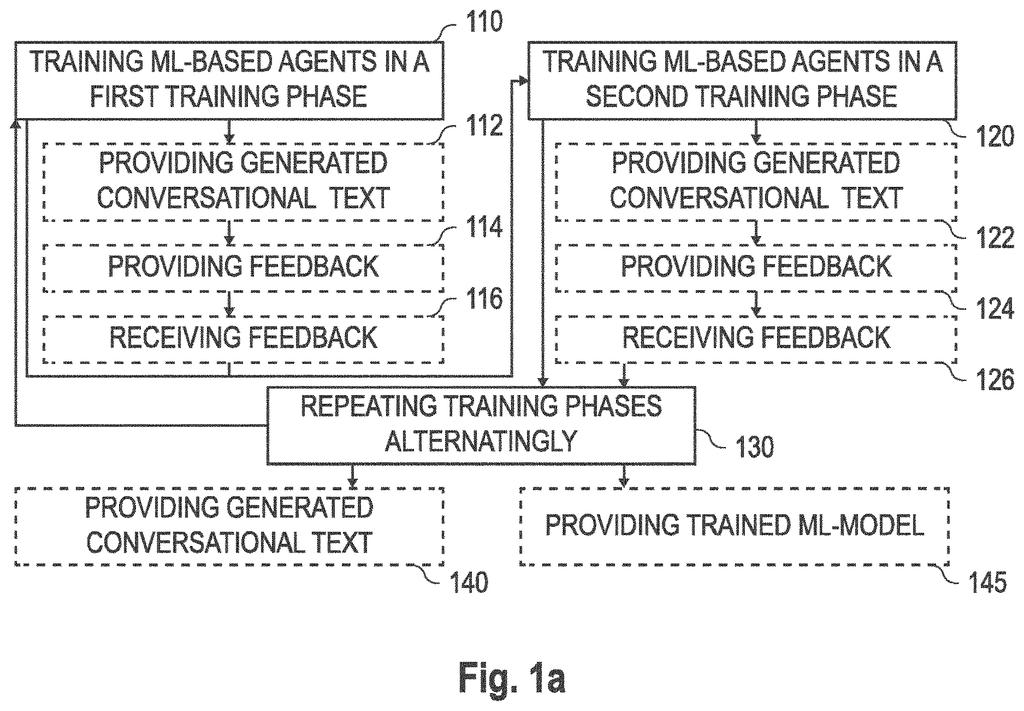
What Sony's multi-style AI writing system actually does
Imagine you hired five ghostwriters and told each one to develop a completely unique voice, then put them all through the same editorial workshop. That's roughly the idea here.
Sony's patent describes a training method for AI text generators where multiple AI agents first learn to write in distinctly different styles from one another. Then, in a second phase, those same agents are trained toward a different objective entirely, something beyond just sounding different. These two phases alternate back and forth throughout the entire training process.
The goal is to end up with AI agents that can produce conversational text in a range of voices while also meeting some other performance target. Think of it as teaching variety and purpose at the same time, rather than one after the other.
How Sony alternates training phases across multiple agents
The patent describes a training loop for a plurality of machine-learning-based agents (meaning: a group of AI models trained in parallel, not just one).
Training alternates between two phases:
- Phase one: each agent is pushed to develop a different linguistic writing style from the others. The explicit goal is stylistic divergence across the group.
- Phase two: all agents are trained on a second, separate objective. The patent doesn't lock in what that objective must be, leaving it open to applications like tone consistency, factual accuracy, or conversation quality scoring.
The key mechanism is the alternation of these phases throughout training, rather than running them sequentially. This interleaving is meant to prevent either objective from collapsing into the other, keeping stylistic variety alive while still pushing toward the second goal.
The patent also covers related methods for classifying conversational text (likely to evaluate which style an output belongs to) and for generating training data to feed this kind of system.
What this means for AI-generated conversation and content
For Sony, which operates across gaming (PlayStation), entertainment, and consumer electronics, having AI that can generate conversation in varied, believable voices has obvious applications: NPC dialogue in games, virtual assistants with distinct personalities, or content generation tools for creators.
More broadly, the two-phase alternating approach addresses a real problem in AI training: when you optimize for one thing, you often lose ground on another. If Sony's method genuinely preserves stylistic diversity while still hitting a secondary performance target, it could be a useful training recipe for any company building AI that needs to sound like more than one kind of person.
This is a niche but genuinely interesting training method patent, not a product announcement. The core idea, alternating between a diversity objective and a performance objective, is a reasonable solution to a real tension in AI training. Whether it actually works better than other approaches is something the patent doesn't prove, but the framing is clean and the application to gaming and entertainment AI is a natural fit for Sony.
There are more where this came from
We read every patent application Big Tech publishes and send you the ones worth knowing. Plain English, free, every week.
The drawings
5 drawing sheets from US 2026/0222368 A1 · click any drawing to enlarge


Want this weekly breakdown for a company we don't cover? Patentlyze Pro →