
IBM Patents an AI That Designs App Screens From a Requirements List
IBM has patented a system where an AI reads a list of app requirements and then designs the screens — buttons, menus, and all — without a human having to lay anything out manually.
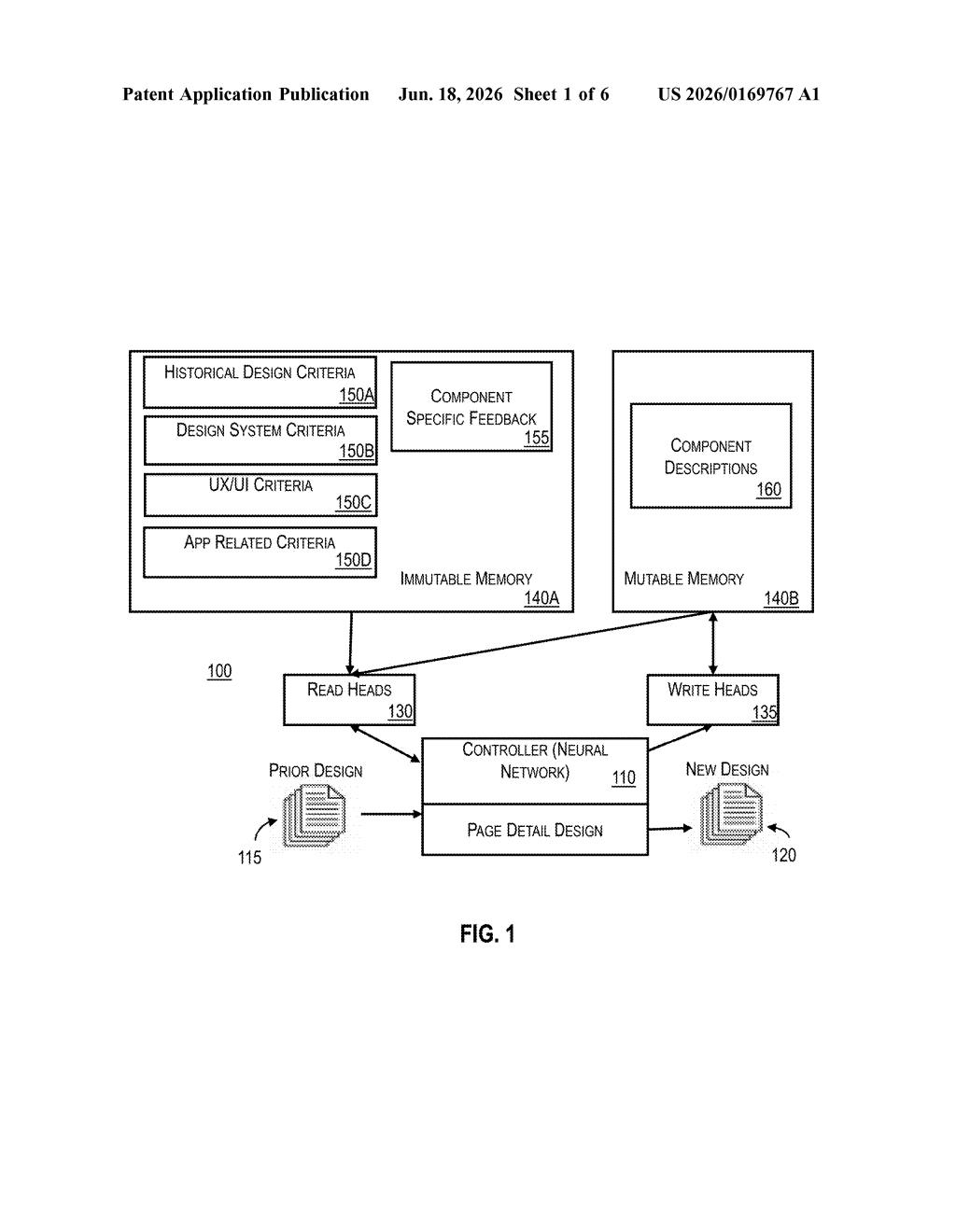
What IBM's AI interface-designer actually does
Imagine you're building a new app. Normally, a designer would sit down and figure out what every button, form, and menu should look like. IBM's patent describes handing that job to an AI: you give it a written list of what the app needs to do, and it produces the visual design for each screen element, one piece at a time.
The trick is how the AI keeps track of things. It uses two separate memory stores — one that's locked (holding the original requirements so they never get corrupted) and one that can change as the AI works through each design decision. That way the AI always knows what you originally asked for, even as it builds up the design step by step.
The underlying AI model is called a neural Turing machine — a type of AI that can read and write to memory the way a traditional computer does, which makes it better at handling multi-step, structured tasks like assembling a full screen layout.
How the two-memory neural network builds each screen element
The system takes a written description of what an application should do — its requirements — and feeds that into a neural Turing machine (a type of AI architecture that pairs a neural network with external, addressable memory, giving it more structured recall than a standard language model).
That memory is split into two parts:
- Immutable memory — a locked store loaded with the original app requirements. It never changes during the process, acting as a stable reference the AI can always consult.
- Mutable memory — a working store that accumulates descriptions of UI components the AI has already designed, so each new element can be informed by what came before.
When prompted, the neural network reads both memory stores and outputs a component description — a structured specification for one piece of the interface, like a navigation bar or a form field. Repeating this process builds up a full GUI design.
The design output is component-by-component rather than a single monolithic generation, which is meant to keep each piece consistent with both the original requirements and the decisions already made.
What this means for software design teams
For software teams, the most time-consuming early work is often translating a product brief into actual screen designs. A system that can do a first pass automatically — starting from requirements rather than a blank canvas — could shift designers from layout work to review and refinement. That's a meaningful change in how design resources get spent.
From a technical angle, the choice of a neural Turing machine is notable because most AI design tools rely on standard transformer models. The external-memory approach IBM describes here is better suited to tasks where you need to consistently reference a fixed source of truth while also tracking a growing body of prior decisions — exactly the challenge of multi-screen UI design.
This is a real engineering bet, not a marketing patent. IBM is making a specific architectural argument — that neural Turing machines handle structured, memory-dependent design tasks better than conventional AI models — and building a system around it. Whether that argument holds up in practice is the real question, and this patent doesn't answer it. Worth watching if you care about AI-assisted design tooling, but don't expect a product announcement soon.
There are more where this came from
We read every patent application Big Tech publishes and send you the ones worth knowing. Plain English, free, every week.
Want this weekly breakdown for a company we don't cover? Patentlyze Pro →