
Samsung Patents Technology That Loads App Data Into Memory Before You Need It
Every time your phone opens an app or loads a file, it's reacting — fetching data only after it's been asked for. Samsung's new patent describes a system that tries to stay one step ahead, predicting what data will be needed next and loading it into memory before the request ever arrives.
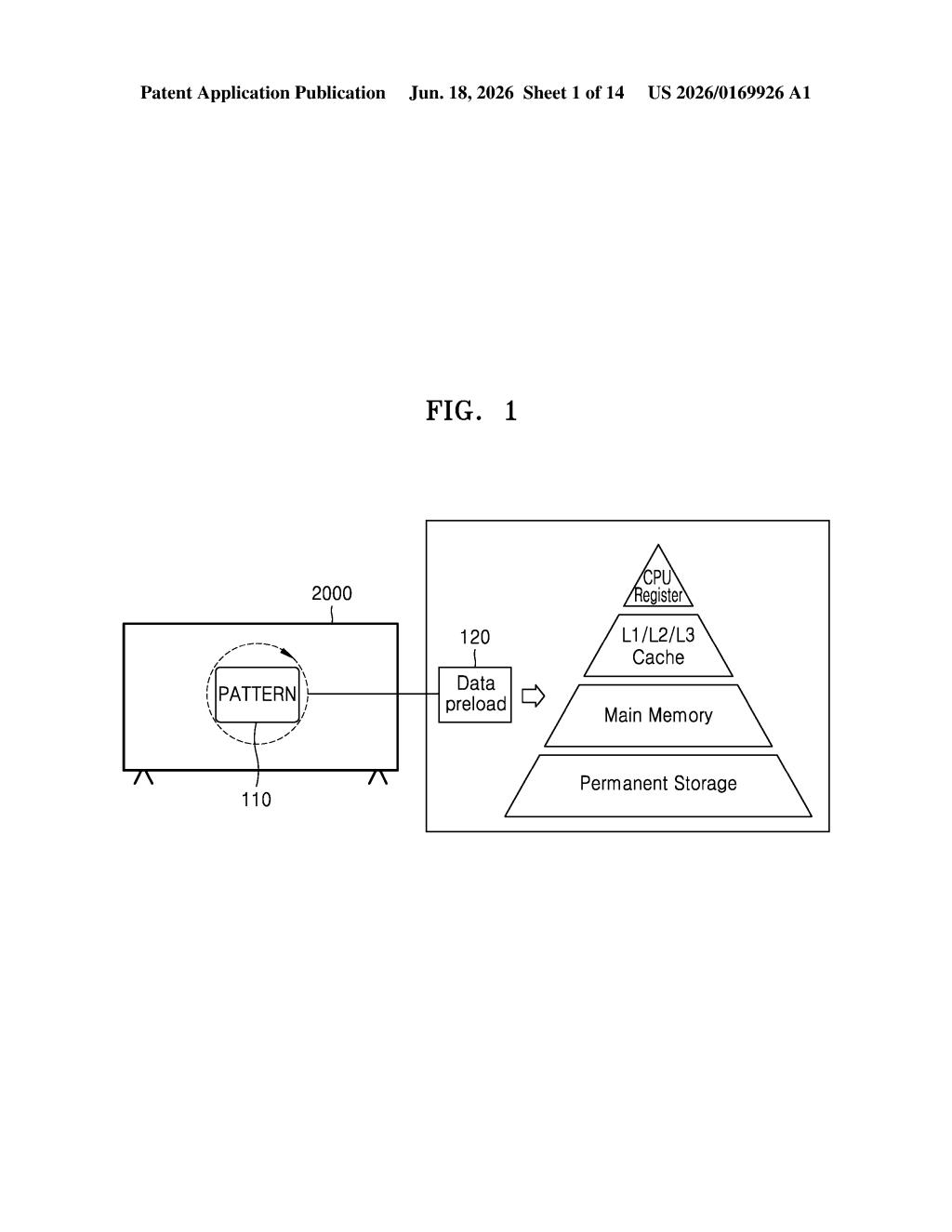
What Samsung's memory pre-fetching system actually does
Imagine you're reading a long document on your phone, and every time you scroll down, the phone has to pause briefly to load the next section. That pause exists because your device is reactive — it waits for you to need something before it goes and gets it.
Samsung's patent describes a smarter queuing system built into the chip itself. When your phone loads a piece of data, the system notes which app made the request and where in memory that data lives. If it's the same app that was running before, it uses that information to predict what data the app will likely need next — and loads it into fast-access memory in advance.
The goal is to reduce the tiny delays that add up across everyday tasks: opening files, switching between apps, or running anything that pulls a lot of data off storage. It's a classic trick in computing — called prefetching — but this patent focuses on doing it in a way that's tied to specific running processes rather than guessing blindly.
How Samsung tracks processes to predict the next memory fetch
When an app requests data, a processor normally translates a virtual address (a label the app uses internally) into a physical address (the actual location in storage) using something called a page table — essentially a lookup directory.
Samsung's system adds a prediction layer on top of that. Once the physical address is resolved, it checks whether the app currently running (identified by a process ID) is the same one that made the last data request. If it is, the system uses the current physical address to predict the next address the app will need.
- Identify the requesting app via its process ID
- Translate its virtual memory address to a physical location
- Compare the current process ID to the previously logged one
- If they match, predict the next physical address and prefetch that data into main memory
The process-ID check is key. Without it, the system could try to prefetch data based on one app's pattern while a completely different app is actually running — a waste of memory bandwidth. By anchoring predictions to a specific process, the system only prefetches when its guess is likely to be relevant.
What this means for app speed on Samsung devices
Prefetching isn't new — CPUs and operating systems have used variations of it for decades. What this patent adds is a tighter link between the prefetch logic and the specific app process making the request, which could make predictions more accurate on mobile chips where many apps compete for memory at the same time.
For Samsung devices — phones, tablets, or any device built on its Exynos chip line — this kind of on-chip optimization could shave milliseconds off common operations in a way that adds up across a day of use. Whether that translates into a noticeable improvement for you depends heavily on implementation details not covered in the patent itself.
This is a solid but unglamorous engineering patent covering a well-understood technique — prefetching — with a specific twist around process-ID matching. It's the kind of low-level memory optimization that ships quietly inside a chip and makes benchmarks tick up by single-digit percentages. Worth tracking as a signal that Samsung is investing in on-chip memory intelligence, but don't expect a press release about it.
There are more where this came from
We read every patent application Big Tech publishes and send you the ones worth knowing. Plain English, free, every week.
Want this weekly breakdown for a company we don't cover? Patentlyze Pro →