
Samsung Patents a Switchable External Antenna That Mounts Near the Camera
Samsung is patenting a phone antenna that lives outside the device body, positioned near the camera, and can be switched on or off to reshape how the phone broadcasts and receives signals.
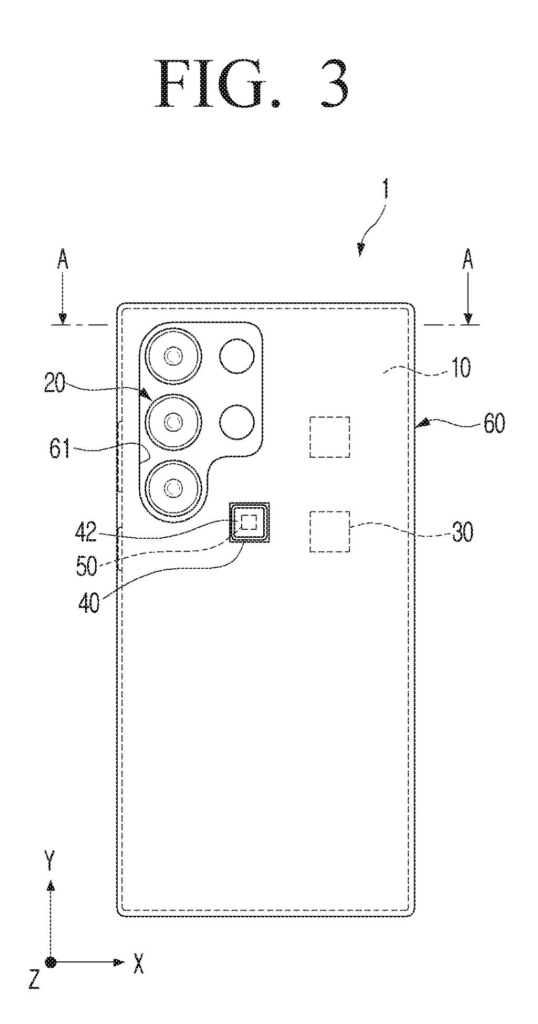
What Samsung's clip-on antenna system actually does
Imagine you're shooting video outdoors and your phone's signal keeps dropping. Part of the problem is that your hand is wrapped around the exact spot where the antenna sits inside the phone, blocking the signal. Samsung's patent describes a fix that moves part of the antenna to the outside of the device.
The idea is a small external antenna element placed on the outside of the phone's housing, close to where the camera sits. A separate component called an antenna adjuster decides whether this external piece should work together with the internal antenna or stay disconnected. When they're linked, the phone's signal radiates in a different direction and pattern than when it's working alone.
In plain terms, the phone can choose between two different shapes of wireless coverage depending on what you're doing. That kind of flexibility could help maintain a stronger connection even when you're holding the phone in an unusual way, like horizontal for video or mounted on a tripod.
… an antenna adjuster on an outside of the housing and configured to selectively electromagnetically couple the external antenna with the internal antenna …
Translation: A switch on the exterior connects the two antennas to change how signals are broadcast.
How the antenna adjuster switches between two signal patterns
The patent describes a mobile device with four key components working together:
- Internal antenna: the standard antenna already inside the phone housing, responsible for cellular and wireless communication.
- External antenna: a separate antenna element mounted on the outside of the phone, physically near the camera module, and spaced a specific distance from the phone's surface.
- Antenna adjuster: a switching component on the outside of the housing that controls whether the two antennas are electromagnetically coupled (meaning they work together as one combined antenna system) or isolated from each other.
When the external antenna is decoupled (switched off from the internal one), the internal antenna produces what the patent calls a first radiation pattern, the default shape in which the phone sends and receives wireless signals. When the adjuster links the two antennas together, they produce a second radiation pattern, a different directional shape for the radio waves.
The practical implication is that the phone can dynamically shift its antenna behavior based on context. Placing the external antenna near the camera is significant: camera accessories, tripod mounts, and even a user's hand position during photography all change how the phone's signal propagates. The patent suggests the external element can compensate for those physical changes by reshaping the signal coverage.
… electromagnetic waves radiated from the internal antenna forms a first antenna radiation pattern and wherein, when the internal antenna is electromagnetically coupled with the external antenna, the electromagnetic waves radiated from the internal antenna forms a second antenna radiation pattern …
Translation: Coupling the antennas together changes the shape of the wireless signal pattern.
What this means for signal strength in awkward shooting positions
Antenna performance in smartphones is a persistent problem. Every time you grip your phone, your hand absorbs radio signals, which is why holding a phone in landscape mode for video calls often produces worse signal quality than holding it upright. Placing an external antenna near the camera, where accessories often attach, is a targeted approach to a real annoyance.
For Samsung, this could connect to its broader push into camera-centric hardware. If the external antenna element doubles as part of a camera accessory mount or protective case system, the signal-switching benefit arrives without asking users to change behavior at all. That said, this is an early-stage patent filing, so whether it ever ships in a Galaxy device is an open question.
This is a focused, practical antenna engineering patent rather than a high-concept moonshot. The camera placement detail is the interesting angle, it suggests Samsung is thinking about how photography use cases specifically degrade antenna performance. It's worth a look if you follow mobile hardware design, but it's not the kind of filing that signals a product category shift.
There are more where this came from
We read every patent application Big Tech publishes and send you the ones worth knowing. Plain English, free, every week.
The drawings
23 drawing sheets from US 2026/0230549 A1 · click any drawing to enlarge


Want this weekly breakdown for a company we don't cover? Patentlyze Pro →
Be the first to weigh in