
Red Hat Patents a Fix for Data Corruption During Live Server Migrations
Moving a running virtual machine between servers is one of the trickier problems in cloud computing, and one specific scenario can corrupt data in the process. Red Hat's new patent targets exactly that gap.
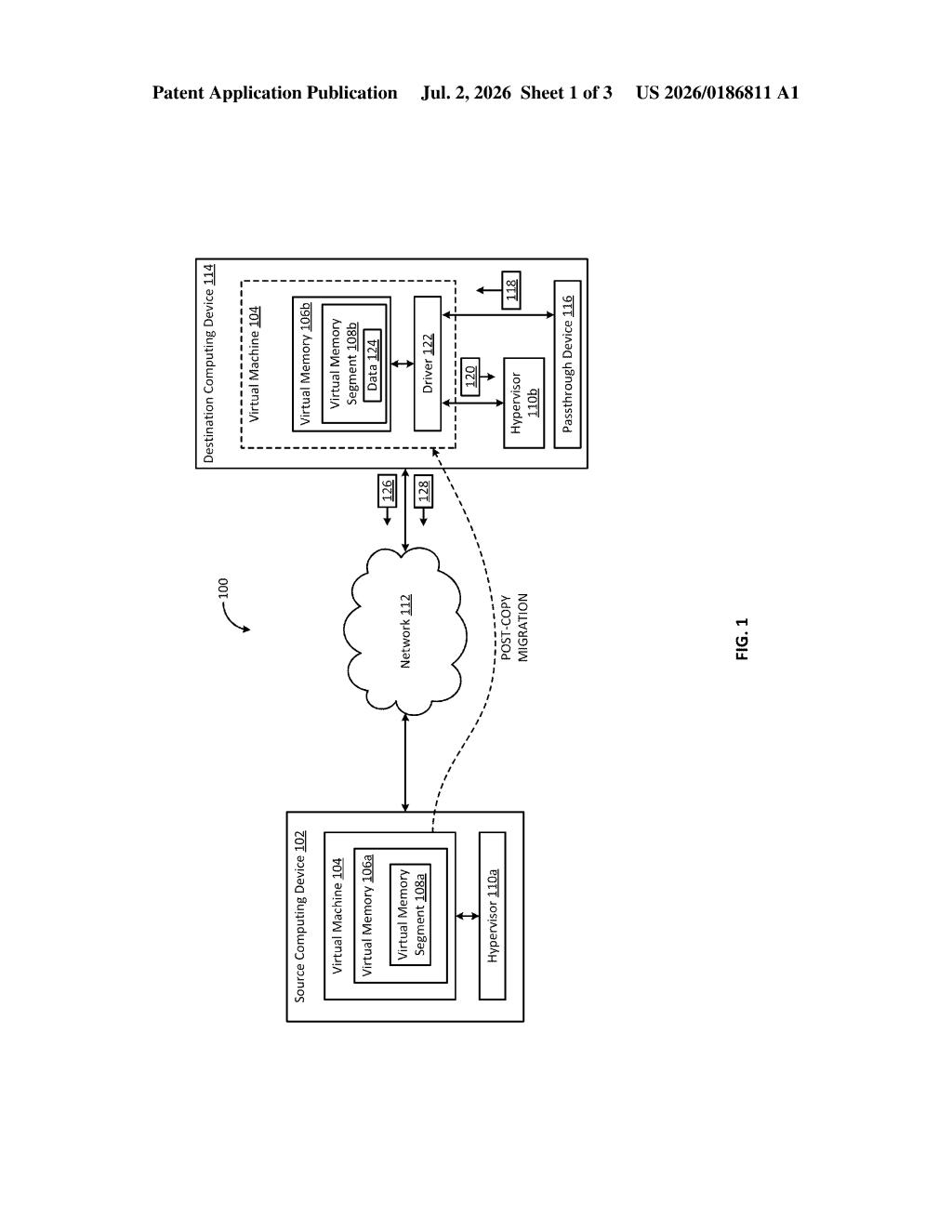
What Red Hat's VM migration memory fix actually does
Imagine you're moving a running application from one server to another without shutting it down, the way a hospital might transfer a patient between rooms without pausing their care. In cloud computing, this is called a live migration, and it's a routine operation. But there's a tricky moment where things can go wrong.
When a virtual machine (think: a software-simulated computer running inside a real server) gets moved, it takes some time for all of its memory to follow. In a technique called "post-copy" migration, the virtual machine actually starts running on the new server before all of its memory has arrived. If a piece of hardware attached to that machine tries to write data to memory during this window, the old memory can come in right afterward and overwrite it, erasing the new data entirely.
Red Hat's patent describes a way for the software layer managing the virtual machine to notice when hardware is about to write to a memory region, and then block that region from being overwritten by the incoming old memory. It's a targeted fix for a specific data-loss scenario that affects cloud operators running hardware-intensive workloads.
How the hypervisor blocks the conflicting memory transfer
The patent focuses on a component called a hypervisor (the software that creates and manages virtual machines on a physical server). During a post-copy migration (a method where a virtual machine starts running on the destination server before all of its memory pages have been copied over), the hypervisor on the destination machine plays traffic cop for incoming memory.
The specific problem involves a passthrough device, hardware like a GPU or network card that is connected directly to a virtual machine, bypassing some of the normal software abstraction layers for speed. When such a device writes data directly into the virtual machine's memory on the new server, that write can be silently undone if the same memory region is then fetched from the old server a moment later as part of the ongoing migration copy.
The fix works like this:
- The virtual machine starts on the destination server while migration is still in progress.
- The hypervisor receives a message indicating a passthrough device is about to write to a specific virtual memory segment.
- The hypervisor marks that segment as off-limits for the ongoing copy process, so the old version of that memory region is never pulled in from the source server.
This prevents the passthrough device's fresh data from being overwritten by stale data arriving from the source. The patent also notes this approach can reduce latency, since the hypervisor no longer needs to wait or retry when conflicts arise.
What this means for cloud workloads that use direct hardware access
For most cloud users, this is invisible plumbing. But for operators running workloads that rely on direct hardware access, GPU-accelerated computing, high-speed networking, storage controllers, live migration has historically been risky or simply unavailable. A bug that silently corrupts data written by hardware during a migration window is the kind of problem that only surfaces under load, making it hard to diagnose.
Red Hat is a major contributor to open-source virtualization infrastructure, including the KVM hypervisor used widely in Linux-based cloud environments. A fix like this, if it makes it into production tooling, could make it safer to live-migrate workloads that were previously considered too sensitive to move without a restart.
This is a narrow but legitimate engineering problem, not a marketing play. Post-copy migration with passthrough devices is a known pain point in the virtualization community, and the race condition this patent addresses is real. It won't make headlines outside of infrastructure circles, but the engineers running large Linux-based clouds will recognize exactly what Red Hat is solving here.
There are more where this came from
We read every patent application Big Tech publishes and send you the ones worth knowing. Plain English, free, every week.
Want this weekly breakdown for a company we don't cover? Patentlyze Pro →
Be the first to weigh in