
Qualcomm Patents a Fix for Blurry AR Glasses When Processing Runs on a Separate Device
One of the nastiest problems in AR and VR is latency: the gap between when your head moves and when the image catches up. Qualcomm's new patent targets a specific piece of that gap that appears when a phone or PC does the heavy rendering while the headset handles the final display.
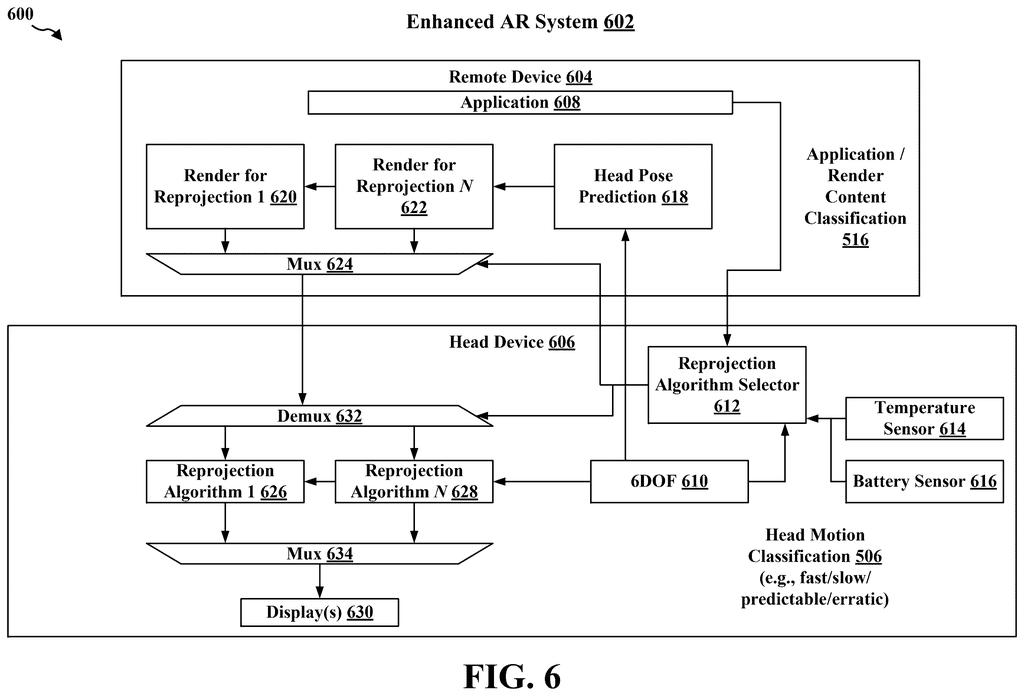
How Qualcomm's split-rendering fix actually works
A person puts on a pair of AR glasses. The glasses themselves are thin and light, so a phone in their pocket does the real graphics work and streams the images over. Sounds tidy, but the moment that person turns their head, the streamed image is already a few milliseconds stale.
To paper over that gap, headsets use a trick called reprojection: they take the last received frame and warp it to match where your head is pointing now, buying time until the next real frame arrives. It works, but only if the image that was sent in the first place was prepared with that warping in mind. If the sender and the receiver aren't coordinating, the warp can look wrong or blurry.
Qualcomm's patent describes a graphics processor that first asks the headset which reprojection method it's using, then tailors every rendered frame to work well with that specific method before sending it. Your AR experience gets more consistent, and the system wastes less effort correcting for mismatches on the other end.
obtain an indication of at least one reprojection algorithm used at a wearable display device; render, based on the indication of the at least one reprojection algorithm, content for the wearable display device; and transmit, for the wearable display device, the rendered content for the wearable display device.
Translation: The separate device checks how the glasses correct images and draws the graphics to match.
How the graphics chip adapts output for the headset's fill-in method
The patent describes a split XR system (XR meaning extended reality, the umbrella for AR and VR). In this setup, a powerful graphics processing unit (GPU) sits in a phone, PC, or some other host device and does the main rendering work, while a lighter wearable display handles output.
The core mechanism has three steps:
- The GPU queries the headset to learn which reprojection algorithm it uses. Reprojection is the technique of warping a previously rendered frame to account for head movement, so the display doesn't go blank while waiting for the next frame.
- The GPU renders the next frame in a way that anticipates that specific warping. For example, if the headset uses depth-based reprojection (which uses distance information to warp objects more accurately), the GPU makes sure depth data is encoded usefully into what it sends.
- The GPU transmits the tailored frame to the headset, which can then apply its reprojection step with much less error.
The claim is deliberately broad: it covers any reprojection algorithm the headset might use, and the GPU's adaptation can involve anything from how geometry is encoded to what auxiliary data (like motion vectors, which tell the headset how each pixel is moving) gets bundled with the frame.
This is a coordination protocol as much as a rendering technique. The two devices negotiate a shared understanding of how images will be processed, rather than the sender guessing.
What this means for untethered AR and VR headsets
For people buying AR or VR headsets, latency and visual wobble are the two fastest ways a device ends up in a drawer. Reprojection is one of the main tools manufacturers use to fight both problems, but it breaks down when the device doing the rendering doesn't know how the headset will use what it receives. Qualcomm's approach closes that communication gap at the chip level.
This matters especially as the pattern in Qualcomm's XR system filings points toward a future where thin, light glasses offload nearly all computation to a companion device. If that companion chip can speak the same reprojection language as the glasses, the experience can stay smooth even as the hardware gets lighter and the wireless link between them introduces its own small delays.
Qualcomm's 46th filing we've tracked since July in the AR glasses race adds to their earlier work on stopping blurry photos corrupting maps and one-step image correction for headsets.
The problem this patent attacks is real and specific. Reprojection artifacts, those swimming, stretched edges you see in VR when you turn your head fast, are one of the most reliable ways to break immersion. And they get worse in split systems, where two physically separate chips have to agree on what a "good" frame looks like. That's a genuine engineering pain point, not a theoretical one.
The patent's answer is logically sound: tell the renderer what the display will do with the image, and the renderer can prepare better. The question is how much that coordination actually buys in practice. If the wireless link between phone and glasses already introduces variable delay, tuning the frame content for a specific warping algorithm may help at the margins but not solve the underlying timing problem.
Still, margin gains matter a lot in XR. A fix that shaves off even a fraction of visible artifact time is the difference between a headset people wear for an hour and one they wear for five minutes.
There are more where this came from
We read every patent application Big Tech publishes and send you the ones worth knowing. Plain English, free, every week.
The drawings
11 drawing sheets from US 2026/0289918 A1 · click any drawing to enlarge


Want this weekly breakdown for a company we don't cover? Patentlyze Pro →
Be the first to weigh in