
Qualcomm Patents a Way for Devices to Pool Location Data for More Precise Positioning
Finding your exact location indoors is still surprisingly hard. Qualcomm's new patent describes a system where multiple nearby devices team up, sharing their own distance measurements so that any one of them can pinpoint a location far more accurately than it could alone.
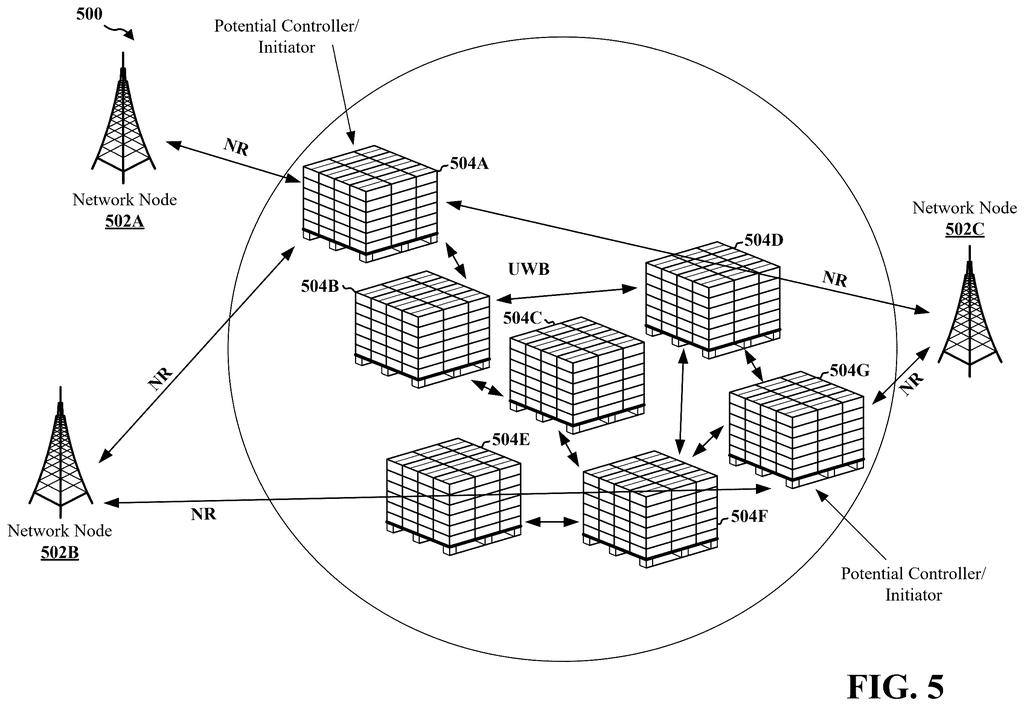
How Qualcomm's cooperative UWB location-sharing works
Imagine you're trying to find a lost item in your house using a tracker tag. Your phone picks up a signal, but one phone can only get a rough idea of where the tag is based on how far the signal traveled. Now imagine three or four devices in your home all measuring that same signal from different angles, then sharing those measurements with each other.
That's the core idea here. Qualcomm's patent describes a system where one device acts as a kind of coordinator, gathering distance measurements from a group of nearby devices, then combining all of them into a single, more complete picture of where something is.
The technology behind this is called ultra-wideband (UWB), the same short-range radio standard used in Apple AirTags and Samsung SmartTags. By having devices cooperate rather than work independently, the system can deliver more accurate location results even in tricky environments like buildings with lots of walls.
receive a first ranging control message indicating a set of second network entities that are part of a ranging session in which the first network entity is included; perform a first set of measurements for the ranging session; …
Translation: A device joins a group positioning session and gathers its own distance data.
How devices aggregate ranging measurements in the session
The patent describes a protocol for what Qualcomm calls a ranging session, a coordinated exchange where multiple network entities (devices like phones, tags, or access points) all measure the distance to a target at the same time.
- A ranging control message is sent to a designated first device, telling it which other devices are participating in the session.
- Each participating device performs its own set of ranging measurements, essentially timing how long UWB radio pulses take to travel back and forth to calculate distance.
- Each secondary device sends its measurements back to the first device, which then aggregates all of them into one combined data package.
- That aggregated report is then transmitted onward, presumably to a server or positioning engine that can calculate a precise location using all the data points together.
The key technical idea is that no single device needs to figure out the location on its own. The combination of measurements from multiple angles is what makes accurate positioning possible, especially indoors where UWB signals can bounce off walls and cause errors for any individual device.
… transmit an indication of an aggregated set of measurements based on the first set of measurements and each respective second set of measurements.
Translation: The device sends out a combined pool of location data gathered from all participants.
What this means for UWB tracking and device ecosystems
UWB is already in many flagship phones and Bluetooth trackers, but its accuracy degrades in cluttered indoor spaces where a single device's measurement can be thrown off by reflections. A cooperative approach, where several devices cross-check each other's readings, is a practical way to get around that problem without needing more powerful hardware.
For Qualcomm, this is also a business play. The company supplies the UWB chips and modem platforms that power a wide range of Android phones and IoT devices. A cooperative positioning protocol that works across those devices could become a standard that Qualcomm's chipsets are built to support, giving them an edge in the growing market for precise indoor location services.
This is solid, unglamorous infrastructure work. Cooperative positioning is a well-understood concept in research, and the real question is whether Qualcomm can get enough device makers to support the protocol for it to matter in practice. If they can, it's a meaningful improvement for anyone who has ever watched a UWB tracker show up in the wrong room on a map.
There are more where this came from
We read every patent application Big Tech publishes and send you the ones worth knowing. Plain English, free, every week.
The drawings
20 drawing sheets from US 2026/0231091 A1 · click any drawing to enlarge


Want this weekly breakdown for a company we don't cover? Patentlyze Pro →
Be the first to weigh in