
Qualcomm Files Patent to Black Out the Screen Spot Above Its Hidden Light Sensor
Phones that hide their light sensor behind the screen have a problem: in a dark room, the screen's own glow fools the sensor. Qualcomm's fix is to black out a small patch of screen right above it.
What Qualcomm's dimmed sensor patch actually does
You're lying in bed with the lights off, scrolling your phone. The screen needs to be dim so it doesn't sear your eyes, but to know how dim, the phone has to measure the room's light. Its sensor sits behind the display, and in the dark, the glow from the pixels right above it can drown out the real reading.
Qualcomm's patent application describes a simple workaround. When the room gets dark enough, the phone dims, blacks out, or turns off only the pixels over the sensor and a little area around it. The rest of the screen keeps working as normal.
When the room gets bright again, the patch goes back to normal. The phone gets a cleaner reading when it counts most, without constantly correcting for its own screen light.
… modifying an image being displayed within a first region of the display screen, wherein the first region of the display screen comprises less than all pixels in the display screen and comprises at least the pixels of the display screen located above the under-display ambient light sensor.
Translation: Darkening just the specific area of pixels sitting directly on top of the hidden light sensor.
How the phone decides when to darken the patch
The filing covers a method and a device with a display, an under-display ambient light sensor (a light sensor mounted behind the screen instead of in a notch or bezel), a memory and a processor. The processor takes a light reading and checks it against a threshold. If the room is darker than that threshold, it changes the image in a region of the screen that covers at least the pixels directly above the sensor, and fewer than all pixels on the display.
The description lists a few ways to change that region:
- Turn the pixels off entirely.
- Set them to black.
- Dim them by a percentage, with the dimming growing as the room gets darker.
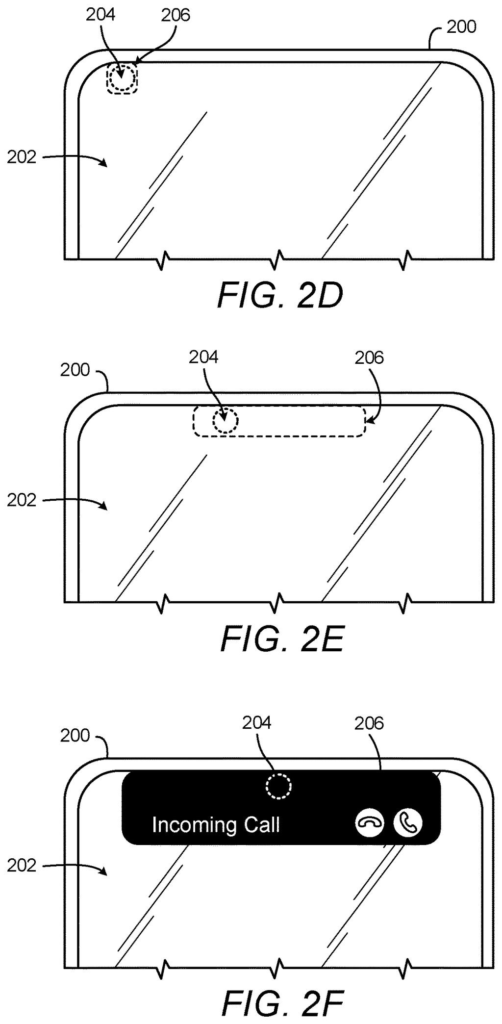
The patch can also extend a set distance past the sensor's edge, to catch pixels whose light might leak in. When the reading rises above a second threshold, the change is reversed. The filing says the two thresholds can differ, which stops the patch from flickering on and off near the cutoff. It also says the patch can fade in and out, can be resized by the operating system or an app, and can show extra information, like an incoming call alert, in the darkened area.
The company says it is simple to do: zeroing out pixel values in the region is a basic masking step.
Disclosed are techniques for dynamic, localized screen intensity reduction for an under-display ambient light sensor.
Translation: The patent describes a way to dim specific parts of the screen near a hidden light sensor.
Why a small black patch could improve your photos
If this works as described, your phone could adjust its screen brightness more accurately in dark rooms, and the camera could get a better reading of the light around it. The filing says that should mean better photos and video. That matters most for people who use their phone in bed, at the movies, or at night.
It could also let phone makers keep light sensors hidden under the screen without the heavy ongoing corrections they need today. The examiner's first review rejected the claims as filed, which is routine at this stage and often followed by amendments, so nothing here is settled.
This is the 67th Qualcomm patent we've tracked in our cell phone coverage since May, joining ideas like the hand-shake camera and the echo-cutting sound fix.
The cost of this design is easy to see: you give up a little screen. A black spot shows up in the dark, exactly when you'd least want a distraction. The filing tries to soften that by letting the patch grow into a notch-style cutout, show a call alert, or fade in and out.
Still, the trade reads as worth it. The alternative is a phone that constantly guesses how much of its own light is polluting the reading, and the filing admits that guessing is hard in very dark rooms. A tiny dark patch is a cheap, blunt fix for that.
The risk is taste. Some people will hate any visible patch on an edge-to-edge screen. Whether this gets used depends on how small and how invisible phone makers can make it.
Get our take in your Top Stories
Liked this breakdown? Add Patentlyze as a preferred source on Google, and our plain-English take shows up more often in your Top Stories the next time Qualcomm patent news breaks.
There are more where this came from
We read every patent application Big Tech publishes and send you the ones worth knowing. Plain English, free, every week.
The drawings
6 drawing sheets from US 2026/0341249 A1 · click any drawing to enlarge


Want this weekly breakdown for a company we don't cover? Patentlyze Pro →
Be the first to weigh in