
Qualcomm Patents a Way to Keep Wi-Fi Devices in Tighter Time Sync for Real-Time Apps
Wi-Fi routers tell connected devices what time it is, but those updates don't come often enough for apps like live gaming audio or AR headsets that need near-perfect timing. Qualcomm's new patent proposes a mode that floods the network with extra timing signals so every device stays in lockstep.
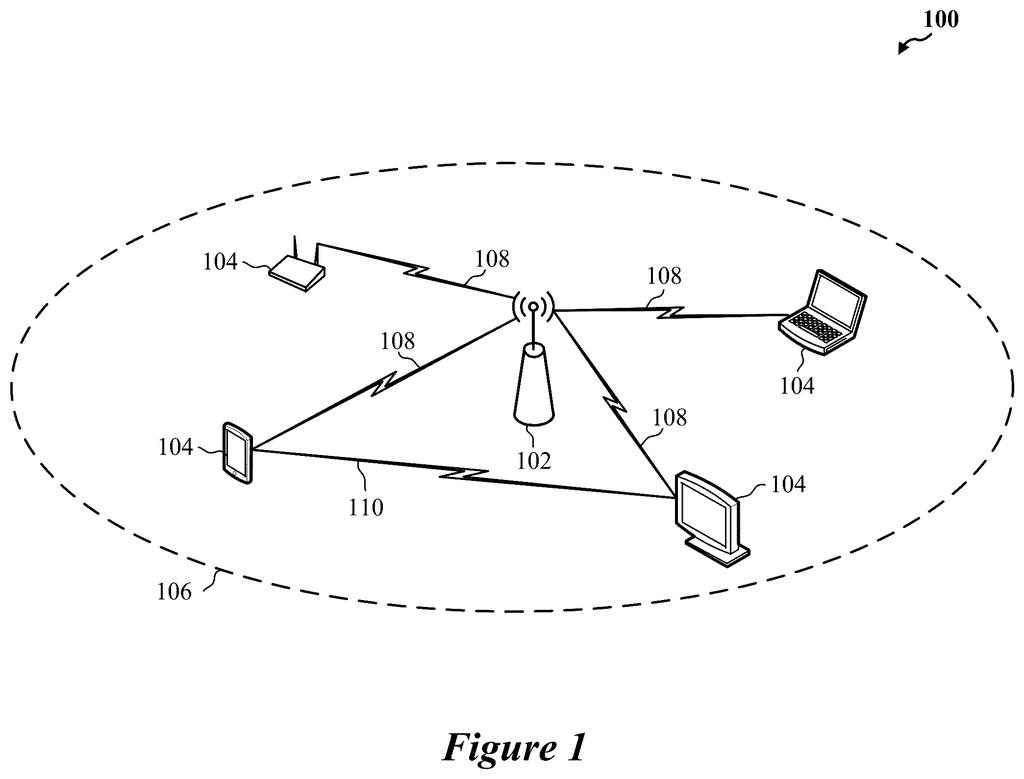
What Qualcomm's tighter Wi-Fi timing fix actually does
Modern Wi-Fi routers send out periodic timing pulses called beacons, roughly ten times a second, so connected devices all share the same clock. That works fine for streaming video or browsing, but some newer uses, like wireless audio for AR glasses or multiplayer gaming with spatial audio, need devices to agree on time down to fractions of a millisecond. At that level, waiting between normal beacon pulses is too slow.
Qualcomm's patent describes an "enhanced synchronization mode" where a router (or a multi-link router with two radios) switches into a higher-frequency timing broadcast. Instead of waiting for the usual beacon schedule, it sends out extra sync frames far more often. Those frames carry a special timing offset value so a device connected on one radio can stay perfectly aligned with a device on a different radio.
For you as a user, this would be invisible. You'd just notice that latency-sensitive gadgets, think wireless earbuds, AR headsets, or game controllers, work more reliably without the tiny timing hiccups that cause audio glitches or input lag.
… transmit, during the enhanced synchronization mode, a plurality of sync frames on the first communication link more often than Target Beacon Transmission Times (TBTTs) associated with the first communication link, each of the plurality of sync frames indicating a Timing Synchronization Function (TSF) offset between the first AP and a second AP of the device.
Translation: The device sends frequent time synchronization updates between two access points to keep connected wireless stations tightly aligned.
How the enhanced sync mode floods links with timing frames
The patent covers a device (typically a Wi-Fi access point or a multi-link router) that can operate in what Qualcomm calls an enhanced synchronization mode. In normal Wi-Fi, a router broadcasts a beacon frame at a fixed schedule called the Target Beacon Transmission Time (TBTT), usually every 100 milliseconds. That beacon carries the router's current clock reading so connected devices can stay in sync.
In enhanced sync mode, the router transmits additional sync frames at a faster rate than the normal beacon schedule. Each frame carries a Timing Synchronization Function (TSF) offset, which is essentially the difference in clock readings between two radios on the same router. This matters because modern Wi-Fi 7 routers can connect to a single device over multiple radio bands simultaneously (a feature called Multi-Link Operation), and those radios need their clocks tightly aligned.
The patent also specifies that the router tells connected devices whether joining this enhanced mode is mandatory or voluntary, giving network designers flexibility. One of the sync frames can be a Fast Initial Link Setup (FILS) Discovery frame, a lightweight broadcast packet originally designed to help devices find networks faster, repurposed here to carry precise timing data without the overhead of a full beacon.
- Router announces enhanced sync mode on one of its radio links
- Devices are told if participation is required or optional
- Extra sync frames go out more frequently than the standard beacon interval
- Each frame carries the clock offset between two radios on the router
What this means for lag-sensitive devices on your home network
For most people browsing or streaming, standard Wi-Fi timing is more than adequate. But a growing category of products, wireless AR glasses, spatial audio earbuds, cloud gaming peripherals, and industrial sensors on the same Wi-Fi network, live and die by timing accuracy. A clock disagreement of even a few milliseconds can cause audio to drift out of sync with video, or make a game controller's input feel mushy.
Qualcomm has been filing around Wi-Fi timing and multi-link operation since 2022 as Wi-Fi 7 brought multi-radio device connections into the mainstream. This patent specifically addresses the gap between what the current beacon system offers and what latency-sensitive applications actually need, which suggests Qualcomm is positioning its chipsets for exactly those product categories.
Qualcomm's 431st filing we have tracked since May in our Qualcomm coverage adds to a location-accuracy thread that includes fixing bad distance readings and smarter signal-bounce locating.
If your wireless earbuds have ever sounded slightly behind the video on a call, or your AR headset has stuttered for a split second, the culprit is usually two radios failing to agree on exactly what time it is. This patent fixes that by having a router send far more frequent timing signals than it normally would, so connected devices stay tightly coordinated.
The practical benefit lands in moments that demand precision: lip sync during a live call, spatial audio that feels anchored in physical space, game controllers where a few milliseconds of lag is the difference between a hit and a miss.
Qualcomm makes chips that go into many of the headsets, earbuds, and controllers people already buy, which means this patent describes something closer to a production plan than a thought experiment. Older devices simply ignore the new signals and carry on, so nothing breaks for anyone who does not yet own hardware built to take advantage of it.
There are more where this came from
We read every patent application Big Tech publishes and send you the ones worth knowing. Plain English, free, every week.
The drawings
18 drawing sheets from US 2026/0292729 A1 · click any drawing to enlarge


Want this weekly breakdown for a company we don't cover? Patentlyze Pro →
Be the first to weigh in