
Apple Patents a Way to Wake a Phone's Main Radio Without Wasting Battery
Your phone's radio is always listening for signals, even when it's supposed to be asleep. Apple has filed a patent on a smarter way to bring that radio back to full power without burning through your battery in the process.
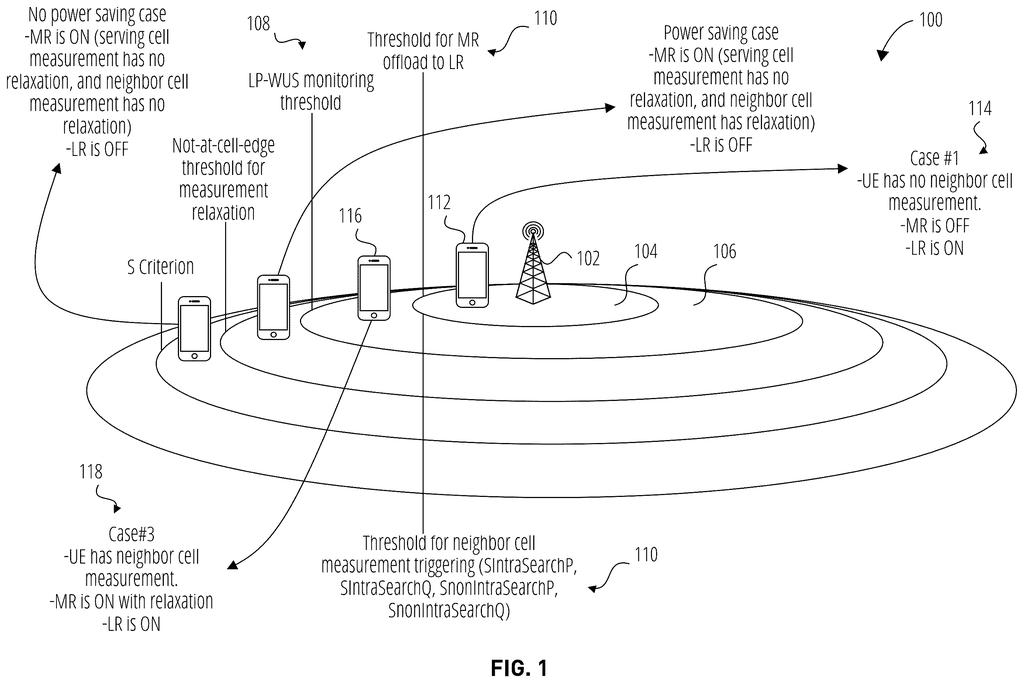
How Apple's radio wake-up fix saves phone battery
Every modern smartphone keeps a tiny, low-power radio running in the background while the main cellular radio sleeps, waiting for an incoming call or data push. The problem is that waking the main radio is messy: it needs a moment to calibrate itself to the right volume level and lock onto the correct timing from the cell tower, and getting that wrong wastes energy or delays your connection.
Apple's patent describes a method for making that wake-up process as efficient as possible. Instead of always using the same fixed calibration routine, the phone figures out exactly how many timing signals from the nearby cell tower it needs to sample before the main radio is ready. That number adjusts based on how long the low-power radio has been tracking the tower on its own.
The idea is that if the low-power radio has been staying in good sync with the tower, the main radio won't need as much warm-up time. You get a faster, cheaper wake-up that doesn't overshoot on battery use or undershoot on accuracy.
determining a number of synchronization signal block (SSB) samples of SSBs sent by a base station to use to perform one or more of automatic gain control (AGC) settling and time/frequency tracking on the MR during an MR waking-up procedure for waking the MR from the sleep state …
Translation: The phone calculates how many radio samples it needs to properly calibrate itself before turning on the main antenna.
How the UE counts sync samples before powering up
The patent covers the full wake-up sequence for what the spec calls a low-power wake-up receiver architecture. In this setup, a phone carries two radios: a small, low-energy receiver (LR) that stays on around the clock listening for a specific low-power wake-up signal from the base station, and a main radio (MR) that handles actual data and calls but sleeps most of the time to save battery.
When the base station wants to reach the phone, it sends a low-power wake-up signal (LP-WUS). The tiny receiver catches it and tells the main radio to turn on. But the main radio needs a calibration step before it can do useful work:
- AGC settling (automatic gain control): the radio adjusts its amplifier so incoming signals aren't too loud or too quiet.
- Time and frequency tracking: the radio locks onto the cell tower's exact timing and carrier frequency, since small drifts accumulate while it was off.
Both steps consume power and take time. Apple's method ties the number of synchronization signal block (SSB) samples used for those steps to how often the low-power receiver has been getting its own timing reference from the tower. If that reference came in recently and often, the main radio's clock hasn't drifted much, so fewer calibration samples are needed. If the gap was long, more samples are used to compensate.
The key claim is that the phone calculates this number before waking the main radio, so the wake-up procedure is sized to the actual situation rather than defaulting to a worst-case routine every time.
The UE uses a low-power receiver (LR) to monitor for LP-WUSs while an MR of the UE is in a sleep state.
Translation: A secondary tiny receiver constantly listens for wake up signals while the power hungry main radio stays turned off.
What this means for 5G battery life on future iPhones
Battery life on 5G phones has been a persistent complaint since the standard launched. The high-frequency radios in 5G devices wake and sleep constantly, and every poorly tuned wake-up cycle chips away at the total. A calibrated wake-up process like this one could, in principle, reduce the overhead cost of each radio activation, meaning the phone wastes less energy on bookkeeping and more on actual communication.
For everyday users, that kind of saving rarely shows up as a dramatic leap in battery life, but it compounds across hundreds of wake-up events per hour. several Apple filings on radio power management this year suggest the company is working across multiple layers of the cellular stack to close the gap between 5G and older LTE power efficiency. This patent targets one specific handoff in that chain.
Apple's 464th filing in our Apple coverage since May continues a battery-saving radio thread, joining the low-power wake radio and the tower handoff patent.
The phone saves battery by letting a tiny, always-on listening chip guess how much warm-up work the main radio will need when it switches back on. That guess is the cost. If the tiny chip's picture of the cell tower has drifted from reality, the main radio wakes up miscalibrated and has to redo the work anyway, burning exactly the power the system was trying to save.
The conditions where the guess breaks down are common: moving between buildings, riding an elevator, sitting near a crowded wireless environment. The patent accounts for this partly by adjusting warm-up effort based on how long the radio slept, which is reasonable but still a model, and models fail at the edges.
For a phone sitting on a desk or in a pocket, the trade reads as worth it. Battery life is made in the ordinary case, and the ordinary case is stable enough that the shortcut usually holds.
There are more where this came from
We read every patent application Big Tech publishes and send you the ones worth knowing. Plain English, free, every week.
The drawings
5 drawing sheets from US 2026/0292693 A1 · click any drawing to enlarge


Want this weekly breakdown for a company we don't cover? Patentlyze Pro →
Be the first to weigh in