
Qualcomm Patents a Battery-Saving Sync System for 3D Video Calls
Holographic calls between multiple people sound futuristic, but keeping every participant's video frames perfectly in step is a power-hungry nightmare. Qualcomm's new patent describes a system that first locks everyone in sync, then steps back to save battery.
How Qualcomm keeps holographic calls in sync without wasting battery
Ever tried to watch a live video call where one person's audio lags behind their lips? Now multiply that across several people, add a third dimension, and you have the timing problem at the heart of holographic calls.
Qualcomm's patent tackles this with a two-phase approach. In the first phase, every device involved in the holographic call communicates constantly, using that stream of back-and-forth data to figure out exactly how far ahead or behind its own video frames are and then nudge its timing until everyone is in step. Think of it like musicians tapping a metronome until they're all playing on the same beat.
Once the timing is locked in, the second phase kicks in. Each device sends a message saying, essentially, "I'm synced, we can relax now." The network then switches everyone to a power-saving mode, where devices check in less often because they no longer need that constant stream to stay aligned. You get a smooth, coordinated holographic experience without your device running hot all day.
… modify an uplink frame timing based at least in part on a round trip time and a plurality of data frames received while operating in accordance with the first communication mode; …
Translation: The device adjusts its transmission schedule using round trip time and incoming data frames.
How frame timing alignment triggers the power-saving switch
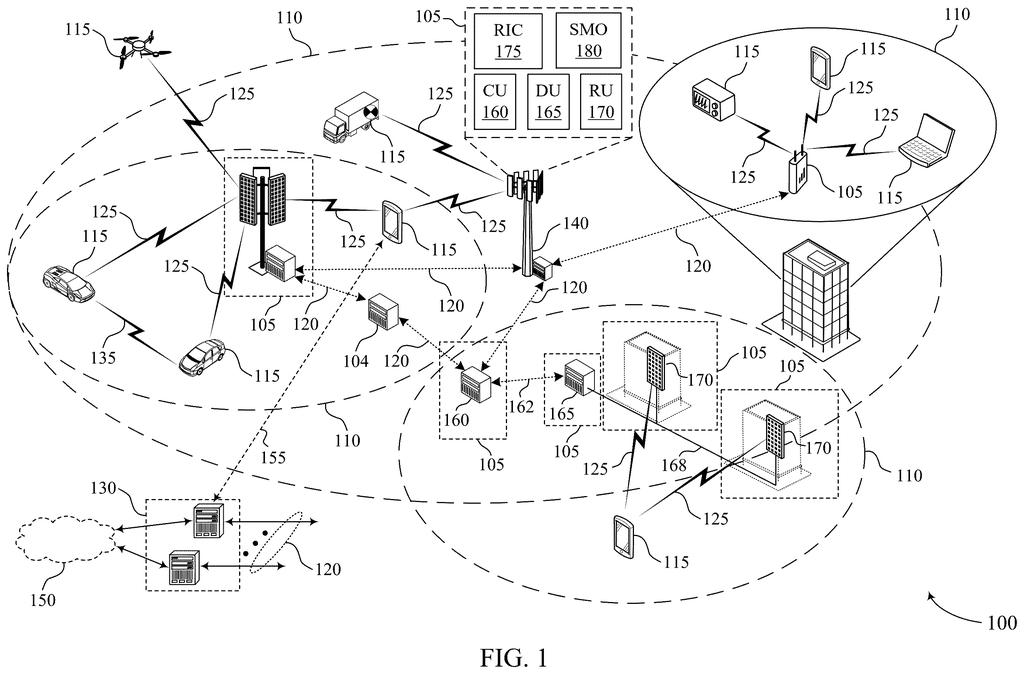
The patent describes a two-stage coordination protocol for holographic communications involving multiple wireless devices (phones, tablets, or purpose-built holographic terminals).
Stage one: always-on alignment. When a holographic session starts, all participating devices enter what the patent calls a first communication mode, essentially an always-on channel where frames are transmitted and received continuously. Each device measures the round trip time (how long a packet takes to leave, reach another device, and come back) and uses that measurement to adjust the timing of its own outgoing video frames. The goal is to make sure frames from every participant arrive at every other participant at roughly the same moment, preventing the visual lag or desync that would make a 3D holographic scene look fractured.
Stage two: power-saving handoff. Once a device has aligned its frame timing, it transmits a request to exit the always-on mode. The network (or an application server that has been collecting timing data from all devices) responds with a configuration for a power-saving mode, where devices communicate less frequently because the hard work of synchronization is already done.
The application server role is notable: it can act as a central referee, collecting timing reports from each device and sending back individual adjustment instructions, rather than requiring every phone to figure out sync through peer-to-peer negotiation alone. This centralized path could handle sessions with many participants more gracefully.
After the frame timing is aligned among the devices, a request to exit the first communication mode may be transmitted, and one or more of the devices may be configured with a power saving mode for the holographic communications.
Translation: Once the timing is synced, the devices can leave the active mode to save battery.
What this means for future holographic calling devices
For everyday users, this patent addresses one of the most practical blockers to holographic calling becoming real: battery life. Keeping multiple video streams perfectly timed is compute- and radio-intensive. A system that does the heavy lifting upfront and then backs off is the difference between a feature you can use for an hour and one that kills your phone by lunch.
Qualcomm's interest in holographic and extended-reality communications shows up across its modem and XR chip roadmaps, and this patent adds the networking layer that would make multi-person holographic calls practical rather than just technically possible. If holographic calling reaches consumer devices in the next several years, the synchronization and power-management layer described here is the kind of infrastructure that has to exist before any of it works reliably.
Qualcomm's 463rd filing in our Qualcomm coverage since May adds to a run that includes grading its own AI tower predictions and replacing radio scans with simulations.
The real-world payoff here is specific and real: you would notice this patent's absence as a call that looks choppy or desynchronized, and you would notice its presence as a session that feels solid and doesn't cook your phone.
That said, this is infrastructure work. The patent doesn't create holographic calling; it solves one of the several hard problems that stand between today's video calls and a true multi-person 3D experience. The two-phase design (sync hard, then ease off) is a sensible engineering approach that mirrors how GPS receivers work: lock the signal first, coast after.
For most readers, this filing lands in the category of "important but invisible." If holographic calls ever become common, nobody will think about frame timing synchronization. But without something like this working underneath, the whole experience falls apart.
There are more where this came from
We read every patent application Big Tech publishes and send you the ones worth knowing. Plain English, free, every week.
The drawings
33 drawing sheets from US 2026/0304392 A1 · click any drawing to enlarge


Want this weekly breakdown for a company we don't cover? Patentlyze Pro →
Be the first to weigh in