
Qualcomm Patents a Way for GPUs to Fetch Two Texture Pixels With One Instruction
Every pixel in a 3D scene has to be looked up from a texture map, and that lookup costs chip time. Qualcomm has filed a patent for a GPU trick that does two of those lookups for the price of one instruction.
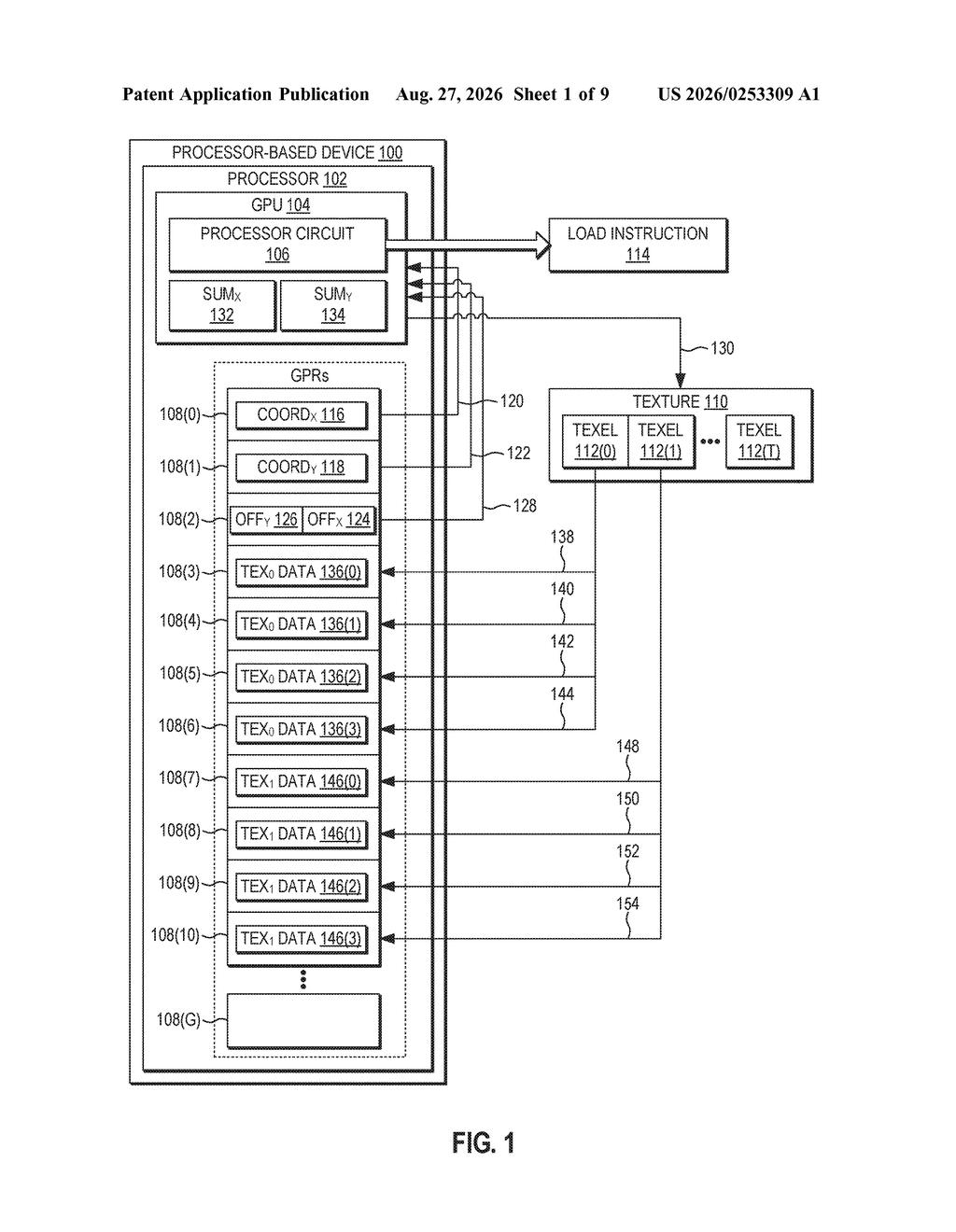
What Qualcomm's two-texel GPU shortcut actually does
You're playing a 3D game on your phone and the scene is packed with detailed surfaces: stone walls, cloth, skin, metal. Behind the scenes, your phone's graphics chip is racing to look up the exact color for thousands of tiny squares, called texels, in enormous image files called textures. Each lookup normally needs its own instruction, which burns time and power.
Qualcomm's patent describes a way to fold two of those lookups into a single command. The chip reads the position of one texel and a small distance offset, then automatically fetches the neighboring texel at the same time, all without a second instruction being fired. The math for finding that neighbor happens inside the instruction itself.
For you, this matters most on mobile devices where the graphics chip is always juggling raw performance against battery life. Doing the same visual work with fewer instructions is one of the cleaner ways to buy back a little of both.
… the GPU configured to, responsive to execution of a single instruction by the processor circuit: read a first coordinate and a second coordinate of a location of a first texel of a texture from a first general purpose register (GPR) and a second GPR, respectively, of the plurality of GPRs …
Translation: The graphics chip is designed to grab the location data for a texture pixel from two specific memory slots with one command.
How the GPU reads two pixel coordinates in one pass
A GPU renders 3D graphics by constantly sampling textures, large image files that wrap color and detail around 3D shapes. Each sample targets a texel (short for texture element, the equivalent of a pixel inside a texture map). Normally, sampling two texels means two instructions, two trips through the chip's register file, and two rounds of address calculation.
This patent describes a single instruction that handles two texels at once. The GPU reads a first texel's X and Y coordinates out of two general purpose registers (GPRs, small fast-access memory slots inside the chip). It also reads a pair of offsets from a third register. Those offsets tell it how far to step in each direction to reach the second texel.
The chip then:
- Fetches the first texel at the original coordinates
- Adds the X offset to get the second texel's X coordinate
- Adds the Y offset to get the second texel's Y coordinate
- Fetches the second texel, all in the same instruction cycle
The register layout is specific: coordinates in two registers, offsets packed into a third. That compact encoding is what lets the hardware act on both texels without a second dispatch.
Performing texel access operations on multiple texels responsive to executing a single instruction by graphics processing units (GPUs) is disclosed herein.
Translation: This patent describes a method for a graphics card to fetch data for several texture pixels using only one instruction.
What this means for mobile 3D graphics performance
Instruction count is real currency inside a GPU. Every instruction a chip executes costs decode time, power, and register-file bandwidth. Shaving instructions out of the texture-sampling loop, which runs constantly during any 3D scene, can free up cycles for other work or let the chip run cooler. On a phone, where thermal limits are tight and the battery is small, that headroom translates directly into longer gaming sessions or smoother frame rates at the same power budget.
This is a chip-microarchitecture filing, not a user-interface one, so you'll never see a setting for it. The payoff would show up as a game running a few degrees cooler, a benchmark scoring a little higher, or a frame holding steady instead of stuttering during a complex scene. Qualcomm's Snapdragon line already dominates premium Android devices, and filings like this one sit alongside many other GPU-efficiency patents in the newest Big Tech patents covering the quiet engineering work that decides how fast mobile chips actually render the world.
That makes this Qualcomm's ninth filing we've tracked since July in our GPU rendering race watchlist, building on their work on keeping rotating graphics sharp and splitting chip work across frames.
For most readers, GPU instruction-set changes live completely below the waterline. You will never toggle this in settings, and no spec sheet will list it. The concrete payoff is a phone that runs a demanding game without slowing down as quickly, or drains a little less battery during a long session.
Qualcomm is essentially teaching the chip to do two texture-painting jobs in one step rather than two, which adds up across millions of operations per second. The patent is narrow and specific, which is actually a good sign that it describes real engineering rather than a broad land-grab.
Whether it reaches a shipping chip depends on many design decisions still ahead, but the underlying idea is practical and points toward a phone that holds up better under graphically heavy apps.
Get our take in your Top Stories
Liked this breakdown? Add Patentlyze as a preferred source on Google, and our plain-English take shows up more often in your Top Stories the next time Qualcomm patent news breaks.
There are more where this came from
We read every patent application Big Tech publishes and send you the ones worth knowing. Plain English, free, every week.
The drawings
9 drawing sheets from US 2026/0253309 A1 · click any drawing to enlarge


Want this weekly breakdown for a company we don't cover? Patentlyze Pro →
Be the first to weigh in