
Qualcomm Patents a Display Chip That Only Processes What You're Looking At
Instead of processing every pixel in every frame, Qualcomm's patent describes a display chip that zeroes in on the part of the screen that actually matters, potentially saving power without the user noticing a thing.
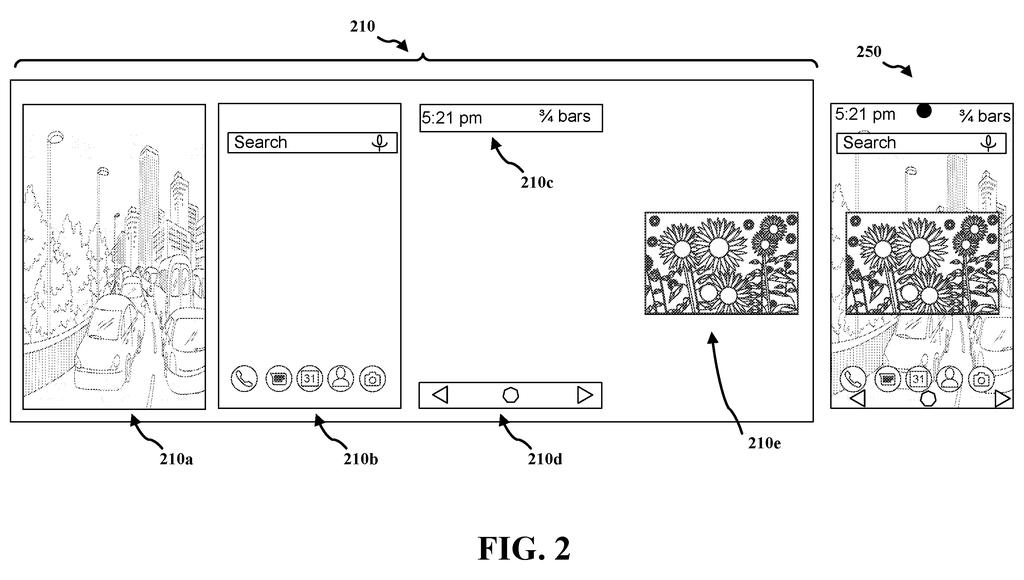
What Qualcomm's region-of-interest display trick actually does
Imagine your phone is playing a video where the camera slowly pans across a scene. Most of the work the display chip does every second is processing pixels that haven't changed much at all. That's a lot of effort for very little payoff.
Qualcomm's patent describes a system where the display processor identifies a region of interest inside each frame, essentially a bounding box around the part of the picture that's moving or that deserves the most attention, and then focuses its full processing effort there. The rest of the frame gets lighter treatment.
This happens after several steps: apps generate graphics, the chip layers those graphics together, stores the combined result, and only then does it decide which slice of the image to work hardest on. The result, in theory, is a display pipeline that does less unnecessary work on every single frame your screen shows.
… determine a region of interest (ROI) of the retrieved frame; and perform display processing on the determined ROI of the retrieved frame.
Translation: The chip identifies the specific part of the screen you are looking at and only spends power processing that area.
How the display processor finds and isolates the ROI
The patent describes a display processor that works through a pipeline with three main stages before anything appears on screen.
- Render: A set of apps generates graphics data, which gets turned into individual layers (think of layers like transparent sheets stacked on top of each other, each containing part of the image).
- Composite: The display processor merges all those layers into a single combined frame and saves it to a frame buffer (a reserved chunk of memory that holds the finished image before display).
- ROI-focused processing: When the processor pulls that composited frame back out of the buffer, it first identifies the region of interest (ROI), the part of the frame that warrants the most processing work, and then applies display processing only to that region.
The key idea is that not every pixel deserves equal computational attention on every frame. In a moving scene, for instance, most of the frame may be static background. By concentrating processing on the ROI, the chip avoids redundant work.
The patent doesn't specify exactly how the ROI is detected, which leaves room for the implementation to use motion vectors, content analysis, or other signals. That ambiguity is intentional in a patent claim, covering a broad range of possible detection methods.
Before retrieving the frame from the frame buffer, the display processor may composite the frame based on a plurality of layers and store the composited frame in the frame buffer.
Translation: The system combines different visual elements into a single image before it decides which part of the screen to focus on.
What this means for phone screens and power budgets
For everyday users, the most direct payoff is battery life. Display processing is one of the heavier loads a phone chip carries, and doing less of it per frame without visibly degrading the image is a meaningful efficiency win. Qualcomm supplies display processors inside chips used across a huge share of Android phones, so an optimization at this level could reach a wide audience.
The approach also fits neatly into a longer trend of moving toward selective processing, doing only the work that's perceptible to the human eye, rather than brute-forcing every pixel equally. Qualcomm's display and graphics teams file regularly in this space, and this patent joins a stream of interesting tech patents around adaptive chip-level display pipelines that are reshaping how mobile screens manage power.
That makes this Qualcomm's tenth filing we've tracked since July in the GPU rendering race, joining earlier work on fetching two pixels at once and keeping rotated graphics sharp.
The chip decides which part of the screen deserves the most careful work, then puts less effort into everything else. That bet saves battery when it is right, but when it is wrong, the sharpest rendering lands somewhere you are not looking and the part you are actually focused on gets shortchanged.
The patent says nothing about how often that guess has to be correct to avoid annoying users, which is the number that actually determines whether this feels like a feature or a flaw. Qualcomm is locking down a specific way of wiring this idea into the layered process every modern phone already uses to build its screen, and that is a real engineering contribution.
But the trade only reads as worth it if the detection is reliable enough to make the errors rare, and this document cannot tell us that.
Get our take in your Top Stories
Liked this breakdown? Add Patentlyze as a preferred source on Google, and our plain-English take shows up more often in your Top Stories the next time Qualcomm patent news breaks.
There are more where this came from
We read every patent application Big Tech publishes and send you the ones worth knowing. Plain English, free, every week.
The drawings
7 drawing sheets from US 2026/0253269 A1 · click any drawing to enlarge


Want this weekly breakdown for a company we don't cover? Patentlyze Pro →
Be the first to weigh in