
Qualcomm Files Patent to Switch Off Earbud Microphones in Quiet Rooms
Walk from a loud restaurant into a quiet library and your noise-canceling earbuds keep an in-ear microphone running that has almost nothing left to do. A new Qualcomm patent application would shut it off.
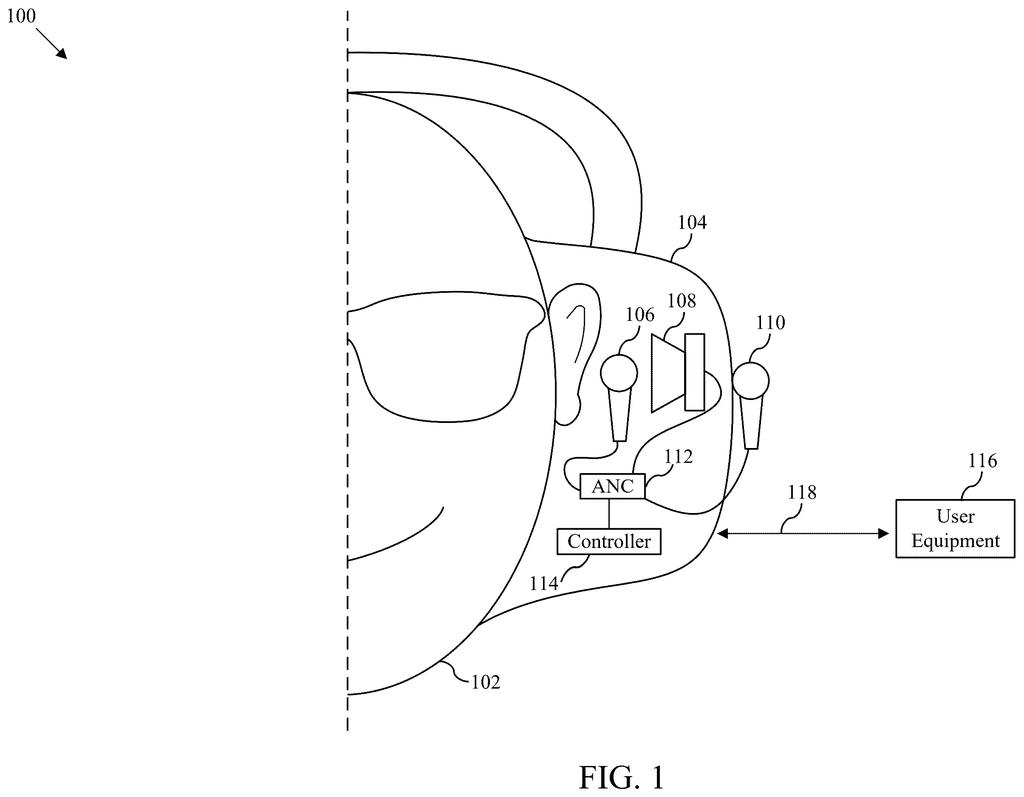
What Qualcomm's quiet-mode earbuds actually do
Every time you walk from a loud restaurant into a quiet library, your noise-canceling earbuds keep working just as hard as before. Each earbud has a microphone on the outside to hear the room and another inside your ear to catch whatever noise sneaks through. In a quiet room, that inner microphone has almost nothing to catch, yet it still drains the battery.
Qualcomm's patent application has the earbuds notice when the room goes quiet and switch the inner microphone off. The outside microphone stays on, so the earbuds can still cancel sound and notice when things get loud again. At that point the inner microphone comes back on.
The payoff, according to the filing, is longer battery life and less electrical noise in your ears when it's quiet. If one earbud switches modes, the other follows.
transition from the non-quiet mode to the quiet mode based on the detected first ambient sound information; and disable the feedback circuit based on the transition to the quiet mode.
Translation: The earbuds switch to quiet mode using background noise data and then turn off the inner microphone.
How the earbuds decide a room is quiet enough
Noise-canceling earbuds normally run two listening paths. The feed-forward circuit (the outside microphone path) hears noise before it reaches your ear. The feedback circuit (the in-ear microphone path) catches whatever leaks through anyway. Both usually stay on, even in a quiet room, where the in-ear path adds little and, the filing says, can add audible electrical noise.
The patent describes a quiet mode and a non-quiet mode. The outside microphone decides which one applies, and the claims cover cutting off the feedback path once the device enters quiet mode. The filing describes two ways to call a room quiet:
- A sound threshold: ambient noise below a set level in decibels, with 30 to 40 dB given as a library-like example.
- A sound profile match: the device stores patterns of quiet places and scores how closely the current sound matches one (a similarity index from 0 to 1, where a setting of 0.9 demands a near-identical match).
The outside microphone keeps listening in quiet mode. If the room gets loud, or stops matching any quiet profile, the inner path is switched back on. The device can also require a change to last a set time, such as 1 or 2 seconds, so a brief spike in noise does not make it flip back and forth.
Disabling the inner path can mean cutting its power supply. With a pair of earbuds, one entering quiet mode tells the other to follow.
Aspects relate to active noise cancelation (ANC)-enabled audio output device. The audio output device includes a feed-forward circuit that detects first ambient sound information, and a feedback circuit that detects in-ear sound information.
Translation: The invention covers noise-canceling headphones equipped with both outside and inside microphones.
What this means for noise-canceling earbud battery
The practical stake is how long your earbuds run between charges. The filing says keeping the in-ear microphone path on in quiet places burns power for almost no benefit. Turning it off could stretch playback time, and it could also remove a faint layer of electrical noise you might hear when the room is silent.
The patent is written broadly. It covers headphones, earphones, earbuds and even hearing aids, and the decision can be made by the device itself or by a paired phone or other control device. It describes a power-saving rule, not a new kind of sound, so any benefit would show up as battery life and a cleaner quiet.
This is the eighth Qualcomm filing we've tracked in our wearable audio patents coverage since July, following one on bone-conduction voice sensing and one on audio compression errors.
The problem here is real but small. Earbuds run on small batteries, and plenty of people wear them in quiet places like offices and libraries, where the in-ear microphone is working for almost no gain. Wasting power there is a fair complaint.
The fix is a good match for that size of problem. Listen with the outside microphone, and when the room is quiet, switch off the inner one. The filing adds sensible guardrails, like waiting a second or two before switching so a short burst of noise does not cause constant flipping.
The filing gives no figure for how much battery this saves, so the size of the win is unknown. Expect a modest, welcome gain rather than a dramatic one, and judge it by how many extra minutes of listening you get.
Get our take in your Top Stories
Liked this breakdown? Add Patentlyze as a preferred source on Google, and our plain-English take shows up more often in your Top Stories the next time Qualcomm patent news breaks.
There are more where this came from
We read every patent application Big Tech publishes and send you the ones worth knowing. Plain English, free, every week.
The drawings
12 drawing sheets from US 2026/0343134 A1 · click any drawing to enlarge


Show the other 4 sheets


Want this weekly breakdown for a company we don't cover? Patentlyze Pro →
Be the first to weigh in