
Qualcomm Files Patent for Steering Phones to the Cell Tower That Saves Battery
Your phone normally sticks with the strongest cell tower. This Qualcomm patent application argues that when a device is also tracking its own location, a slightly weaker tower can be the better pick for battery life.
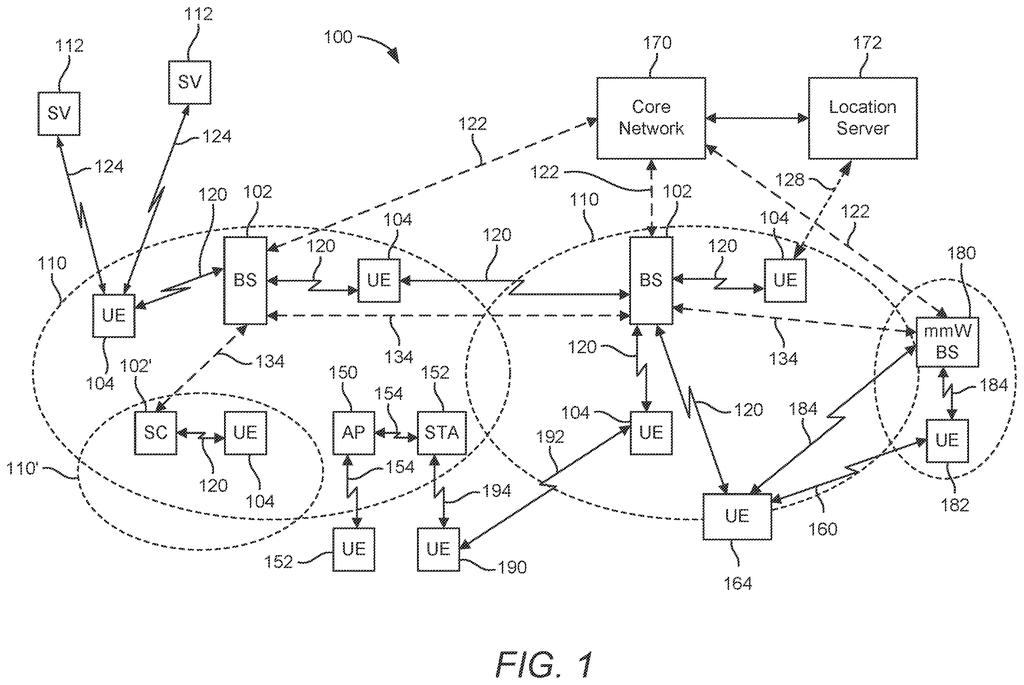
What Qualcomm's tower-picking idea actually does
A tracking tag sits in a suitcase for days, waking for a few thousandths of a second at a time to listen for messages, then dozing off again. Every extra wake-up costs a little battery, and phones and wearables work the same way.
Here is the catch. Cell towers send out special location signals on their own schedule, and that schedule doesn't always match the moments your device is already awake. When the two are out of step, the device wakes up more often or stays awake longer, and the battery drains faster.
Qualcomm's patent application describes nudging a device toward a tower whose schedule fits better, even if that tower isn't the one with the strongest signal. A location server can send a list of preferred towers, or the device can give those towers a small score bonus when it chooses.
… performs one or more actions to bias the UE towards camping on a target wireless node from the first subset of candidate wireless nodes.
Translation: The phone is nudged to connect to the most energy efficient cell tower.
How the phone scores towers by sleep schedule
The filing starts from a power problem. An idle device uses DRX (discontinuous reception, a schedule of short wake-ups with long sleeps in between) to save battery. When it also needs its location, it must wake for RS-P signals (reference signals for positioning, the radio pulses a tower sends so a device can work out where it is). If those pulses land far from its normal wake-ups, the device stays awake longer or switches on and off more often.
Claim 1 covers three steps:
- Work out the positioning signal setup for a device's location session.
- Sort candidate towers (or other devices) into two groups: those whose sleep schedules can handle those signals with a shorter wake time, fewer on-off switches, or both, and the rest.
- Take action to bias the device toward camping (staying parked on a tower while idle) on one from the better group.
The filing describes several ways to apply the nudge. The device can add a bonus to the signal strength it measures for favored towers (an RSRP offset), or subtract from the others. A tower or location server can instead send preferred and non-preferred lists, with priorities. One example rule requires a candidate's signal to clear a minimum and sit within a set number of decibels of the current tower.
The target can also be another device, such as an anchor phone in a device-to-device setup. The filing says this can happen before or during a session, and may be left to device makers rather than written into the 5G standard.
Why this matters for always-on location trackers
Battery life is the hard limit on small, always-on gadgets that report their location, such as asset trackers and wearables. The filing points to a low-power, high-accuracy positioning category and notes that misaligned wake-up schedules hurt it most. Choosing a tower with better timing could add up to real savings on a device that mostly sleeps.
For you, the effect would be invisible: a tag or watch that tracks location for longer between charges, with no new settings. The tradeoff is that your device may sit on a tower that isn't the strongest, which is why the filing limits the choice to towers with a signal close to the current one. Whether any real phone or tracker works this way is not something the patent says.
Qualcomm's 493rd filing in our Qualcomm coverage since May adds to a run that includes the camera-location cross-check and the battery-saving device scan.
Claim 1 is broad in who does the work. It says "a communications device," so it covers a phone, a tower, a location server, or a helper device making the call. Claims 3 through 8 then split the idea into narrower versions for each of those players.
The claim is also loose on detail. It names no signal thresholds, no number of towers, and no specific sleep schedule. It asks only for towers sorted by whether they can support the positioning signals with shorter wake time or fewer on-off switches, plus "one or more actions" that nudge the device toward one of them. If granted, that wording would reach many ways of weighing a tower's sleep schedule against the location signals a device needs.
The idea itself is sensible and modest: choose the tower that lets the device sleep more. Its value depends on whether the standard or device makers adopt it, and the filing admits the method may be left to individual implementations.
Get our take in your Top Stories
Liked this breakdown? Add Patentlyze as a preferred source on Google, and our plain-English take shows up more often in your Top Stories the next time Qualcomm patent news breaks.
There are more where this came from
We read every patent application Big Tech publishes and send you the ones worth knowing. Plain English, free, every week.
The drawings
19 drawing sheets from US 2026/0313589 A1 · click any drawing to enlarge


Want this weekly breakdown for a company we don't cover? Patentlyze Pro →
Be the first to weigh in