
Salesforce Patents an AI That Sorts Your Saved Messages by Priority
That 'saved for later' pile in your team chat app is about to get a lot less chaotic. Salesforce has filed a patent for an AI that decides which messages to surface first, and even flags new ones for you before you ask it to.
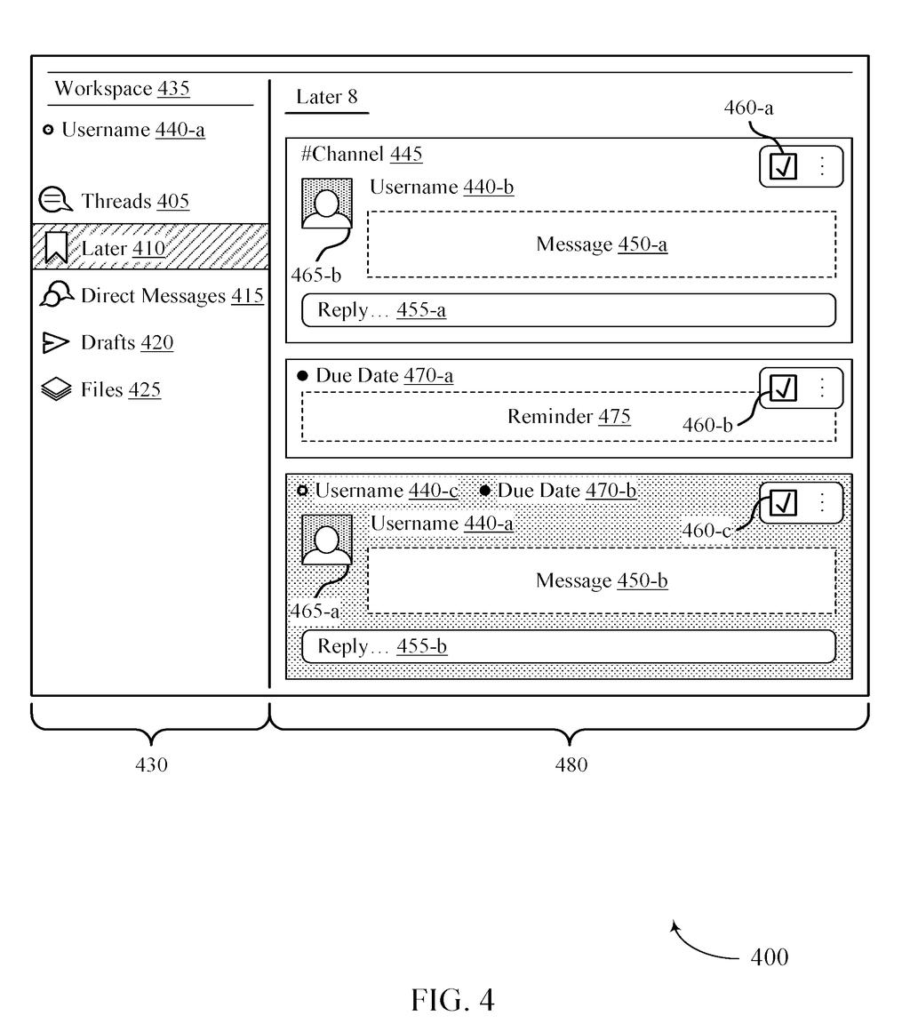
What Salesforce's message-ranking AI actually does for you
A manager gets tagged in fourteen threads before lunch and saves half of them to deal with later. By the end of the day, that saved list is its own chaos, and the urgent items are buried under the routine ones.
Salesforce wants to fix that. The patent describes an AI model that looks at every message sitting in a user's "Later" tab, drafts list, or similar view, then sorts them in order of what you probably need to see first. It learns from what you actually do, whether you reply quickly, ignore something, or delete it, and adjusts over time.
The system can also go a step further and automatically mark a message as "save for later" on your behalf, based on what the message is about, not just whether you clicked a button. The goal is to make your saved-messages pile behave less like a junk drawer and more like a to-do list that a capable assistant already sorted.
… inputting the plurality of sets of features into a machine learning model trained to rank the plurality of messages for the user view; determining, in response to the inputting the plurality of sets of features into the machine learning model, an output of the machine learning model indicating a ranking of the plurality of messages for the user view …
Translation: The system feeds data about your messages into an AI that calculates which ones you should see first.
How the model scores and orders messages in each tab
The patent describes two related capabilities inside a group-based communication platform (think a workplace chat tool like Slack, which Salesforce owns).
Automatic flagging: An ML model analyzes each incoming post and decides whether it should be silently added to your "save for later" queue. The decision is based on a set of features that includes at minimum a semantic embedding of the post (a numerical fingerprint of what the message means, not just what words it uses). This lets the system catch action-item messages even if they don't include obvious keywords.
Priority ranking: A second (or shared) model takes all the items sitting in a given user view, whether that's a Later tab, Drafts tab, Threads tab, or Files tab, and outputs a ranked order. The system then pushes that ordering to the user's device so the interface renders messages from most to least important.
- Features fed into the model can include message content, timing, sender identity, and past user behavior
- The model is updated continuously based on how users interact with ranked items
- The same framework applies across multiple tab types, not just saved messages
The claim covers the full pipeline: generating feature sets, running them through the model, getting a ranked output, and sending that ranking to the device for display.
The system may use a machine learning model to determine to automatically mark a post for later for a user, for example, based on a set of features including at least a semantic embedding of the post.
Translation: The software analyzes the meaning of your messages to decide which ones you might want to save for later.
What this means for workplace chat overload
For anyone who uses a workplace chat tool daily, the "saved for later" feature is often where important tasks go to be forgotten. An AI layer that automatically triages that pile, and even pre-populates it, could meaningfully reduce the mental overhead of staying on top of asynchronous work. The practical stakes are highest for people who operate across many channels at once: team leads, customer-facing roles, and project managers.
Salesforce controls Slack, which already has a "Later" feature, so the infrastructure for this kind of AI ranking already exists in a product used by millions. The patent sits in a broader stream of new Big Tech patents around AI-assisted workplace communication, where the competition to make chat apps feel more like intelligent assistants is intensifying across the industry.
Salesforce's third filing we've tracked since July in our AI assistants that remember you watchlist follows chatbot buttons tied to account history and why customers actually called.
The patent claim is written so broadly that it covers almost any system that reads incoming messages, scores them by importance using an AI model, and shows that ranked list on screen. That is a very wide net. If approved at that scope, Salesforce could use it to block rivals from building similar "sort my messages by urgency" features inside their own chat tools.
The one specific technical requirement is that the AI must first convert each message into a kind of numerical fingerprint that captures its meaning. That detail is real, but it is also a standard trick that nearly every modern AI text tool already uses, so government patent examiners may push back and demand the claim be narrowed. The true power play here is not any single clever invention. It is owning the whole process, start to finish, inside a messaging product.
There are more where this came from
We read every patent application Big Tech publishes and send you the ones worth knowing. Plain English, free, every week.
The drawings
12 drawing sheets from US 2026/0244950 A1 · click any drawing to enlarge


Want this weekly breakdown for a company we don't cover? Patentlyze Pro →
Be the first to weigh in