
Salesforce Patents a System That Automatically Unifies Duplicate Company Names in Databases
Every sales database has the same dirty secret: "IBM," "I.B.M.", and "IBM Corp" are three different companies to a computer. Salesforce just filed a patent for a system that fixes this automatically, without anyone having to build a master list first.
What Salesforce's name-matching system actually does for your CRM
Imagine you work in sales and your company's contact database lists the same client as "General Electric," "GE," "G.E. Corp," and "Gen. Electric", four entries, one real company, a reporting nightmare.
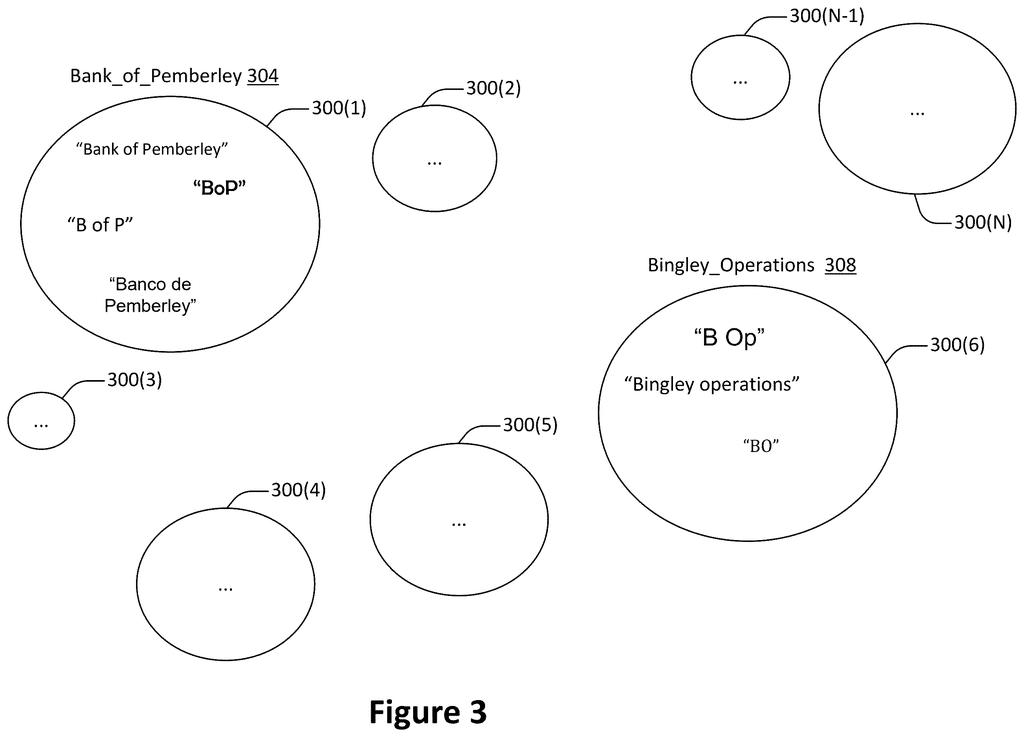
Salesforce's new patent describes a system that reads all those messy name variations, converts them into a kind of mathematical fingerprint, and then figures out on its own which names belong together. It assigns each real-world company a single canonical identifier, a clean, authoritative label, without anyone having to pre-build a reference list of correct names. The system learns the groups from scratch by measuring how similar the fingerprints are to each other.
The result: your CRM or database could stop treating "Microsoft Corp" and "MSFT" as strangers, automatically, every time new data comes in from a spreadsheet, a partner feed, or a form fill.
… transforming the preprocessed entity name variations into vector representations using a word embedding model; storing the vector representations in a vector database of the database system, wherein the vector database is optimized to store and index vector data for similarity-based retrieval; …
Translation: The system turns messy company names into mathematical points and saves them in a special database designed to find similar matches.
How the vector clustering engine groups messy name variants
The system runs in several stages, all sitting inside a database infrastructure.
First, raw name strings get preprocessed: punctuation is stripped, abbreviations are expanded (so "Corp" becomes "Corporation"), misspellings are corrected, and common filler words like "the" or "and" are dropped. This cleaning step standardizes the raw input before any math is applied.
Next, each cleaned name is fed into a word embedding model (a type of AI that converts words or phrases into lists of numbers, called vectors, where similar meanings produce similar numbers). Those vectors are stored in a vector database, a specialized database built to quickly find items whose number-lists are close to each other.
Then an unsupervised clustering algorithm (meaning: no human-supplied answer key) groups the vectors by similarity. Names whose vectors land close together in mathematical space get grouped as the same entity. Crucially, the system does not need a pre-existing master list of correct company names; it discovers the groupings entirely from the data it sees.
Finally, each discovered group gets a canonical identifier generated from the names in that group, and that identifier is written back to the database as the authoritative label for that real-world entity.
The entity name variations may be clustered into groups of similar entity name variations based on a similarity metric between the vector representations. A canonical identifier for each group of similar entity name variations may be stored in the database.
Translation: Variations of company names are automatically grouped together and assigned a single master ID to keep the database organized.
What this means for sales teams drowning in duplicate records
Duplicate and inconsistent entity names are one of the oldest headaches in enterprise software. Sales pipelines show inflated lead counts, finance reports double-count revenue, and merge-purge jobs eat engineering hours every quarter. A system that resolves this automatically, at the database layer, would remove a whole category of ongoing manual work for any company running Salesforce's CRM or data-cloud products.
The interesting design choice here is that the system requires no pre-built reference list. That means it could theoretically work on any domain, companies, people, products, addresses, without expensive upfront data preparation. For sales and operations teams, the practical payoff is cleaner data flowing into dashboards and AI models that depend on it, without a dedicated data-quality team babysitting the pipeline.
This is the 11th Salesforce filing we've tracked in our Enterprise AI coverage since June, adding to work like teaching AI to read images and cutting AI model size.
The system decides which company names belong together using math alone, with no hand-built list of correct names to check against. That works well when one company has dozens of messy spelling variants, but breaks when two different companies simply sound alike, because nothing in the design catches that mistake.
The label assigned to each group gets generated from the messy input itself, not from any verified source. If the cleaner versions of a name show up rarely in the data, the system can confidently file thousands of records under a subtly wrong name and raise no alarm.
The core idea is sound for large customers who feed it rich, abundant records. For anyone working with thin or inconsistent data, where accurate company names tend to matter most, the trade reads as costly.
There are more where this came from
We read every patent application Big Tech publishes and send you the ones worth knowing. Plain English, free, every week.
The drawings
6 drawing sheets from US 2026/0277932 A1 · click any drawing to enlarge


Want this weekly breakdown for a company we don't cover? Patentlyze Pro →