
Salesforce Patents a System That Keeps App Screens Current When Outside Data Sources Change
When an outside service updates its API and changes its version numbering, apps that rely on it can silently break. Salesforce is patenting a system that reads each component's version tag and automatically routes requests to the right place, without developers having to manually rewrite paths.
What Salesforce's API version-routing actually does
Imagine you build a dashboard in Salesforce that pulls live data from, say, a shipping carrier or a payment processor. That outside service occasionally updates its software and, in doing so, changes the address your requests need to go to. If your dashboard still points to the old address, the data stops showing up or you get errors.
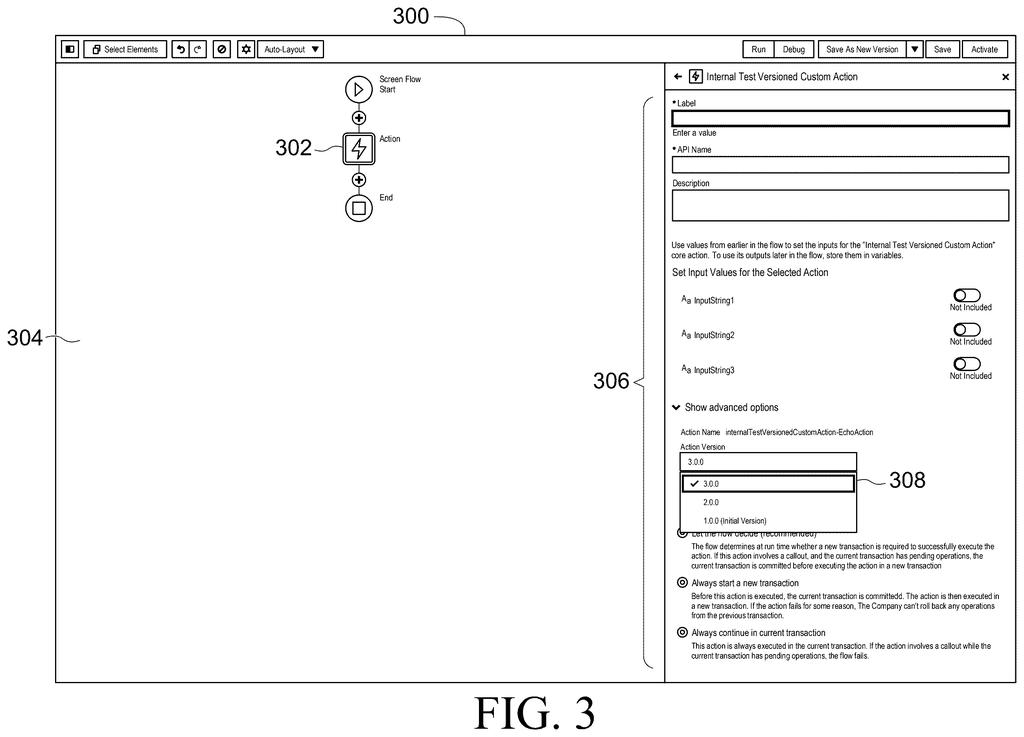
Salesforce's patent describes a system that handles this problem automatically. Each part of a screen can carry a label saying which version of the outside service it needs. When a user loads that screen, Salesforce reads the label, checks a configuration file for that outside service, and builds the correct web address on the spot before sending the request.
The payoff is that different parts of the same screen can talk to different versions of the same outside service at the same time, and the whole thing happens invisibly. You, as the person who built the app, don't have to go back and manually update every address every time an outside service ships a new release.
… dynamically constructing, at the database system at run-time, a versioned network path for interacting with a designated version of the API at the external system using the version designation and an integration file associated with the external system …
Translation: The system builds a specific web address on the fly to connect with the correct version of an outside service.
How Salesforce constructs a versioned path at run-time
The patent describes a multi-step process that runs inside Salesforce's database system every time a user loads a screen in a virtual application.
- Component scanning: When a GUI (screen) request arrives, the system inspects each visual component's underlying code for a reference to an external API (a programming interface that lets two software systems talk) and a version tag attached to that reference.
- Schema translation: The outside service may number its versions differently than Salesforce does internally (for example, the outside service might use v2024-01 while Salesforce's standard is v52.0). The system reads an integration file that maps one numbering style to the other.
- Run-time path construction: Using the version tag and the integration file, the system dynamically builds a versioned network path (a URL) pointing to exactly the right version of the outside API. This happens at run-time, meaning each page load, not at design time when a developer writes the code.
- Data retrieval and rendering: Salesforce sends the request to the external system using that path, gets the data back, and uses it to render the component on screen for the end user.
The key technical distinction is that the versioned path is constructed fresh each time rather than hard-coded, which means the app can tolerate version differences across multiple external services simultaneously.
… identifying, within code of a component of a graphical user interface (GUI) display, a reference to an external system and an associated version designation, which may utilize a custom versioning schema of the external system that is different from a standard versioning schema at the database system …
Translation: It checks the app code to see which external service and specific version number the screen component needs to use.
What this means for Salesforce app builders
For the companies that build apps on top of Salesforce and connect them to outside services, managing API versions is one of the more tedious and error-prone parts of the job. A single outside service can have three or four active versions in use across different parts of a product, and keeping track of which component talks to which version is mostly a manual chore today.
If Salesforce ships this as a platform feature, app builders could declare version requirements at the component level and let the platform handle the routing. That reduces the chance of a vendor update silently breaking a customer-facing screen, which is the kind of bug that tends to surface on a Friday afternoon.
This is unglamorous plumbing work, but it targets a real and recurring pain point for Salesforce's developer ecosystem. The versioning-conflict problem is genuinely annoying, and a platform-level fix is more reliable than asking every builder to manage it themselves. Don't expect a press release, but do expect this to appear in a future release of Salesforce's integration tooling.
There are more where this came from
We read every patent application Big Tech publishes and send you the ones worth knowing. Plain English, free, every week.
The drawings
6 drawing sheets from US 2026/0228234 A1 · click any drawing to enlarge


Want this weekly breakdown for a company we don't cover? Patentlyze Pro →
Be the first to weigh in