
New Patent Turns Cell Towers Into a Coordinated Radar Network
What if your phone carrier's towers could track objects in the physical world the same way radar does, without any dedicated radar hardware? That's the core idea in Samsung's latest 5G/6G patent.
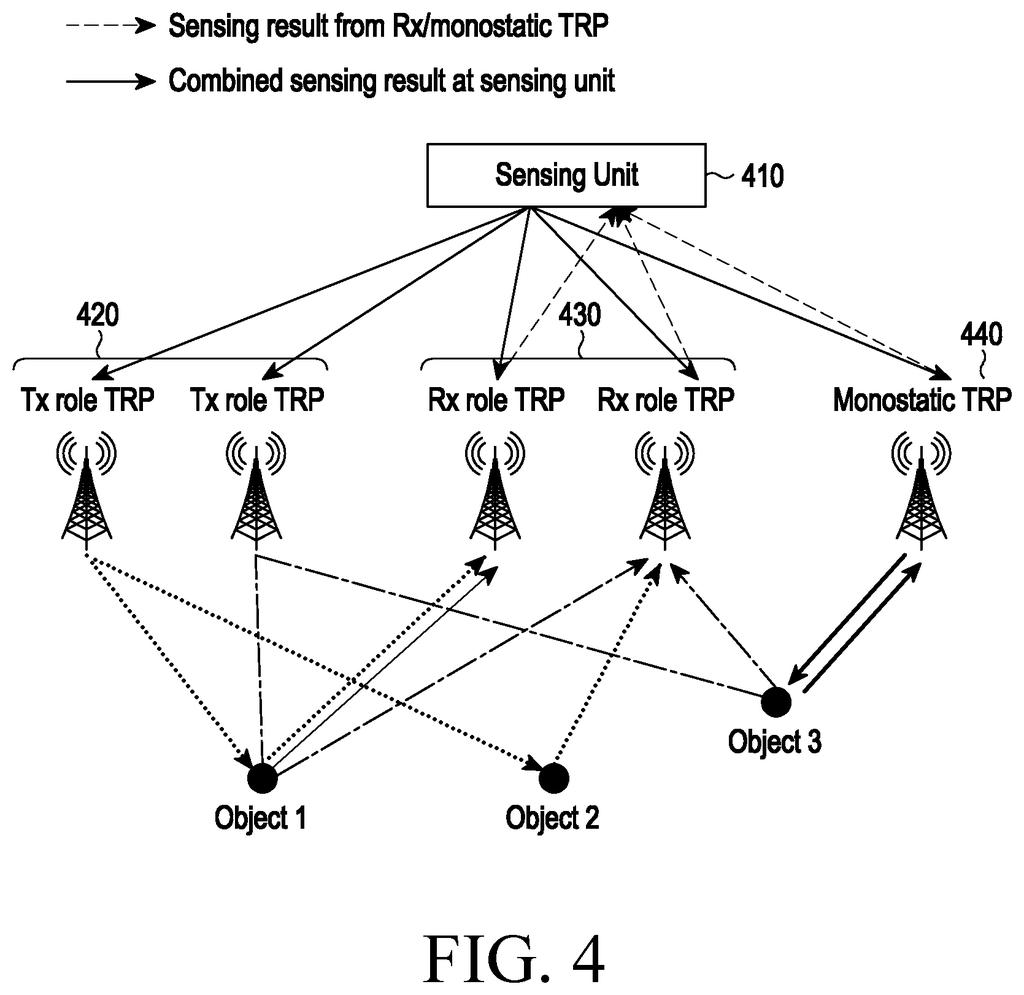
How Samsung's cell-tower radar system actually works
Imagine a neighborhood with several cell towers, and instead of just carrying your phone calls and data, those towers also act like a radar system, bouncing invisible radio signals off cars, people, or drones to track their location and movement.
That's the concept here. Samsung is patenting a way for a central controller to assign each tower a specific job: one tower sends the signal, another receives the echo, and some towers do both at once. The controller then tells each tower exactly which radio frequencies and time slots to use, so they don't interfere with each other.
This kind of built-in sensing is a major goal for 6G networks, where the same infrastructure that delivers your data could also help with things like traffic monitoring, weather sensing, or detecting obstacles for self-driving vehicles, all without separate hardware.
identifying a transmission role transmission and reception point (TRP) and a reception role TRP for a bistatic sensing operation, and a monostatic TRP for a monostatic sensing operation; …
Translation: The system assigns different cell towers to either transmit signals, catch the echoes, or do both at once.
How the sensing manager assigns roles across towers
The patent describes a sensing management entity (think of it as a traffic coordinator for radio signals) that sits inside a 5G or 6G network and organizes how base stations, called Transmission and Reception Points (TRPs), cooperate to sense the physical environment.
The coordinator identifies two types of sensing arrangements:
- Bistatic sensing: one tower sends a radio signal and a different tower picks up the reflection (like a traditional radar split across two sites).
- Monostatic sensing: a single tower both sends the signal and listens for its own echo (classic single-unit radar).
The combination of multiple towers doing this simultaneously is called multistatic sensing (many nodes working as one distributed radar). The management entity sends each participating tower a configuration packet that specifies its role (sender, receiver, or both) and its assigned radio resources (which frequencies and time slots to use), so all the towers stay synchronized.
The patent covers the signaling method itself: how the central coordinator identifies which towers are available, what role each plays, and how resource allocation information is formatted and delivered.
… transmitting sensing configuration information for configuration of a multistatic sensing operation to at least one of the transmission role TRP, the reception role TRP, and the monostatic TRP.
Translation: It sends out operational instructions telling each designated tower what job to perform in the radar network.
What tower-based radar means for 6G and beyond
Network-based sensing is one of the defining features being designed into 6G standards, and this patent positions Samsung in an area where carriers and regulators are actively looking for solutions. If towers can sense their environment as a side effect of normal operation, the same infrastructure could support autonomous vehicles, emergency response, smart city applications, and precision weather data without deploying separate sensor networks.
For you as a consumer, the near-term impact is indirect: this is infrastructure-layer engineering. But it signals that Samsung is building the coordination logic needed to make sensing a native part of next-generation networks, which could shape how 6G is standardized globally, especially given Samsung's role as both a chipmaker and a network equipment supplier.
This is a standards-positioning patent, not a consumer product reveal. Samsung is planting a flag in the coordination layer of 6G sensing before the standards bodies finalize the spec. That's how network equipment companies compete, and it matters even if no end-user will ever see this code directly.
There are more where this came from
We read every patent application Big Tech publishes and send you the ones worth knowing. Plain English, free, every week.
The drawings
36 drawing sheets from US 2026/0227510 A1 · click any drawing to enlarge


Want this weekly breakdown for a company we don't cover? Patentlyze Pro →
Be the first to weigh in