
Samsung Patents a Technique That Lets Phones Share 5G Signal Data More Quickly
What if your phone and a cell tower could share a single AI model, each running half of it, and together figure out the best way to use the wireless signal between them? That's the core idea behind this Samsung patent, which describes a training system that splits the work across both devices without sending raw data back and forth.
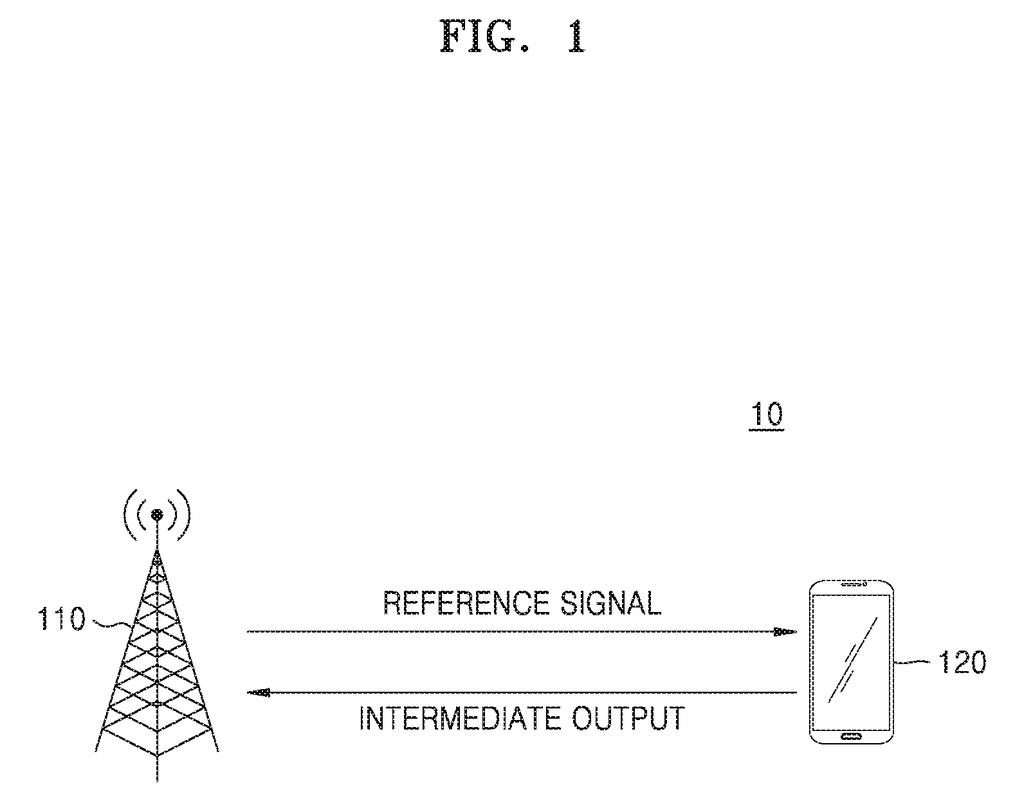
How Samsung's split-AI idea changes your phone's 5G connection
Every time your phone connects to a cell tower, it has to send a quick report: "here's what the signal looks like from my end." That report helps the tower decide how to aim its signal at you more precisely. The more accurate the report, the better your connection speeds. But sending detailed signal data is expensive in terms of airtime, so phones compress it first.
Samsung's patent describes a way to train an AI system that handles this compression and decompression job while it's split across two devices: part of the AI runs on your phone, and part runs on the tower. The two sides pass small pieces of their work to each other and use the results to improve themselves, almost like two people editing the same document from opposite ends.
The clever part is that neither side ever hands over its full AI model or its raw signal data. They only exchange intermediate outputs (partial results) and correction signals called gradients. That keeps sensitive model details private while still letting both sides get better at the job together.
… obtaining a decompressed channel estimation result by inputting the second intermediate output to a third model corresponding to an output layer of a second model comprising a second neural network for data decompression; …
Translation: The phone decodes the data it receives back using a specialized neural network.
How the phone and tower trade model pieces during training
The patent describes a training protocol for a type of AI called an autoencoder (a model that compresses data and then reconstructs it). In 5G networks, autoencoders can compress the channel state information, or CSI (a snapshot of how the wireless signal looks at a given moment), that phones send to base stations so the towers can aim their antennas more accurately.
The challenge is that the encoder (the compression side) typically runs on the phone, and the decoder (the reconstruction side) runs on the tower. Training them together normally requires sharing raw data or full model copies, which raises privacy and bandwidth concerns.
Samsung's approach, which it calls "modified split learning," solves this by dividing the AI update process into two tightly coordinated loops:
- The phone compresses the channel snapshot and sends only a first intermediate output (a compact, partial result) to the tower.
- The tower's decoder processes that partial result, but stops just before the final output layer, and sends a second intermediate output back to the phone.
- The phone's small output layer finishes the reconstruction, measures the error, and sends a gradient value (a correction signal telling the model which direction to adjust) back to the tower.
- The tower generates its own separate gradient and returns it to the phone, which uses it to update the compression model.
By splitting the decoder across both devices and exchanging only these compact signals, the system trains both sides simultaneously without either one exposing its full model internals.
… receiving a first gradient value from the electronic device and updating weight parameters of the partial model; and generating a second gradient value different from the first gradient value and transmitting the second gradient value to the electronic device.
Translation: The system adjusts its internal settings based on performance feedback to improve future data sharing.
What this means for 5G speeds in crowded areas
In 5G and upcoming 6G networks, the accuracy of the signal-quality report your phone sends is one of the biggest factors in whether you get fast, steady speeds or choppy ones. If the AI handling that compression is poorly trained or can't adapt to your specific environment, the tower aims its antennas based on bad information and your throughput drops.
This approach matters most in dense urban areas, stadiums, or office buildings where many people are competing for the same tower's attention. A well-trained, continuously updated compression model means the tower can adapt more precisely to each user. For you, that could translate to fewer stalled video calls and faster downloads in exactly the places where networks tend to struggle most. Samsung has been filing around AI-assisted wireless feedback since at least 2024, suggesting this is part of a broader infrastructure AI push.
Samsung's 84th filing we've tracked since May in our 5G and network work, it follows one fixing shared location signals and one cutting signals for low-power devices.
When your call drops in a crowded stadium or your video freezes at the airport, the tower is often working from a stale picture of your connection. This patent describes a way for your phone and the tower to continuously trade small pieces of information that sharpen that picture together, without either side exposing its full internal workings to the other.
The practical result is fewer moments where the network guesses wrong about how to reach you. Better guesses mean more stable calls, smoother video, and faster recovery when you move through a busy area.
Getting this from a research filing to something you would actually feel on your phone requires hardware support, software updates, and carrier rollout, none of which have a committed timeline. The problem it addresses is familiar; the fix is not imminent.
There are more where this came from
We read every patent application Big Tech publishes and send you the ones worth knowing. Plain English, free, every week.
The drawings
17 drawing sheets from US 2026/0303415 A1 · click any drawing to enlarge


Want this weekly breakdown for a company we don't cover? Patentlyze Pro →
Be the first to weigh in