
Samsung Patent: Audio That Automatically Adjusts to Your Custom Speaker Placement
Most surround-sound systems assume your speakers are in the 'right' spots. Samsung is patenting a way to automatically fix the audio mix when they're not.
What Samsung's speaker-layout audio fix actually does
Imagine you've set up a surround-sound system, but your couch is in a corner, one speaker is behind a bookshelf, and another is closer than it should be. Audio software is usually designed assuming your speakers sit in textbook positions, so when they don't, the sound can feel off-balance or muddy.
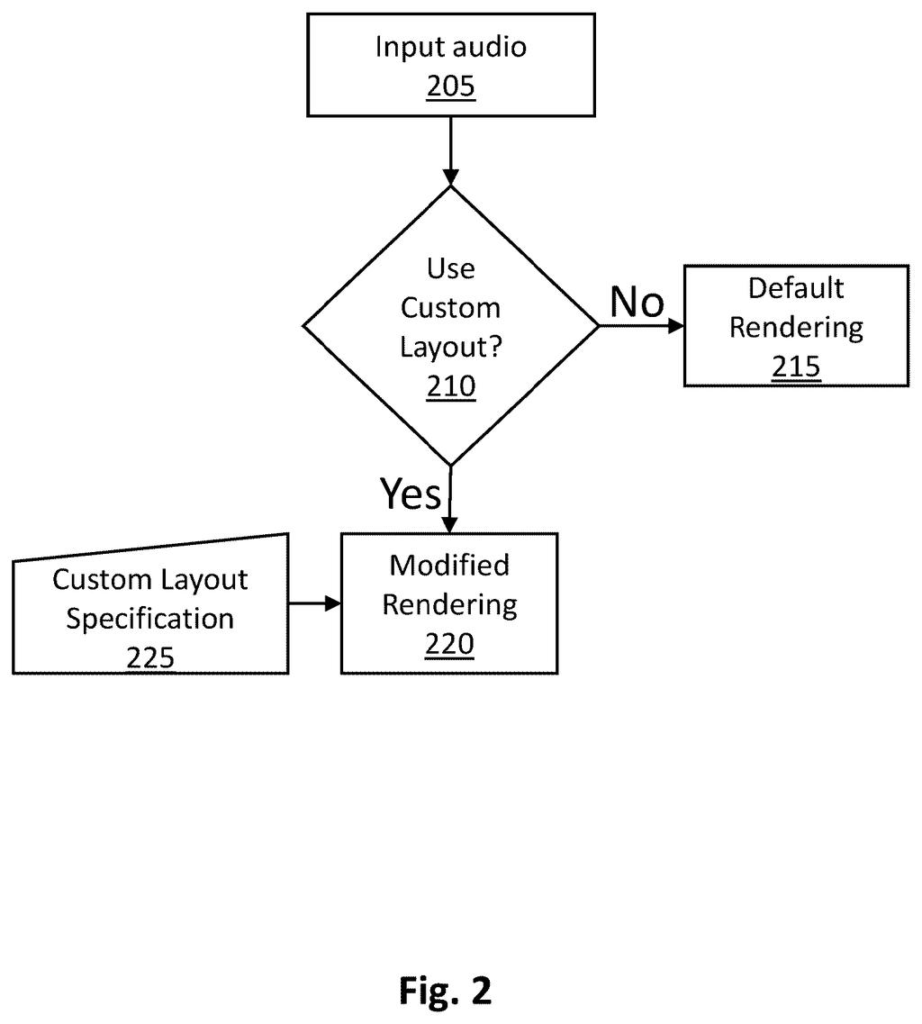
Samsung's patent describes a system that detects when your speaker arrangement differs from that textbook default. Instead of trying to force the standard audio mix through a non-standard setup, it picks a different mixing approach, called a renderer, that's actually tuned for your specific layout.
In short: the system reads the room, figures out that your speakers are in unusual spots, and swaps in a better audio recipe automatically. You shouldn't need to dig through settings menus or hire a professional calibration service to get decent sound.
… determining, based on the particular layout of the set of loudspeakers in the listening space, whether the particular layout comprises a custom layout that differs from a default layout associated with a default renderer …
Translation: The system checks if your speaker setup matches the standard factory arrangement.
How the system picks the right audio renderer
The patent describes a method for audio playback that has three core steps.
- Layout detection: The system looks at where your loudspeakers are physically placed in the room and compares that arrangement to a stored "default layout" (think: the standard 5.1 or 7.1 surround-sound diagram you'd see in a manual).
- Custom layout check: If your arrangement matches the default, the system uses the standard renderer (the software that mixes audio channels for your speakers). If it doesn't match, the system flags your setup as a "custom layout."
- Renderer selection: For custom layouts, the system selects a modified renderer, a different audio-mixing algorithm tuned to compensate for where your speakers actually sit.
The patent doesn't specify exactly how speaker positions are measured (possible approaches include a microphone sweep, app-based input, or automatic acoustic sensing), but the key claim is that the renderer choice is driven by the specific layout, not just a binary "standard or not" switch. This implies a range of possible modified renderers matched to different configurations.
… selecting, based on the particular layout of the set of loudspeakers, a modified renderer for generating output audio for playback on the set of loudspeakers; and rendering the input audio using the selected modified renderer …
Translation: It switches to a specialized audio processor tailored to your specific speaker placement.
What this means for home theater and soundbar buyers
Home audio setup is notoriously sensitive to room geometry, and most people never place speakers in the exact positions manufacturers assume. A system that automatically selects an audio renderer matched to your actual layout could meaningfully close the gap between what surround sound promises and what most living rooms deliver.
For Samsung, which sells soundbars, home theater systems, and TVs, this patent points toward tighter integration between hardware and audio processing software. If this technology ships in a product, it could reduce the need for manual calibration steps that many buyers skip entirely, and bring better out-of-the-box audio to a much wider audience.
This is a sensible, practical patent solving a real problem that anyone who has set up a surround-sound system has run into. It's not flashy technology, but automatic layout-aware audio rendering is genuinely useful and fills a gap that current consumer audio products handle poorly. Worth watching if you care about Samsung's home audio roadmap.
There are more where this came from
We read every patent application Big Tech publishes and send you the ones worth knowing. Plain English, free, every week.
The drawings
5 drawing sheets from US 2026/0230754 A1 · click any drawing to enlarge


Want this weekly breakdown for a company we don't cover? Patentlyze Pro →
Be the first to weigh in