
Samsung Files Patent to Catch the Sharpest Moment of a Jump on Your Phone
The best frame of a jump lasts a split second, and phones usually miss it in sharp detail. Samsung's patent application tries to predict that instant from the wind-up.
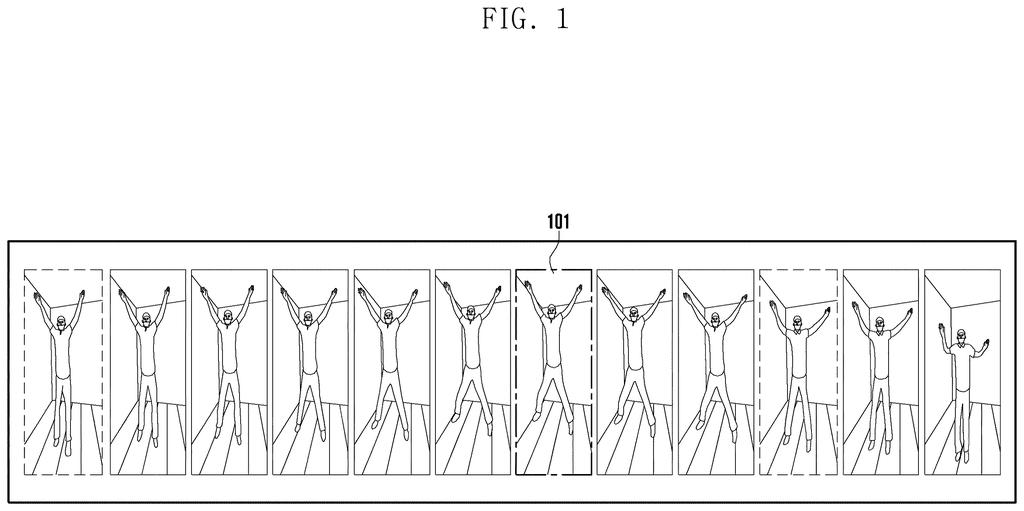
What Samsung's peak-moment camera idea does
A kid bends his knees at the end of a diving board, then launches into the air. Your phone is filming, but the best moment, the instant at the very top, lasts a fraction of a second. When you check the video later, that moment is either low quality or was never captured in sharp detail.
Here is why. Phones can film many frames per second at low quality, but sharp, high-quality frames come much more slowly. So the sharp shot usually lands just before or after the peak. Samsung's patent application describes a fix: watch the crouch before the jump, predict when the top will arrive, and time the sharp shots to land right on it.
If a sharp frame still misses by a hair, the phone can blend it with the low-quality frame from the exact peak. The same prediction can also adjust your zoom and trigger slow motion at the right moment.
… obtaining a LR peak action frame in the LR image stream based on the at least one pose; identifying a first HR frame from the HR image stream, the first HR frame being closest to the LR peak action frame; determining whether to adjust a zoom factor of the at least one camera based on the first HR frame …
Translation: The system finds the exact moment of peak action in the low-res video and matches it to a high-res frame to check the zoom.
How the phone predicts the top of a jump
The system starts with two video streams from the same camera. One is fast but low quality (the filing's example is 30 frames per second). The other is sharp but slow (examples of 3 or 8 frames per second, held back by power and memory limits). Fast action often falls between the sharp frames.
To fix the timing, a deep neural network (an AI model trained on images) finds key points on the body, like ankles and wrists, in the fast stream. The system watches for the recoil, meaning the crouch or wind-up before a jump or throw. It measures the speed and angle of that movement, then uses a projectile-motion equation to predict when the peak arrives. For a jump, the peak is when the ankles are highest. For a throw, it is when the wrist is farthest from the body.
That prediction shifts the timing of the slow, sharp stream so one of its frames lands as close to the peak as possible. Claim 1 then has the camera decide whether to change its zoom based on that sharp frame, and keep filming at the new setting. The filing also describes:
- Blending the closest sharp frame with the low-quality peak frame, using a motion map (a map of what moved between the two), so the background keeps its detail and the moving subject comes from the peak frame.
- Starting slow motion at the right moment, using the predicted peak time.
- Showing on-screen arrows that tell you which way to move the camera.
… generating a HR peak action frame by blending the identified HR frame and the LR peak action frame …
Translation: It creates the final sharp photo by combining the high-res details with the fast low-res action shot.
Why sharper action shots matter on your phone
If you film kids, pets or sports on your phone, you know the problem: the shot you wanted happened between two frames. A phone that predicts the peak could hand you a sharp still of that moment instead of a near miss. The same prediction could also start slow motion at the right time, and the arrows could warn you to tilt the camera before someone's head leaves the frame.
The approach also avoids a power problem. The filing says the sharp stream stays slow because of power and memory limits, so the trick is better timing instead of shooting more sharp frames. It describes switching between telephoto, wide and ultra-wide cameras as the action unfolds. The filing does not name a product, so treat this as an idea Samsung wanted on record.
Samsung's 156th filing we've tracked in our camera sensor work since May builds on earlier applications covering battery saving without added noise and better video without more power.
Claim 1 covers more than a jump. It describes a camera that records a fast, low-quality stream and a slow, sharp one, spots a pose, picks the low-quality frame at the peak of the action, and finds the sharp frame closest to it. The "subject" can be anyone or anything in the shot.
The last step narrows it. Claim 1 also requires the camera to decide whether to change its zoom based on that sharp frame, then keep filming at the new zoom. The blending trick in the abstract, which builds one sharp peak frame from two sources, appears only in later dependent claims (6 and 13).
On paper, that zoom step is what shapes the claim. A phone that times sharp shots to the peak but never adjusts zoom would not match claim 1's wording. It is a sensible camera idea, wrapped in a claim that is more specific than its title.
Get our take in your Top Stories
Liked this breakdown? Add Patentlyze as a preferred source on Google, and our plain-English take shows up more often in your Top Stories the next time Samsung patent news breaks.
There are more where this came from
We read every patent application Big Tech publishes and send you the ones worth knowing. Plain English, free, every week.
The drawings
23 drawing sheets from US 2026/0330833 A1 · click any drawing to enlarge


Show the other 15 sheets


Want this weekly breakdown for a company we don't cover? Patentlyze Pro →
Be the first to weigh in