
A New Samsung Patent Sends Your Search to a Second Screen While the Movie Plays
Spot a jacket in a movie and search for it, and everyone on the couch usually has to wait. Samsung's patent application moves that search onto your own device so the film never stops for the others.
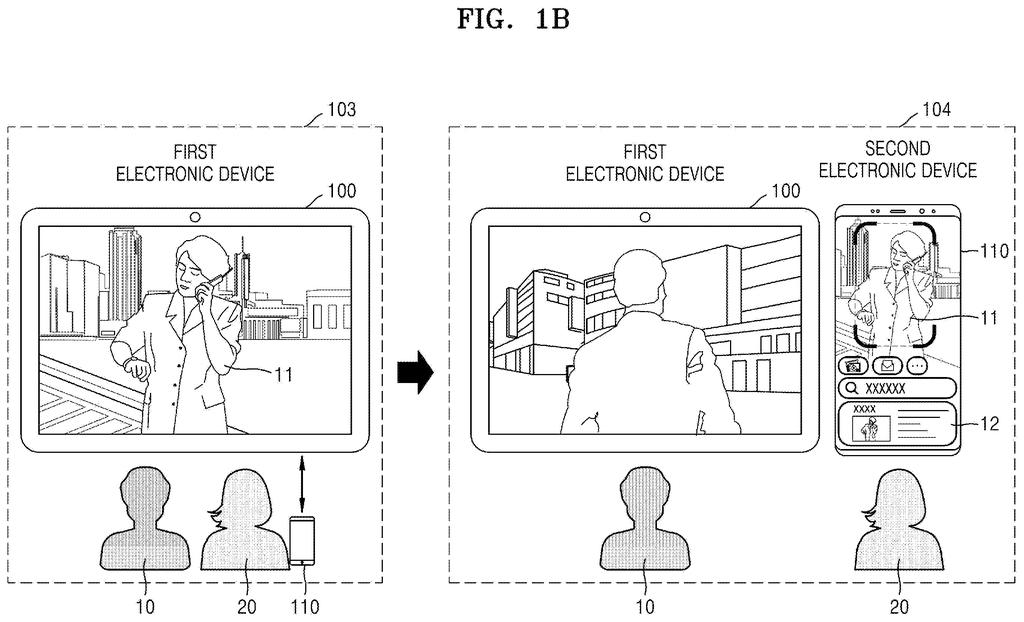
What Samsung's search-while-watching patent does
You're halfway through a movie on the family tablet when a stunning jacket flashes across the screen. You want the brand and a place to buy it. The person next to you just wants to find out what happens next.
Today, searching usually means pausing the film and switching the whole display to your search page, so everyone waits. Samsung's patent application describes a different route. When you start a search, the tablet asks your other device whether it will accept a screen cast. Once you say yes, the movie picks back up on the tablet while the search page runs out of sight and shows up on your device instead.
You can tap around the results there, and your taps travel back to the tablet, which does the work. Everyone else just keeps watching.
… creating, in response to receiving the search input, a virtual screen for displaying a target object and a search result; encoding the virtual screen to generate a video stream; and transmitting the video stream to a second electronic device …
Translation: Your phone builds a hidden video feed of your search and streams it to another screen.
How the tablet hides your search from the room
The patent covers what a first device (say, a tablet playing a movie) does when someone starts a search. Rather than switching its own display to the search page, it creates a virtual screen: an extra display that exists only in software and holds the search tool's interface, including the circled object and its results.
The claims lay out the core sequence:
- Receive a search input while an app page is on screen.
- Create the virtual screen in response.
- Encode it (compress it into a live video feed, the way streamed video is packaged).
- Transmit it to a second device, which decodes (unpacks) and plays it.
The description fills in the steps. A long press on the home button starts the search, and the tablet pauses the video. It then sends a broadcast message over the shared network (using UDP, a fast, lightweight way to send data) to find nearby devices, and opens a two-way link called a socket connection. A prompt reading "Accept screen cast?" appears on the second device. Only after it agrees does the tablet create the virtual screen and resume the movie.
Control runs both ways. Taps on the second device go back to the tablet, which runs them in the search app and returns a fresh video feed. The patent calls this inverse control.
… the search result display in a manner of searching while playing is realized at the first electronic device.
Translation: You can look things up without ever pausing the video you are watching.
Why shared-screen viewing is the target here
Anyone who has shared a screen knows the problem: one person's curiosity becomes everyone's pause. If this idea reached a real product, you could look up a jacket, a filming location or an actor on your own device while the people beside you keep watching. The filing's own example is a pair of viewers on a couch with one tablet, and it names Circle to Search, the draw-a-circle-to-look-it-up tool, as the search app involved.
Shopping sits at the center of the example. The second viewer wants the brand of an outfit and where to buy it, which turns a streaming session into a browsing session for whoever wants one. The setup is modest: one tablet and one other device on the same network, something many households already have.
Samsung's 1477th filing in our Samsung coverage since May follows the chatbot memory patent and the resume-scanning one.
Of everything this filing needs, almost nothing is new hardware. It describes a search tool, a screen casting feature and a shared Wi-Fi network, all software on devices people already own. A software update on a tablet and a phone is the shortest route to a working version.
The awkward part is the handshake. The movie still pauses while the tablet finds your device and waits for you to tap accept, so viewers still get a short interruption. Both devices also need a casting app installed and must sit on the same network.
The idea fits a living room neatly, and the description lists phones, tablets and laptops as candidates. Whether it ships depends on whether anyone decides couch-sharing is worth its own feature.
Get our take in your Top Stories
Liked this breakdown? Add Patentlyze as a preferred source on Google, and our plain-English take shows up more often in your Top Stories the next time Samsung patent news breaks.
There are more where this came from
We read every patent application Big Tech publishes and send you the ones worth knowing. Plain English, free, every week.
The drawings
10 drawing sheets from US 2026/0320120 A1 · click any drawing to enlarge


Show the other 2 sheets


Want this weekly breakdown for a company we don't cover? Patentlyze Pro →
Be the first to weigh in