
Samsung Files Patent for a Slimmer Phone Camera With Focus Parts Tucked Into Its Base
Samsung found a place to hide part of a phone camera's focusing machinery: down in the space beside the circuit board. The patent application says that could make the whole camera shorter.
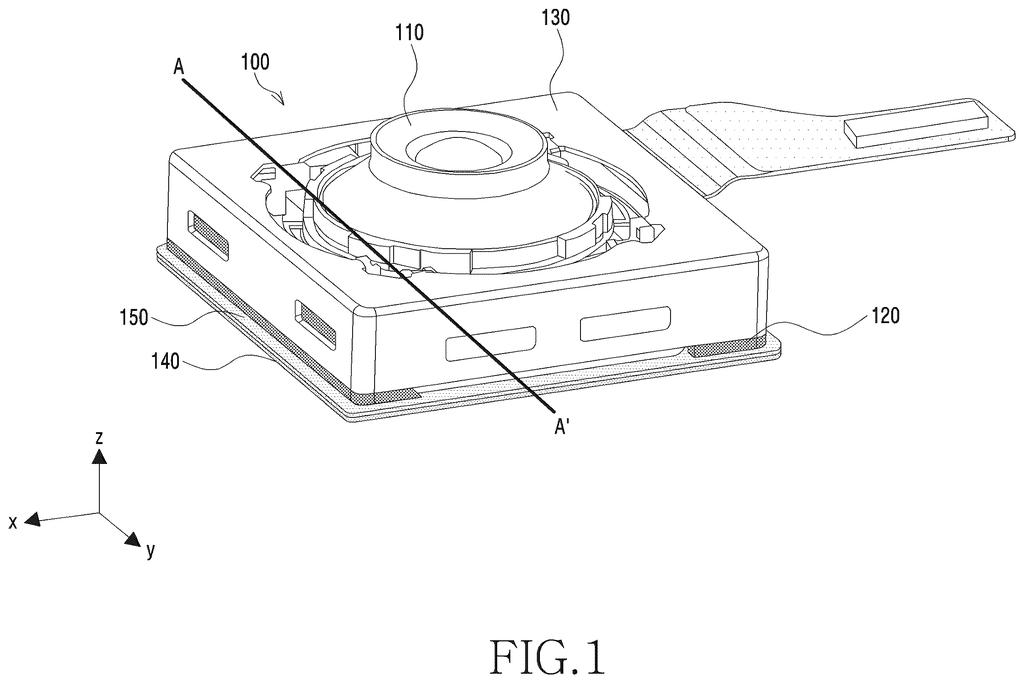
What Samsung's slimmer camera design actually does
Ever wondered why phone cameras stick out as a bump? A camera needs height to work. To focus, the lens has to slide toward and away from the sensor, and the parts that guide it take up room.
Samsung's patent application goes after that height. In its design, the lens sits in a small frame that rolls on tiny balls along a groove, a bit like a drawer on ball bearings. The housing around it is shaped to reach down beside the circuit board that holds the camera sensor. That makes a pocket where the bottom end of those grooves can dip in.
The lens still travels the same distance. It just does so from a lower starting point, so the whole camera can end up shorter. The filing says the saving could be about the thickness of that circuit board.
… a first drive unit disposed at least partially in the housing and configured to move the lens assembly in a first direction with respect to the housing; an image sensor configured to convert light received through the at least one lens into an electrical signal; and a printed circuit board in which the image sensor is at least partially disposed and/or supported thereby …
Translation: The internal motor shifts the lenses while the image sensor turns light into signals.
How the lens rides on tiny balls in a groove
The camera focuses by moving the lens assembly (the stack of lenses) toward or away from the image sensor (the chip that turns light into an electrical signal). A carrier, a frame holding the lens, does the moving. Small spheres roll in a groove between the carrier and the surrounding housing, and in the description a magnet and coil push the carrier up and down.
The twist is in the housing. One part of it sits level with the printed circuit board (the board that holds the sensor and its wiring), forming a recess that holds the lower end of the groove. The board is also about as wide as the housing. With the groove sunk lower, the lens keeps its full travel but the whole range sits closer to the base, so the module gets shorter.
The filing describes a few ways to build this:
- A protrusion on the housing passes through an opening in the circuit board, and sometimes a second opening in the base plate underneath.
- Or the housing has a slot that grips the edge of the circuit board, holding it in place.
- Grooves can be V-shaped on one side and U-shaped on the other, with the magnet between them.
Optional extras include image stabilization (shifting the lens sideways to cancel hand shake), using more carriers and spheres.
… at least one first sphere arranged to allow the first carrier to move in the first direction with respect to the housing …
Translation: Small balls inside help the lens holder glide smoothly back and forth.
Why a thinner camera module matters for your phone
Your phone is a tight squeeze, and the camera is one of its thickest parts. A camera module that sits lower can mean a flatter back or more room inside for other parts. The filing says the height saving could equal the thickness of the circuit board, and it says the lens keeps its full focusing range, so focusing works the same.
The filing lists smartphones, but it also names tablets, laptops, watches and other devices with cameras, since it covers any electronic device with this kind of camera module. It is a patent application, not a product, so nothing here says when or whether a Samsung device would use it.
Samsung's 147th filing we've tracked in our camera sensor work since May builds on ideas like the motion blur light-counting patent and the nanostructure lens application.
You will never see this idea at work. If it ships, what you might notice is a camera bump that sticks out a little less. Nothing in the filing changes how photos look, because the focusing travel stays the same.
The saving the filing points to is about one circuit board's thickness. That is a small amount, and phone makers fight over small amounts, because every fraction of a millimeter in the camera is space the rest of the phone can use. The filing gives no measurements, so the real gain is unknown.
Verdict: routine mechanical engineering with a clear, modest payoff for anyone who cares how thin their phone feels. Everyday photo-takers get no new feature from it.
Get our take in your Top Stories
Liked this breakdown? Add Patentlyze as a preferred source on Google, and our plain-English take shows up more often in your Top Stories the next time Samsung patent news breaks.
There are more where this came from
We read every patent application Big Tech publishes and send you the ones worth knowing. Plain English, free, every week.
The drawings
14 drawing sheets from US 2026/0313215 A1 · click any drawing to enlarge


Want this weekly breakdown for a company we don't cover? Patentlyze Pro →
Be the first to weigh in