
Samsung Patents a Way to Keep Colors Consistent Across Every Camera on Your Phone
Every lens on a multi-camera phone sees color a little differently, and that mismatch ruins photos. Samsung is filing a patent for a system that gives each camera a unique color fingerprint so an AI can correct for those differences automatically.
Why your phone's cameras disagree on color, and what Samsung is doing about it
Ever noticed that a photo taken with your phone's wide lens looks slightly warmer or cooler than one taken with the telephoto at the exact same moment? That's not a trick of the light, it's because each physical camera sensor has its own quirks, and your phone often can't tell them apart well enough to fix it.
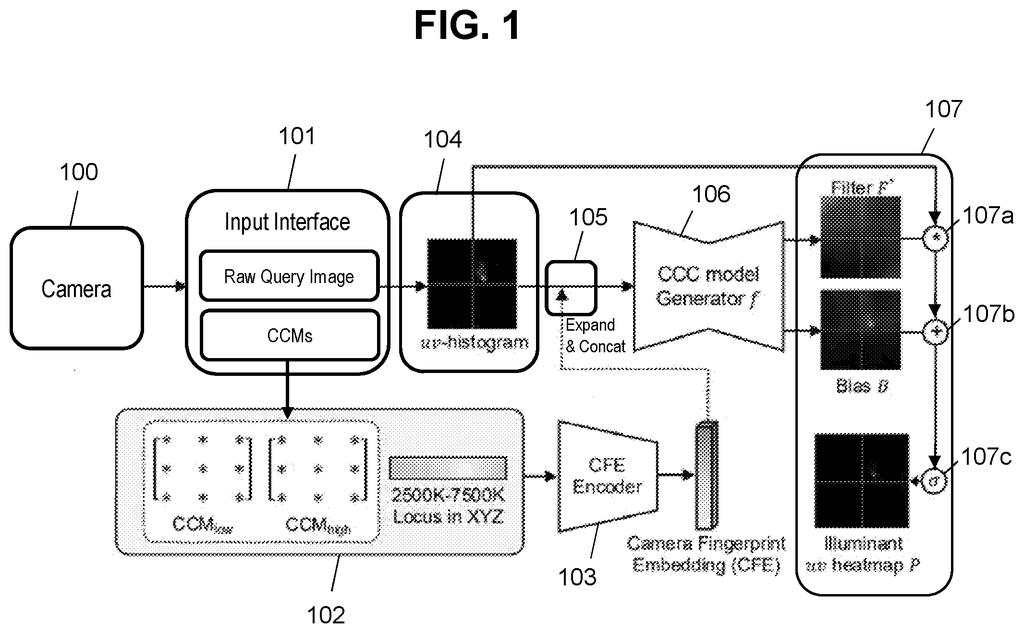
Samsung's patent describes a system that reads built-in calibration data from each camera (the kind of technical profile every sensor ships with) and turns it into a compact "fingerprint" that tells the phone's AI exactly how that particular lens interprets color. The AI then uses that fingerprint, alongside the actual pixels of the photo, to figure out what color the light really was, a step called illuminant estimation.
The goal is consistent, accurate color whether you're shooting with the ultrawide, the main camera, or the telephoto, without the photographer needing to do anything.
… generate a camera fingerprint embedding (CFE) by transforming predefined illuminant chromaticities from a device-independent color space into a raw RGB color space of the camera using interpolation between the CCMs, and encoding the transformed illuminant chromaticities into a CFE vector …
Translation: It creates a unique digital signature for the camera based on how it handles lighting.
How Samsung encodes a camera's personality into a fingerprint vector
Every camera sensor has a set of color correction matrices (CCMs) stored in its firmware. Think of these as cheat-sheets that describe how the sensor converts raw light into the RGB values you see in a photo. They come in pairs, one tuned for warm light (like candlelight) and one for cool light (like an overcast sky), and most real-world lighting falls somewhere between the two.
Samsung's system bridges those two matrices by interpolating (blending proportionally) between them to cover the full range of lighting conditions. It then takes a set of standard reference colors, predefined illuminant chromaticities from a color space not tied to any specific camera, and converts them into the unique color language of that particular sensor. The result is a compact numeric vector Samsung calls a Camera Fingerprint Embedding (CFE).
At the same time, the raw photo is converted into a histogram representation using log-chroma mapping (essentially a compact statistical summary of the color ratios in the image, with brightness removed so only color balance information remains). The CFE and the histogram are then joined together into a single input.
A neural network takes that combined input and estimates the color of the light source that was present when the photo was taken. Once the system knows the true light color, it can correct the image so whites look white and every other color falls into place, and critically, it can do this consistently across lenses that each started with different raw color interpretations.
… estimate an illuminant color in the raw RGB color space of the camera through an illuminant estimation neural network model based on the combined feature representation …
Translation: An artificial intelligence model uses that data to figure out the true lighting colors in the scene.
What this means for multi-camera phones and photo editing
Multi-camera phones are now the norm, and the gap between lenses has become one of the more frustrating inconsistencies in mobile photography. When you cut between the wide and telephoto in a video, or stitch a panorama from two lenses, mismatched color makes the seam obvious. A system that embeds each camera's individual color profile into the AI's decision-making rather than treating all cameras the same could make those transitions invisible.
For computational photography pipelines broadly, this approach has a useful property: the camera fingerprint is derived from calibration data that already exists on the device, so it doesn't require retraining a neural network from scratch for every new sensor. the pattern in Samsung's camera-AI filings suggests the company is pushing color processing further into the model layer rather than relying solely on hardware tuning.
Samsung's 144th filing we've tracked in our camera sensor push since May adds to work like selfie camera color fix and one tied to time of day.
The whole system trusts a set of pre-loaded calibration numbers baked into the camera at the factory. If those numbers drift as the sensor ages, or were measured sloppily to begin with, the AI gets bad inputs and may confidently apply a worse correction than doing nothing.
That cost is real, but the trade reads as reasonable. Samsung is using data every camera already carries rather than inventing a new calibration step, and the blending between warm-light and cool-light matrices does genuine work by smoothing over the messy middle of real-world lighting conditions.
The cleaner part of the design is that improving the AI model later would automatically benefit any device with accurate factory calibration, making it more maintainable over time. The risk is not that the system is fragile by accident; it is that the system inherited a fragility that was always there and now moves faster.
There are more where this came from
We read every patent application Big Tech publishes and send you the ones worth knowing. Plain English, free, every week.
The drawings
11 drawing sheets from US 2026/0301226 A1 · click any drawing to enlarge


Want this weekly breakdown for a company we don't cover? Patentlyze Pro →
Be the first to weigh in