
Samsung Files Patent to Let Your Phone Share Heavy 3D Graphics Work With Network Servers
Rendered 3D frames are made for one viewer and have to arrive within milliseconds, so they can't be stored and reused. Samsung's filing lays out how your phone and a network server agree to split that drawing work.
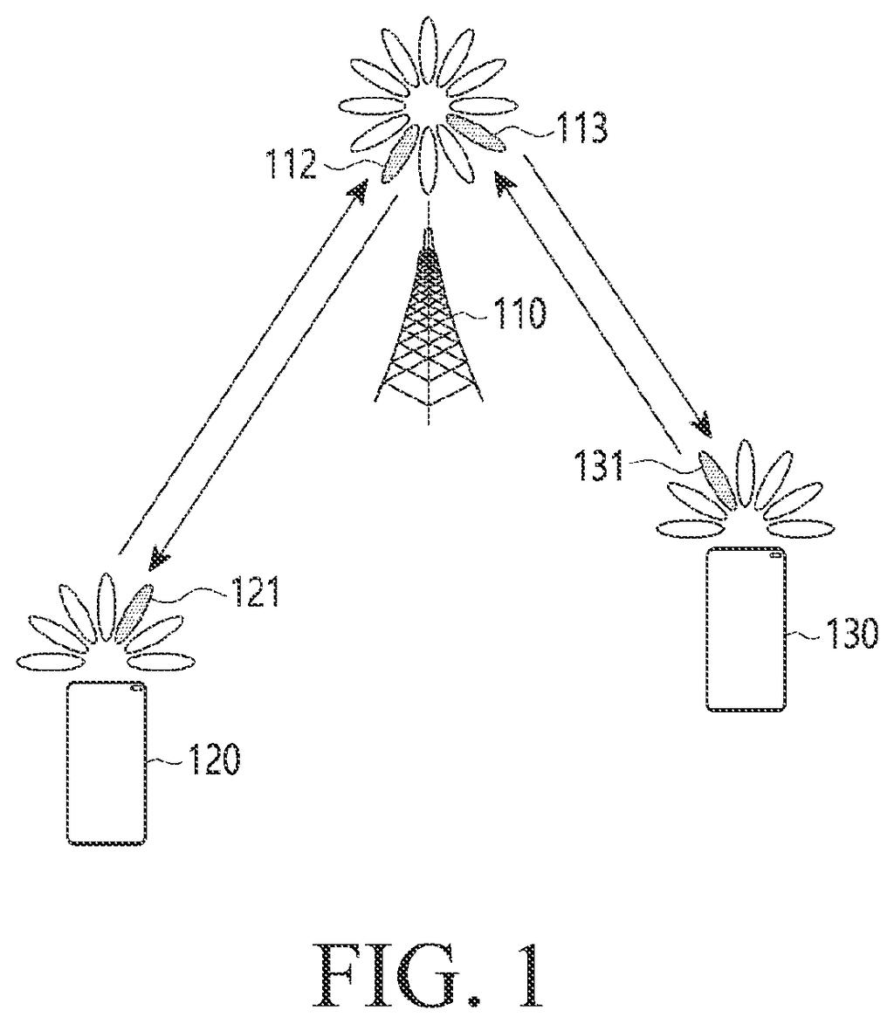
What Samsung's split-rendering handshake does
You're streaming a 3D scene on your phone, and the battery drops low enough that the picture starts to stutter. Drawing every frame yourself is hard work, and a server somewhere on the network could do some of it for you.
Samsung's new patent application describes the behind-the-scenes handshake that makes that possible. Before anything plays, the app's provider sets the rules for how much drawing a server may do. Your phone then asks the network where to start and gets back a single menu of options, covering both ordinary video streaming and live, call-style streaming.
Pick an option and the server sends back frames drawn just for you, based on where your device is pointed. If your phone later needs a lighter load, the filing describes swapping to another stream without a visible jump.
receiving, from an application provider (AP) device, an adaptive split rendering (ASR) policy applied by the AP device; transmitting a service access information (SAI) request for service access information (SAI) to an application function (AF) device based on the above ASR policy; …
Translation: The phone gets rendering rules from the app provider and asks a network server for setup details based on those rules.
How your phone and the server agree on a deal
The filing is about signaling, meaning the messages a phone (called user equipment, or UE) exchanges with the network before a stream starts. It begins when an application provider (the company behind the content) sends an adaptive split rendering policy. The policy describes the service and content on offer and lists the allowed split rendered media profiles, each with details such as how heavy the rendering load is, the codec (the video compression format), and the resolution.
From there, the phone follows three steps:
- It asks a network application function for service access information.
- It gets back a web address for a media play entry.
- It asks a signaling server at that address, which replies with an adaptive split rendering media play entry.
That last reply bundles two existing formats: a playlist file (an MPD, used for on-demand style streaming) and a session description (an SDP, the setup sheet used by live web calls through WebRTC). The SDP is extended to list startup delay, maximum presentation delay, and motion-to-photon delay (the time from sending your pose to seeing the result on screen). It also lists the projection type, field of view, and which rendering steps your device must handle.
The phone then either fetches video segments the usual way, or answers the SDP, sends its pose or field of view to a rendering server, and receives live streaming back.
… receiving, from the ASRSS, an adaptive split rendering media play entry (ASRMPE) including a media presentation description (MPD) for web real-time communication (WebRTC) and a session description protocol (SDP) for 5-th generation media streaming (5GMS) communication.
Translation: The device finally receives the streaming and connection data needed to share the rendering workload with the server.
Why shared 3D rendering needs a standard
Phones have limited battery and chip power, so letting a server draw part of the picture, and changing how much as conditions change, could keep a 3D stream playable when your device is struggling. The filing describes the phone choosing among options based on its own state, such as expecting to enter low power mode.
The patent office has approved this application, and once Samsung pays the final fee it should be issued as a granted patent. Much of the content extends existing 5G streaming and web call formats, so the groundwork mostly concerns carriers and app makers. You would never see it directly. You would only notice if a 3D stream holds up better when your battery dips.
Samsung's fourth application we've tracked since July in the GPU rendering race watchlist follows their predictive filter chip and their AI 3D lighting work with a new approach to image processing.
The problem here is real. A rendered frame is made for one viewer at one position, can't be reused for anyone else, and has to arrive within a few milliseconds to a few tens of milliseconds. Phones also run low on battery, so some of that drawing has to move off the device.
The fix is sized about right for the problem. Instead of inventing a new streaming system, the filing stitches two existing ones together and adds the missing labels, such as delay targets and which rendering steps your device must do. The ambition is modest, and the scope fits a problem that is mostly about getting machines to agree.
Because this is plumbing, you will never see it. If it works, the only sign is a 3D stream that holds up when your battery dips.
Get our take in your Top Stories
Liked this breakdown? Add Patentlyze as a preferred source on Google, and our plain-English take shows up more often in your Top Stories the next time Samsung patent news breaks.
There are more where this came from
We read every patent application Big Tech publishes and send you the ones worth knowing. Plain English, free, every week.
The drawings
8 drawing sheets from US 2026/0332657 A1 · click any drawing to enlarge


Want this weekly breakdown for a company we don't cover? Patentlyze Pro →
Be the first to weigh in