
Samsung Patents a Way to Skip Redundant Math in Its AI Chips
AI image recognition involves millions of tiny multiplications, many of which produce a result of zero and accomplish nothing. Samsung's new patent describes a chip that figures out which of those calculations can be safely skipped before they even start.
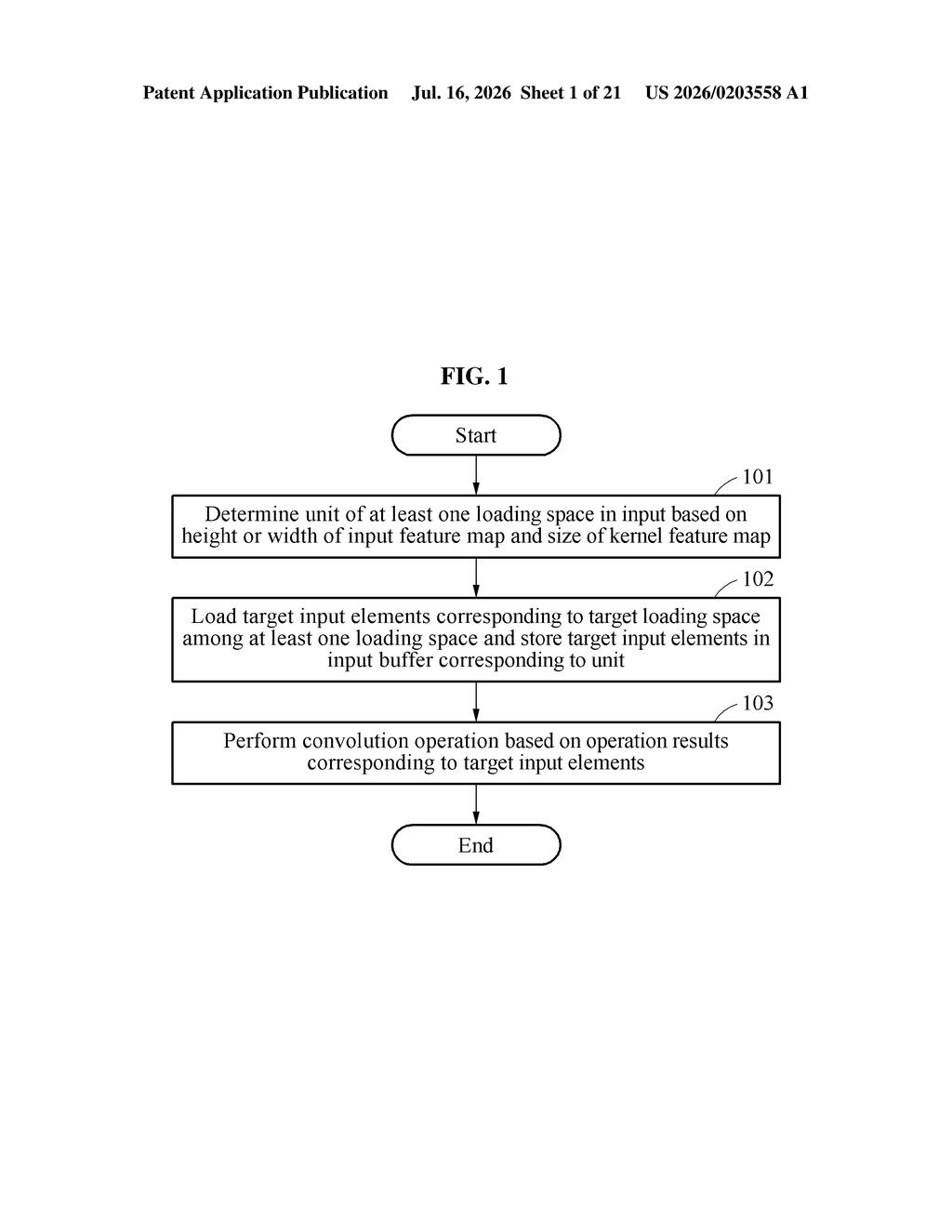
How Samsung's CNN shortcut actually saves processing power
Imagine a factory assembly line where half the workers are assigned to jobs that produce nothing useful. The smart move is to identify those idle steps in advance and reassign resources to the ones that actually matter. That's essentially what this patent describes for AI chips.
When an AI model processes an image, it runs a type of calculation called a convolution, basically sliding a small grid of numbers (called a kernel) across the image and multiplying values together. Many of those multiplications involve a zero, which always produces zero and wastes time and energy.
Samsung's idea is to give the chip advance information about which multiplications will be pointless, so it can skip them entirely and only do the ones that matter. For you, that could mean faster face recognition, lower battery drain, or cooler-running phones and cameras.
How the chip decides which calculations to skip
The patent describes a CNN (convolutional neural network) processing method that introduces a pre-screening step before the main calculation work begins.
Here's the basic flow:
- The chip receives kernel information, a kind of lookup guide that flags which parts of the convolution filter (the kernel) are designated as "skip targets."
- Before doing any math, the processor checks this guide to determine which individual multiply-accumulate operations (the core math of convolution) involve elements that can be ignored.
- It then skips those flagged operations entirely and only executes the remaining ones that actually influence the output.
The key insight is that not all values in an AI kernel are equally important. Weights that are zero, near-zero, or pruned during training (a process called network sparsity, where unimportant connections are cut) contribute nothing to the answer. By encoding that knowledge as "kernel information" and consulting it at runtime, the chip avoids wasting cycles on calculations with predetermined, useless results.
What this means for AI performance in Samsung devices
On-device AI, the kind that runs inside your phone's camera or voice assistant without sending data to a server, is constrained by battery life and chip heat. Every unnecessary calculation costs energy and time. A method that systematically cuts out provably useless operations directly addresses that bottleneck, not by making the chip faster in a raw sense, but by making it do less pointless work.
For Samsung, which makes both the Exynos chips inside some Galaxy phones and the DRAM and flash memory that supports AI inference in many other devices, this kind of efficiency patent is strategically relevant across its entire semiconductor business. The approach also fits neatly with the industry-wide push toward sparse neural networks, where models are deliberately designed to have lots of zero-valued weights.
This is a focused, incremental efficiency patent rather than a fundamental AI breakthrough. Sparse convolution and zero-skipping are well-established ideas in chip design, so the novelty here is in Samsung's specific mechanism for encoding and acting on that skip information at the processor level. It matters for Samsung's chip roadmap, but don't expect a headline product announcement tied to this alone.
There are more where this came from
We read every patent application Big Tech publishes and send you the ones worth knowing. Plain English, free, every week.
Want this weekly breakdown for a company we don't cover? Patentlyze Pro →
Be the first to weigh in