
Samsung Patents a Washing Machine That Learns Your Water Usage Habits
Samsung is filing patents on washing machines that don't just clean your clothes — they track how you use water over time and quietly adjust their behavior to use less of it.
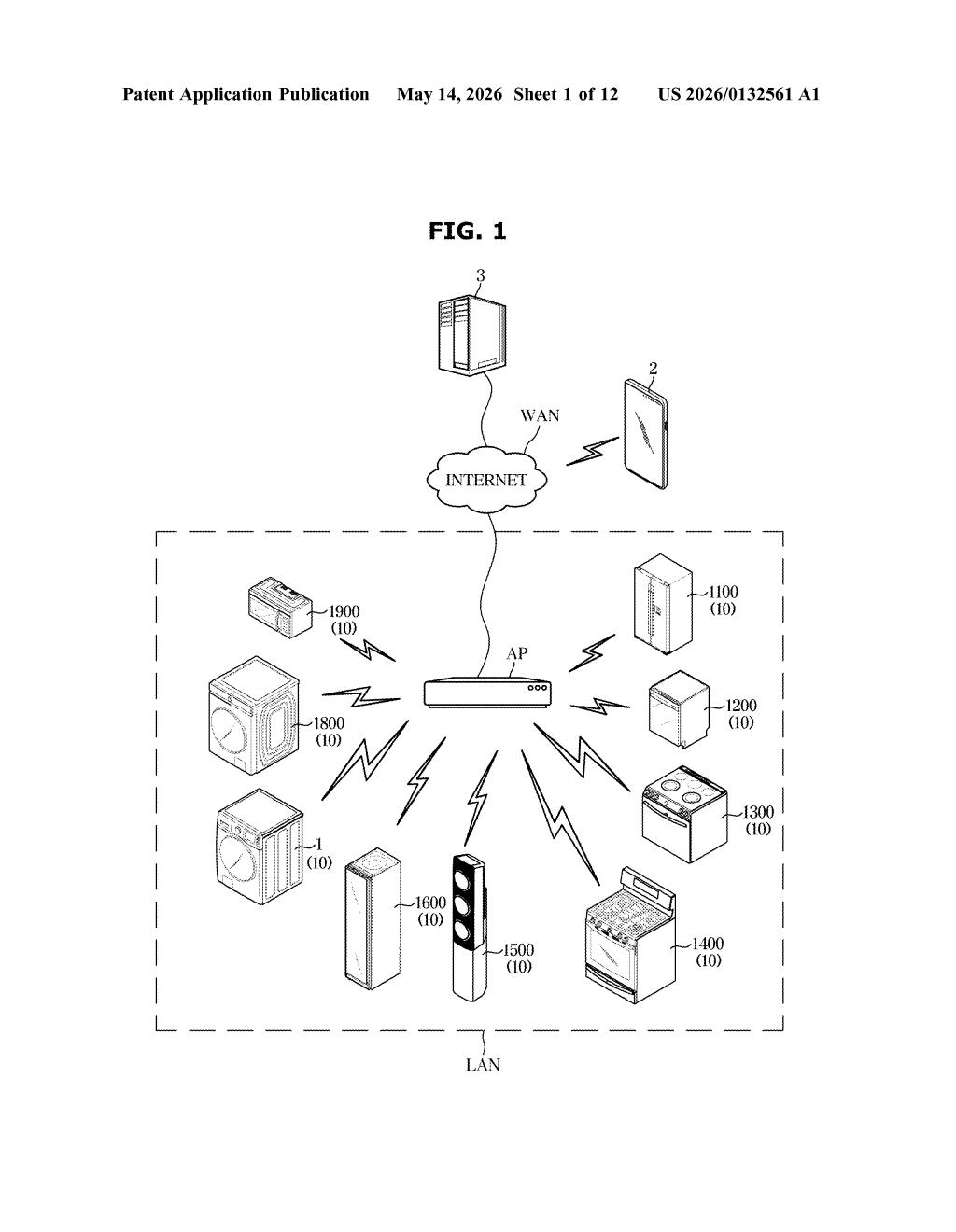
What Samsung's adaptive water-saving washer actually does
Imagine your washing machine notices that you always run full loads on weekends but smaller loads on weekday mornings. Over time, it learns those patterns and starts tailoring each cycle to use just enough water — no more.
That's the core idea in this Samsung patent. Your washer would store a personal water usage profile for you, pull in outside information (like local drought conditions or utility rate data) from a server, and combine it all to trigger a water usage reduction mode automatically.
It also talks to your phone — the patent mentions a "user terminal" — so the system can factor in whatever you tell it, or whatever context your phone can provide. The goal is smarter water consumption without you having to manually tweak any settings.
How the washer combines user data and server info to cut water use
The patent describes a washing machine with three key components working together: onboard memory that stores your personal water usage patterns over time, communication circuitry that connects to both a remote server and your smartphone, and a processor that combines all of that to decide when and how to activate a water-saving mode.
The water usage pattern information is the learned behavioral layer — the machine builds a model of how you typically run laundry. The usage environment information is the external layer — data pulled from a server that might include things like regional water scarcity alerts or time-of-use utility pricing signals.
When both streams align (say, it's a drought period and you tend to over-fill for small loads), the processor triggers the water usage reduction mode, which presumably adjusts fill levels, rinse cycles, or both.
- Memory layer: stores your historical usage patterns on-device
- Server layer: receives environmental or utility context remotely
- Terminal layer: communicates with your phone for additional input
- Processor: combines all three to execute the reduction mode
What this means for smart home water conservation
Water efficiency in appliances is increasingly a regulatory and consumer priority, especially in drought-prone regions like California, Australia, and parts of Europe. A washer that adapts to your behavior — rather than offering a static eco-mode you probably ignore — is a more realistic path to actual conservation.
For Samsung, this fits into a broader SmartThings ecosystem play: appliances that get smarter over time by connecting to cloud data and user devices. If this ships, it could become a selling point in markets where water costs are rising or where utility rebate programs reward smart appliance usage.
This is a sensible, incremental idea — not a technical leap, but a practical one. The interesting part isn't the washing machine hardware; it's the data architecture that combines personal behavioral history with real-time environmental signals. Whether Samsung can actually make that pipeline reliable and privacy-respecting is the real question.
There are more where this came from
We read every patent application Big Tech publishes and send you the ones worth knowing. Plain English, free, every week.
Want this weekly breakdown for a company we don't cover? Patentlyze Pro →