
Samsung Patents a Transparent Display That Charges Itself Using Rotating Solar Blinds
Samsung is patenting a screen that moonlights as a solar panel, using rotating slats that tilt toward the sun when the display doesn't need to show anything, then snap back into position when it does.
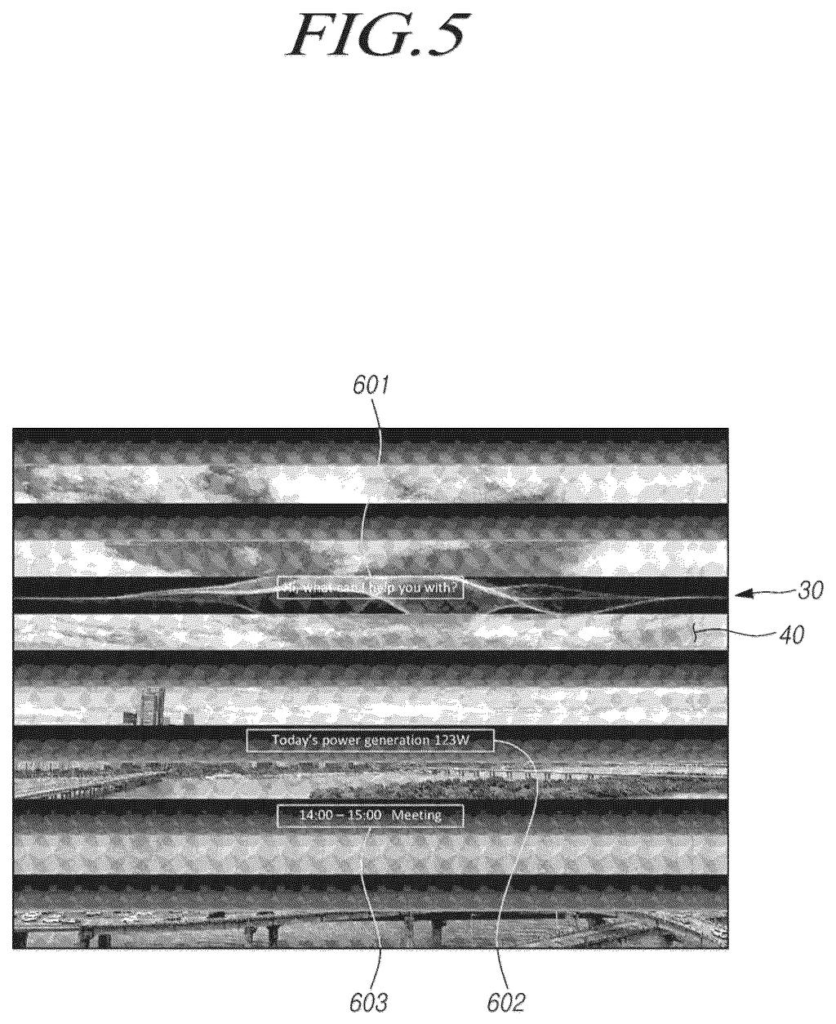
How Samsung's solar blind display actually works
Imagine a storefront window with a built-in screen. Most of the time that screen is idle, and all that sunlight hitting the glass is wasted. Samsung's new patent describes a way to capture that energy.
The idea is to mount tiny solar panels on the surfaces of rotating slats, like a venetian blind, placed in front of a see-through display. When the screen is in full show mode, the slats open flat so you can see through them. When the display is dimmed or off, the slats tilt to face the sun and start generating electricity.
The system is designed to know where it's installed and what time of day it is, so it can decide when sunlight is strong enough to prioritize charging versus when it should prioritize showing content. Think of it as a screen that manages its own energy budget.
How the slat angle and screen brightness coordinate
The patent describes a display assembly with three main layers working together: a blind device made of one or more rotatable slats, solar panels bonded to the surface of those slats, and a transparent display sitting behind the whole assembly.
A processor tracks two distinct charging windows:
- Main power generation time: the peak sunlight hours most relevant to the screen's installed location (a south-facing storefront gets different peak hours than a north-facing one).
- Sub power generation time: off-peak periods where some charging is still possible but content display takes priority.
During main charging windows, the slats rotate to the angle that maximizes solar exposure. The processor then automatically dims the transparent display to match how much light the tilted slats are blocking, keeping the viewing experience consistent rather than suddenly dark.
During sub charging windows or active content periods, slats flatten out, the display runs at full brightness, and any solar generation is opportunistic. The system essentially runs a continuous trade-off calculation between energy harvesting and display quality.
What this means for always-on public displays
Public-facing transparent displays, think retail windows, transit stations, and airport signage, run continuously and carry significant electricity costs. A screen that partially offsets its own power draw through integrated solar harvesting could make always-on transparent displays much more practical to deploy at scale. Even partial self-sufficiency changes the economics of where and how long these screens can run.
For Samsung's display business, which already sells large-format transparent OLED panels, this patent points toward a product category that could stand apart from conventional digital signage. Whether the solar contribution is large enough to matter in real-world conditions is the open question, but the engineering concept is credible and the market incentive is clear.
This is a genuinely interesting convergence of two technologies Samsung already sells separately: transparent OLED displays and solar panels. The rotating-slat mechanism is clever because it makes the solar and display functions genuinely complementary rather than competing. The real test will be whether the energy harvested is meaningful enough to justify the added mechanical complexity, but as a concept this is worth taking seriously.
There are more where this came from
We read every patent application Big Tech publishes and send you the ones worth knowing. Plain English, free, every week.
The drawings
15 drawing sheets from US 2026/0213700 A1 · click any drawing to enlarge


Want this weekly breakdown for a company we don't cover? Patentlyze Pro →
Be the first to weigh in