
Sony Patents a Way to Generate Large Numbers of AI Face Images From a Single Model
Training an AI to recognize faces takes thousands of example photos. Sony has filed a patent for a system that can efficiently churn out large numbers of face image variations automatically, by navigating a hidden mathematical space where facial features are stored as numbers.
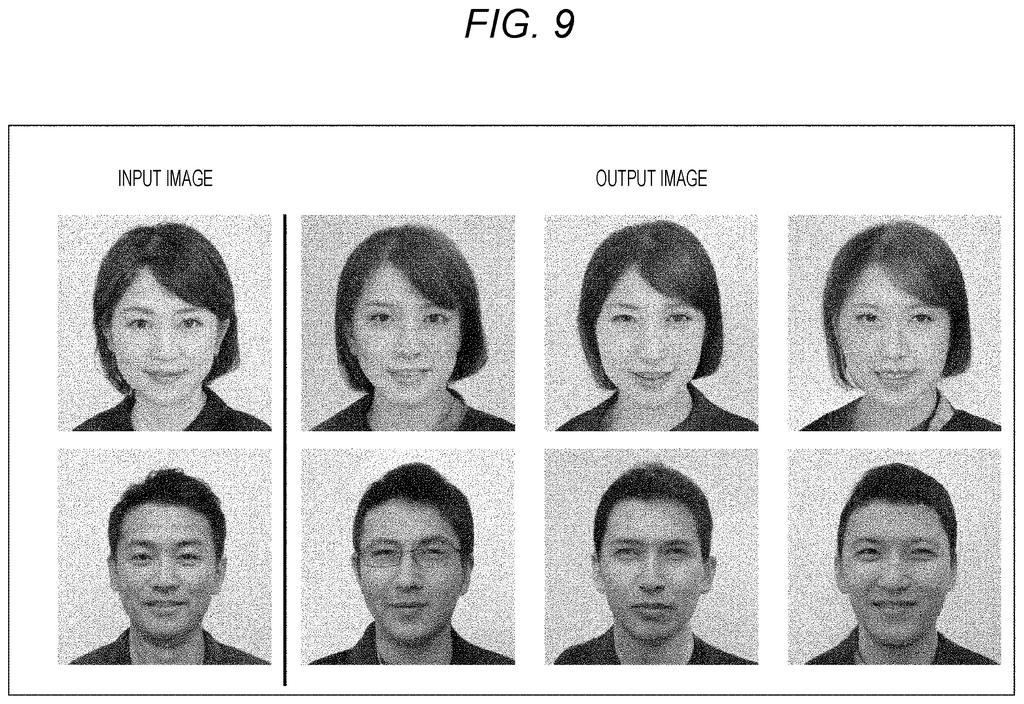
What Sony's face-image generation system actually does
A facial recognition system sits in a data center, hungry for thousands of example faces to learn from. Getting those faces is slow, expensive, and raises obvious privacy questions. Sony's approach is to generate them artificially instead.
The patent describes a system built around a type of AI called a Variational Autoencoder, or VAE. Think of it like a machine that can compress a face photo down to a small set of numbers, and then recreate a face from those numbers. Sony's addition is a method for nudging those numbers in specific directions, so that one particular feature, say age or hair color, changes while everything else stays consistent. The result is a controlled way to produce many different face images from a single starting point.
For you as a consumer, this kind of technology sits behind the scenes in camera software, photo apps, and security systems. The more varied the training data an AI sees, the better it performs in the real world, across different lighting, ages, and appearances.
… converts a latent variable on a basis of a normal vector orthogonal to a division plane that divides a latent space of the latent variable based on a probability distribution generated by a decoder of a variational autoencoder (VAE) …
Translation: It mathematically chops up the AI's internal map using specific geometric boundaries.
How Sony shifts hidden variables to change facial attributes
The core of Sony's system is a Variational Autoencoder (VAE), a class of neural network that learns to encode complex data like a face image into a compact set of numbers called a latent variable (think of it as a compressed fingerprint of the image), and then decode those numbers back into a full image.
The clever part is how Sony proposes to edit that compressed fingerprint. The system identifies a division plane in the latent space (the mathematical territory where all those number-fingerprints live). That plane acts like a divider separating, say, images with one attribute from images without it. The system then calculates the normal vector (essentially the direction that runs perfectly perpendicular to that dividing plane) and moves the latent variable along that direction.
Moving along that perpendicular direction changes the targeted attribute cleanly and predictably, without scrambling other features of the face. The decoder (the part that turns numbers back into a picture) then uses the shifted numbers to produce a new image:
- Input: one face image and a target attribute to change
- Process: compress to numbers, shift along the attribute direction, decode back to image
- Output: a new face image with that attribute altered
Because the shift is mathematically controlled, the system can repeat it at many different magnitudes, generating a large batch of varied but realistic-looking faces efficiently.
What this means for AI training data and synthetic faces
The immediate use case is synthetic training data. AI systems that power face recognition, camera autofocus, and portrait-mode photography all need to be trained on enormous libraries of faces. Generating those faces artificially, with controlled variation in age, lighting, and other attributes, removes the legal and ethical burden of collecting real people's photos.
For everyday users, the downstream effect is AI camera software that works better across more faces, because the model was trained on a broader range of examples. There is also a flip side: systems like this are what make deepfakes and synthetic identity images easier to produce at scale, so the same technology that improves your phone's portrait mode is also a tool that researchers and regulators are watching closely.
Sony's seventh filing in the AI image and video work we've tracked since May adds to earlier applications on memory use in upscaling and stopping frame flicker.
If you use a Sony camera or PlayStation camera, this patent is about why face detection keeps getting better without you doing anything. Sony's system generates thousands of training images of faces where only one thing changes at a time, say the lighting angle, while everything else stays the same. That precision is what lets the underlying software learn faster and make fewer mistakes.
You would notice the result when the camera snaps onto a face in a crowd, or when portrait mode cuts cleanly around hair instead of blurring it into mush. These are the kinds of failures that erode trust in a product, and this is the work that prevents them.
Generating realistic faces at scale also carries real social risk, and that tension does not disappear because the intent is industrial. Sony does not address it here, and a smart buyer or regulator should ask how that capability is controlled.
There are more where this came from
We read every patent application Big Tech publishes and send you the ones worth knowing. Plain English, free, every week.
The drawings
25 drawing sheets from US 2026/0279014 A1 · click any drawing to enlarge


Want this weekly breakdown for a company we don't cover? Patentlyze Pro →