
Sony Patents a Camera System That Distinguishes Glass from Plastic by Filtering Light
Telling a glass bottle from a clear plastic one sounds easy for a human, but it trips up machines constantly. Sony has filed a patent for a camera system that solves this by measuring how light bends differently through each material.
What Sony's polarized-light material detector actually does
Every time a recycling conveyor belt rushes past a sorting robot, that robot has to make a split-second call: glass or plastic? Get it wrong and you contaminate a whole batch. The two materials look almost identical to a normal camera, and that is a real, expensive problem at recycling plants and in automated quality control lines everywhere.
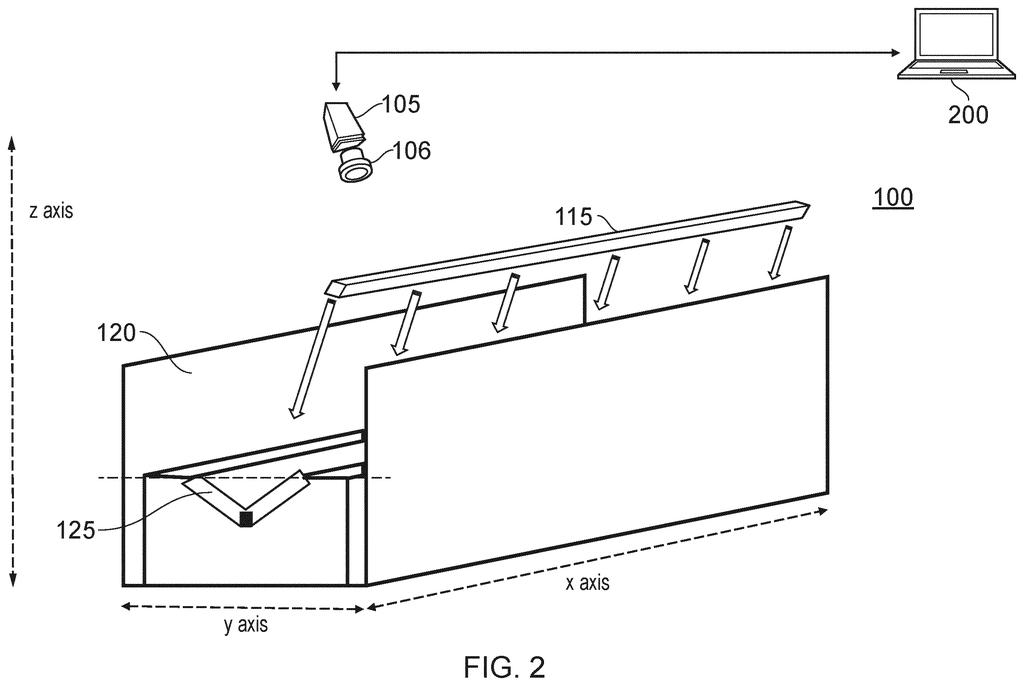
Sony's patent describes a device that fires polarized light at an object, meaning light that is filtered to vibrate in specific directions, and takes several photos through different polarization filters. Glass and PET plastic (the clear plastic in most water bottles and food packaging) twist that light differently, producing a measurable number called a degree of polarization. The device reads that number and outputs a decision: glass or plastic.
The output is a "control signal," meaning it is designed to trigger something else downstream, like a robotic arm that physically separates the items. This is not a standalone gadget; it is a sensing module meant to plug into a larger automated system.
receive a plurality of polarised light images of an object made at least in part from a polarising material, the polarising material being glass or PET plastic, wherein each of the plurality of polarised light images has a different polarisation …
Translation: The camera takes multiple pictures of an object using different angles of polarized light.
How the system calculates a degree of polarization
The core idea is that polarized light interacts differently with glass and PET plastic due to differences in how each material's molecules are arranged. When light is polarized (filtered so its waves all travel in the same plane) and bounced off or transmitted through one of these materials, the degree to which that polarization is preserved or scrambled gives you a fingerprint for the material.
The device takes multiple polarized images of the same object, each captured at a different polarization angle. From those images, it computes a degree of polarization (DoP), a single number that captures how much the object's surface preserved the incoming light's direction. Glass and PET plastic produce different DoP values reliably enough to serve as a classifier.
The processing circuitry then makes a binary decision based on that DoP value:
- If the DoP falls within the range associated with glass, it outputs a signal identifying the object as glass.
- If it falls in the PET plastic range, it outputs a plastic signal.
- That control signal is the endpoint the patent claims, meaning this is a component designed to drive downstream automation, not a finished product on its own.
The system is intended for objects made at least in part from these materials, so it can handle mixed-material packaging too, not just pure glass or pure plastic containers.
… calculate a degree of polarisation associated with the object based on the plurality of polarised light images; determine, based on the degree of polarisation, whether the polarising material is glass or PET plastic …
Translation: It computes the polarization level to figure out if the material is glass or plastic.
What this means for recycling robots and quality checks
Automated recycling is one of the hardest computer-vision problems in manufacturing. Clear materials are notoriously hard to identify by color or shape alone, and misclassification drives up costs and lowers recycled-material quality. A reliable polarization-based detector could be a useful sensing layer on top of existing camera systems, giving sorting machines a way to distinguish glass from plastic even when the objects look identical.
Beyond recycling, the same sensing approach applies anywhere you need to inspect transparent or semi-transparent materials, such as pharmaceutical packaging, food containers, or glass panels in electronics assembly. If the system works reliably at conveyor-belt speeds, Sony would have a sensor module with a broad industrial market.
Sony's 66th filing in our camera patent coverage since May adds to a body of work that includes one on filling color gaps and one on self-adjusting distance cameras among the filings we've tracked.
The physics here is old news: certain materials bend light in ways a camera can measure, and this document describes turning that measurement into a decision signal that tells a sorting machine whether it is looking at glass or plastic. Sony's contribution is building the complete chain, from the camera taking the pictures to the final output that factory equipment can act on.
That outgoing signal is the telling detail. The document already assumes sorting machines exist on the receiving end, which means this is designed to slot into industrial recycling lines as a detection module, not to reinvent them.
Nothing here requires exotic new hardware, and the equipment a factory would need is already common. The shortest route to a real product is a sensor unit sold to automation companies, with the remaining work being proof that detection stays reliable at conveyor speeds and under messy factory lighting.
There are more where this came from
We read every patent application Big Tech publishes and send you the ones worth knowing. Plain English, free, every week.
The drawings
19 drawing sheets from US 2026/0279076 A1 · click any drawing to enlarge


Want this weekly breakdown for a company we don't cover? Patentlyze Pro →