
Sony Patents a Distance-Measuring Camera That Adjusts Itself to Changing Lighting Conditions
Depth sensors, the cameras that measure how far away things are, fall apart when the light changes. Sony is filing a patent for one that watches its own performance and dials in its own settings on the fly.
What Sony's self-adjusting depth sensor actually does
Ever pointed your phone at something and watched the autofocus struggle as a cloud rolls over the sun? Depth sensors, which measure the distance to objects rather than just taking a photo, have the same problem. Light conditions shift, and a sensor tuned for one situation can give bad readings in another.
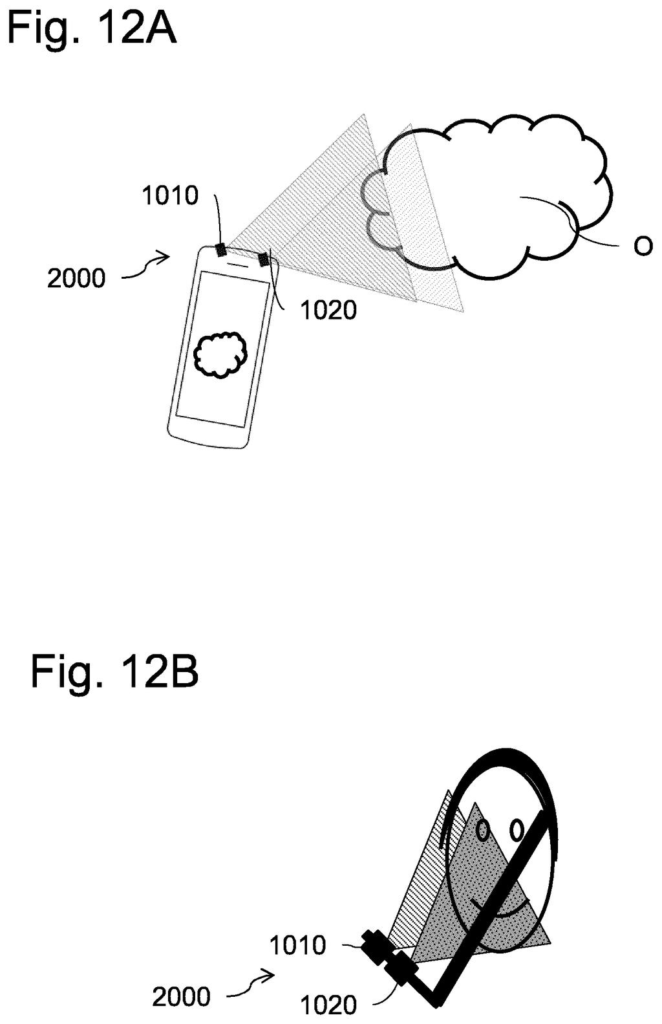
Sony's patent describes a depth sensor with a built-in optimizer. Instead of being set up once and left to its own devices, the sensor monitors how well it's performing right now and figures out which settings to change to improve. It projects structured light patterns onto an object, reads the reflections, and then a separate unit inside the device decides whether the current configuration is working or needs adjusting.
Think of it like a car's adaptive cruise control, which does not just hold a fixed speed but constantly recalibrates to match traffic. Sony's system applies that same idea to depth sensing, letting the sensor keep itself accurate without a human stepping in to reconfigure it.
… an optimizer unit that is configured to determine system parameter changes that maximize the depth sensing performance in current environmental conditions.
Translation: It has a built in brain that tweaks camera settings to get the best possible depth data no matter the lighting.
How the optimizer reads the environment and updates settings
The device has three main parts working together:
- Projector unit: shines structured light patterns (grids, dots, or stripes of infrared light) onto the object being measured.
- Receiver unit: captures how that light bounces back, plus any ambient light already in the scene.
- Control unit: processes the data and drives everything else.
Inside the control unit, a decoder takes the reflected pattern and turns distortions in it into distance measurements, the actual depth information. A separate optimizer unit watches that process and determines which system parameter changes would improve performance given current environmental conditions. System parameters here means things like exposure time, pattern intensity, or which specific illumination pattern to use.
The key phrase in the claim is "maximize the depth sensing performance in current environmental conditions." The optimizer's job is not to run once at startup but to keep evaluating and adjusting as conditions change, whether that means brighter sunlight washing out the projected pattern, a highly reflective surface confusing the receiver, or a target that has moved closer or farther away.
This kind of closed-loop self-correction, where a system measures its own output and feeds that back to improve its inputs, is the core engineering idea here.
What this means for cameras, robots, and AR headsets
Depth sensors show up in a wide range of products: the Face ID hardware on your iPhone, the obstacle-avoidance systems on robots, the hand-tracking cameras on AR headsets, and the lidar units on cars and drones. All of them face the same challenge of performing reliably across unpredictable real-world lighting. A sensor that adjusts itself removes one category of failure that engineers currently handle with fixed calibration or manual tuning.
Sony Semiconductor Solutions' steady filing around sensor intelligence suggests the company sees self-tuning hardware as a long-term direction, not a one-off idea. For device makers licensing Sony's image sensor technology, a depth sensor that manages its own accuracy in the field would reduce the engineering burden on their end.
This is the 64th Sony filing in our Camera coverage we've tracked since May, adding to work like touch and distance sensing and microscopic metal shells.
Claim 1 covers any device that projects light patterns onto an object, captures the reflected light, and then automatically adjusts its own settings to sharpen the depth reading in current conditions. The claim sets no limits on which settings can change, what logic drives those adjustments, or how the device measures improvement.
That openness gives the claim a very wide reach. Any competing product combining those three behaviors would have to clear this claim first, no matter how differently it actually works inside.
The more precise technical choices are almost certainly buried in the dependent claims deeper in the application, but Claim 1 as written draws a perimeter around a broad category of self-correcting depth sensors, the kind already common in phones, cameras, and robots. Whether it holds will depend on what examiners find already existed before this filing.
There are more where this came from
We read every patent application Big Tech publishes and send you the ones worth knowing. Plain English, free, every week.
The drawings
19 drawing sheets from US 2026/0266598 A1 · click any drawing to enlarge


Want this weekly breakdown for a company we don't cover? Patentlyze Pro →