
Sony Patents an AI System That Rebuilds Sharp Game Visuals Without Opening Compressed Files
Sony is teaching an AI to look at a blurry, compressed version of a game texture and reconstruct a sharp, high-resolution one, all without going through the expensive step of decompressing and recompressing the image in between.
What Sony's AI texture trick actually does for games
You're playing a game and your console is loading a distant mountain or a close-up wall. The GPU needs textures at many different sizes depending on how near or far each object is. Keeping all those sizes stored at full quality eats up memory fast, so game engines use compressed, lower-quality versions as a fallback.
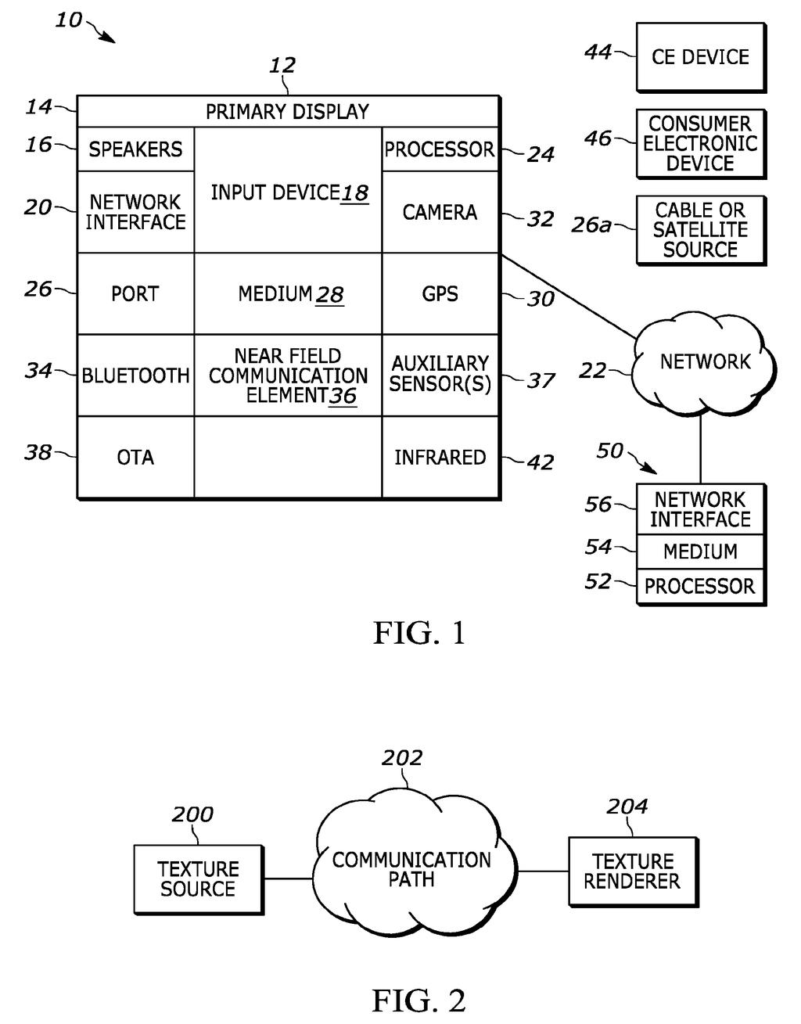
Sony's patent describes an AI that can take one of those smaller, compressed texture versions and generate a larger, higher-quality one on the fly, skipping the usual costly steps of full decompression and recompression. The AI learns what the original high-resolution texture probably looked like, then produces it in the compressed format the GPU already expects.
The practical upshot is that a console might store fewer texture sizes on disk and let the AI fill in the gaps at runtime, potentially saving storage space without sacrificing what you see on screen.
Machine learning is used to generate a first mipmap of a texture having a first compression based on a second mipmap of the same texture and having a second compression without using compression or decompression in generating the first mipmap.
Translation: The AI creates detailed texture scales directly from differently compressed versions without doing any compression work.
How the ML engine skips decompression to upscale textures
Game graphics use a system called mipmaps (pre-made copies of the same texture at progressively smaller sizes) so the GPU can pick the right size for each surface depending on distance. Storing every mipmap level in full detail is memory-intensive, so they are normally stored in a compressed format like BC or ASTC (these are block-based schemes that shrink file size by accepting small visual approximations).
The patent trains a machine learning engine to take a lower-resolution mipmap and produce the next higher-resolution mipmap, entirely within compressed space. The key engineering claim is that compression and decompression are not needed during that upscaling step at render time, only during training.
Training works like this:
- Original texture blocks are compressed using standard GPU compression.
- Those compressed blocks are then decompressed to expose the learned compression artifacts.
- The decompressed (artifact-laden) blocks go into the ML engine as training input, so the model learns what compressed data really looks like, not idealized source art.
- The model is trained to output predicted higher-resolution blocks that match the original higher-resolution ground truth.
At inference time (during an actual game session), the trained model accepts a low-resolution compressed mipmap and produces a higher-resolution mipmap directly, which the GPU can use to render the scene.
What this means for game loading times and storage
For players, the promise is that games could load faster or run on less memory because consoles or PCs would need to store fewer precomputed texture levels, with AI filling in the larger sizes on demand. Storage is a real constraint on current consoles, and any reduction in the number of assets that must be packed onto a disc or SSD matters.
For Sony specifically, this fits the PlayStation platform's ongoing push to make more visual quality fit inside tighter hardware budgets. a growing pile of Sony graphics-pipeline filings suggests the company is investing in AI-assisted rendering at multiple stages. Whether this particular approach performs well enough at real game framerates is the open question, but the underlying idea of skipping the decompression round-trip is a concrete efficiency target, not just a theoretical one.
Sony's 14th filing we've tracked since July in the GPU rendering race builds on ideas like splitting work across console and cloud and serving different streams to different viewers.
The core trade is straightforward: store less texture data on disk and instead spend a little computing power at runtime to reconstruct the missing detail. On modern gaming hardware, that compute is cheap, so the exchange reads as reasonable. But it is not costless.
The fragile point is training. The AI learns by studying how real compression scrambles image data, which is smart, but it means a model trained on one compression format may work poorly if the game ships on a platform using a different one. That is a retraining problem every time the format changes, which limits how portable this solution actually is.
Whether the AI holds up on the texture types that compress worst, fine surface scratches, metallic reflections, complex normal maps, is the question this filing leaves open. Those are exactly the cases players notice most.
Get our take in your Top Stories
Liked this breakdown? Add Patentlyze as a preferred source on Google, and our plain-English take shows up more often in your Top Stories the next time Sony patent news breaks.
There are more where this came from
We read every patent application Big Tech publishes and send you the ones worth knowing. Plain English, free, every week.
The drawings
5 drawing sheets from US 2026/0278739 A1 · click any drawing to enlarge


Want this weekly breakdown for a company we don't cover? Patentlyze Pro →
Be the first to weigh in