
Sony Patents a System That Checks Its Surroundings Before Sending Sensor Data
Sony has filed a patent for a device that first sizes up its environment before deciding what sensor data to send anywhere. The idea is simple: where you are changes what gets shared.
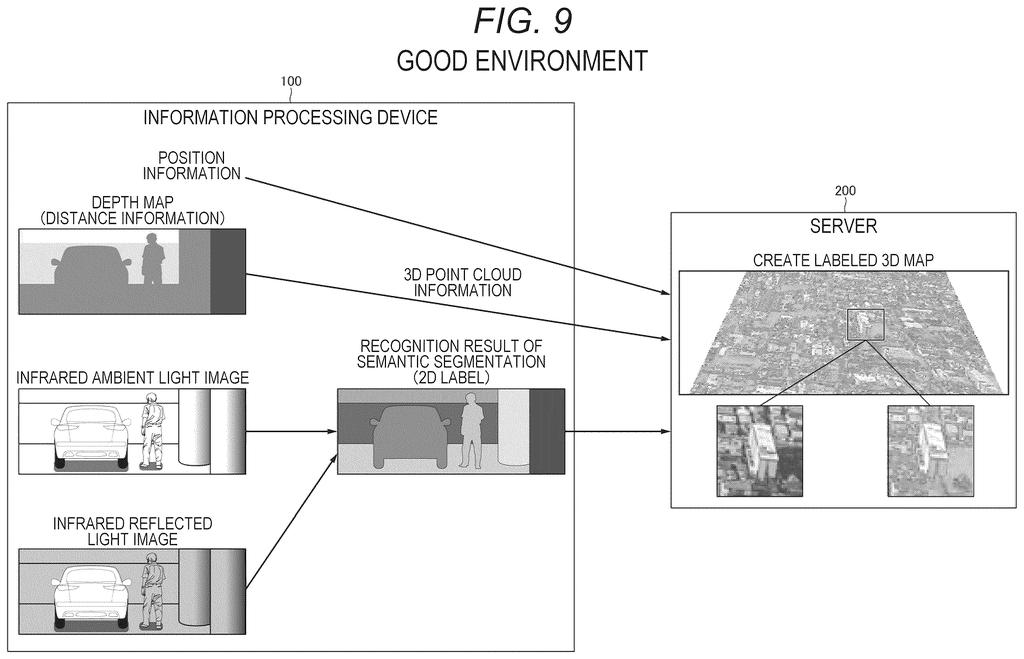
How Sony's environment-aware data sharing actually works
Every time a sensor-equipped device picks up data about the world around it, something has to decide whether to keep that information local or ship it off to another device or server. Right now, most gadgets just send everything, all the time. Sony's filing describes a different approach.
The device would first check the state of its surroundings. If conditions match a specific trigger, it runs its own internal analysis on the sensor data and then sends both the raw sensor reading and its own conclusions to an external device. Think of it as the gadget doing its homework before raising its hand.
That conditional step, checking the environment before transmitting anything, is the heart of what Sony is protecting here. It's a small architectural decision with potentially large consequences for how context-aware devices handle data privacy and network efficiency.
an environment determination unit that determines a state of an environment; a recognition processing unit that performs recognition processing on a basis of a detection result of a sensor; and a communication unit that performs communication processing with an external device …
Translation: The device figures out its surroundings, analyzes sensor data, and talks to outside systems.
How the device decides what to transmit and when
The patent describes an information processing device built around three cooperating components.
- Environment determination unit: This part of the device continuously evaluates the state of its surroundings. The patent does not specify what counts as a "first state" versus other states, leaving that deliberately open, but the concept is that different environmental conditions trigger different behaviors.
- Recognition processing unit: When the environment matches the trigger condition, this unit performs its own analysis ("recognition processing") on whatever a sensor has detected. This is the local computation step, where the device interprets raw sensor data before any transmission occurs.
- Communication unit: Only after local recognition is complete does this unit transmit, and it sends two things: the original raw sensor data and the device's own processed interpretation of that data.
The conditional structure is key. In the "first state," the device is fully active: sensing, analyzing, and transmitting. The patent implies that in other environmental states, behavior changes, though the claim itself specifies only what happens when the first state is active. The external device receiving the transmission gets a richer package: raw input plus local conclusions.
… in a case where the environment is in a first state, the recognition processing unit performs recognition processing on the basis of the detection result of the sensor, and the communication unit transmits the detection result of the sensor and the recognition result of the recognition processing unit to the external device.
Translation: When conditions match specific rules, the device processes sensor data and sends the results outward.
What this means for privacy-aware connected devices
For consumers, this kind of architecture could mean a device that behaves differently depending on context, sharing more when conditions call for it and potentially sharing less (or nothing) otherwise. That has clear relevance for privacy-sensitive applications like wearables, home sensors, or robotics, where you probably don't want constant data streaming regardless of circumstance.
Sony's string of sensor-processing filings points toward a broader interest in edge intelligence, doing more computation on the device itself rather than relying entirely on the cloud. If granted as written, this patent could give Sony a foothold over a broad class of conditional, environment-triggered data-sharing systems across many product categories.
Sony's seventh filing we've tracked since July in our on-device AI privacy push watchlist builds on earlier ideas like designing AI networks without real labels and training on approximate private data.
Claim 1 covers any device that checks its surroundings, runs its own analysis on sensor data, and sends both the raw readings and its conclusions to another device when conditions call for it. The claim names no specific sensor, no specific environment, and no specific type of analysis.
That scope reaches a striking range of everyday products. A security camera that detects motion before uploading footage, a fitness tracker sending heart rate data during a workout, or a warehouse robot reporting its position to a central server could all fit the description as written.
Whether the claim survives review will likely come down to whether that pattern already appears in products predating this filing, because the claim describes a general recipe rather than a narrow solution to a specific problem. If it holds, Sony would have a legal foothold against a broad class of connected devices that simply sense, analyze, and transmit.
There are more where this came from
We read every patent application Big Tech publishes and send you the ones worth knowing. Plain English, free, every week.
The drawings
13 drawing sheets from US 2026/0301448 A1 · click any drawing to enlarge


Want this weekly breakdown for a company we don't cover? Patentlyze Pro →
Be the first to weigh in