
Sony Patent: Tracking Moving Objects Using Camera Pixels That Fire on Change
Most cameras waste enormous effort recording a scene that barely changed. Sony is working on a smarter way to read cameras that only fire when something actually moves, using a statistical technique to figure out what those motion signals mean.
How Sony's event camera motion detection actually works
A security camera stares at an empty hallway all night, recording millions of frames of nothing. You've already seen the trade-off: traditional cameras burn through processing power and storage even when there's nothing interesting to capture.
Sony's patent tackles a newer kind of camera called an event-based vision sensor (or EVS). Instead of recording full frames, an EVS only sends a signal when a pixel detects a change in light, the way a motion detector beeps only when something moves. That makes it incredibly fast and efficient, but it also produces a messy stream of tiny signals rather than a clean picture, so something has to figure out what those signals mean.
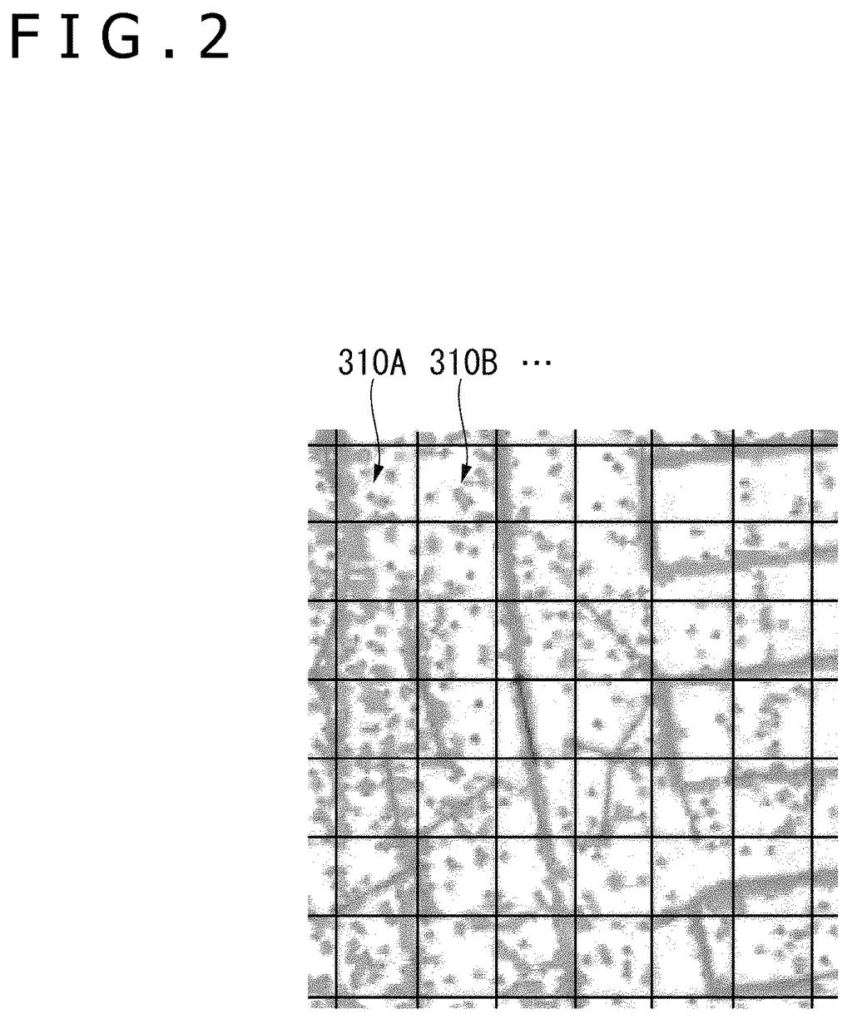
The patent describes a circuit that chops the camera's view into small grid squares, then uses a statistical technique to find patterns in where and when signals are clustering together. From those patterns, it can detect what's moving, where, and how. Think of it like sorting a pile of scattered dots on a page into groups and then drawing a line through each group to see the shape.
… detecting, in each block of blocks which are split sections of a detection region of the event-based vision sensor, a relation between positions of event signals included in the block in accordance with a result representing a distribution of at least the positions of the event signals or generation times of the event signals with a use of a Gaussian mixture model.
Translation: The system divides the camera view into small squares and uses statistical modeling to track how objects move through them.
How the Gaussian mixture model sorts signals across grid blocks
The patent covers a signal processing circuit designed to interpret the output of an event-based vision sensor. An EVS doesn't produce video frames; it fires individual pixel-level signals the instant it detects a brightness change. Those signals carry a position and a timestamp, but without structure they're just noise.
The circuit divides the sensor's full field of view into a grid of smaller blocks. Inside each block it applies a Gaussian mixture model (a statistical method that assumes the incoming data points belong to several overlapping groups, each shaped like a bell curve) to describe how the signals are distributed across position and time. The output of that model tells the circuit whether the signals in a given block are clustered in a line, spread randomly, or following some other geometric relationship.
From those relationships the system can infer motion: a moving edge, for instance, would leave a streak of closely spaced signals that the model could detect as a directional cluster. The key steps are:
- Split the detection region into blocks
- Collect event signals (position + timestamp) within each block
- Fit a Gaussian mixture model to those signals
- Interpret the model's output as a geometric or temporal relationship
The circuit stores its logic as program code in memory and runs it on a processor, so the approach is software-configurable rather than hardwired to one type of motion.
Provided is a signal processing circuit that processes an event signal generated by an EVS. The signal processing circuit includes a memory for storing a program code and a processor for executing operation in accordance with the program code.
Translation: This technology uses a specialized processor and software to analyze data coming from an event-based vision sensor.
What this means for fast-action gaming and robotics cameras
Event-based cameras are gaining ground in applications where speed matters more than image quality: robotics, gesture control, industrial inspection, and gaming peripherals. Sony's PlayStation division already uses custom sensors in controllers and headsets, so a more capable interpretation layer for event cameras fits neatly into that roadmap, even if this patent doesn't name a specific product.
The real question the design raises is computational cost. Gaussian mixture models are not cheap to fit in real time, especially across many blocks simultaneously. Sony is essentially trading the simplicity of raw signal counting for statistical expressiveness, and whether that trade pays off depends heavily on how fast the processor can run the fitting step. For applications like high-speed gaming input or robotics collision avoidance, any lag in that step erodes the core advantage of using an event camera in the first place. This filing sits alongside a wave of sensor-processing new Big Tech patents that reflect how seriously the industry is investing in making event cameras practical beyond lab settings.
The Gaussian mixture approach gives Sony's circuit expressive pattern recognition that simpler threshold-based methods can't match, but it carries a real computational penalty. Fitting a mixture model across every grid block on every processing cycle demands consistent, low-latency arithmetic, and if the processor can't keep up, the whole point of using a frame-free camera collapses. That trade reads as defensible for a company with dedicated silicon teams, but it narrows the addressable hardware to something more powerful than a typical microcontroller, which limits where this technique can actually ship.
There are more where this came from
We read every patent application Big Tech publishes and send you the ones worth knowing. Plain English, free, every week.
The drawings
10 drawing sheets from US 2026/0238895 A1 · click any drawing to enlarge


Want this weekly breakdown for a company we don't cover? Patentlyze Pro →
Be the first to weigh in