
Sony Files Patent for Headphones That Keep Playing When You Sing Along
Some headphones pause your music the moment they hear you speak, which is a problem when you're the one singing. A new Sony patent application adds a second check so a singalong isn't mistaken for a conversation.
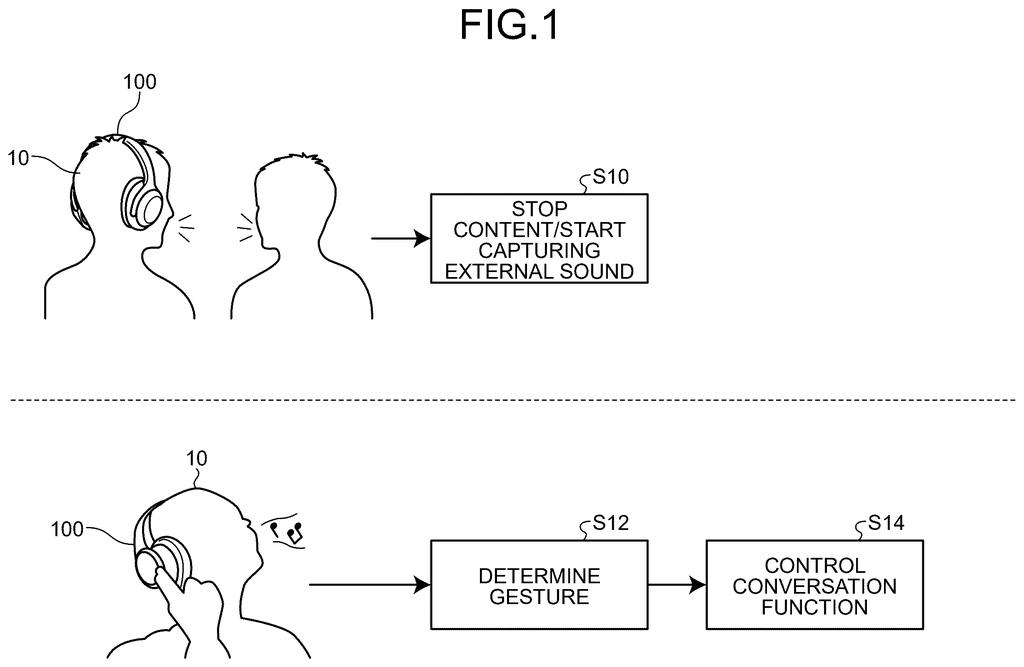
What Sony's sing-along headphone fix does
Imagine you're belting out your favorite song on a walk, headphones on, and the music suddenly cuts out. Your headphones heard your voice, decided you were starting a conversation, paused the song and let the outside sound in.
That's the catch with a handy feature on some noise-canceling headphones: they treat any speech as a cue to pause. Singing along, or repeating phrases during a language lesson, sets it off too. Sony's filing adds a second check before the pause happens.
The headphones can look for a sign that you're doing something on purpose, like touching the earcup or pressing a button. They can also compare your voice with what's playing, checking whether you're singing the same words at the same moment. And they can take into account what you're listening to, such as a comedy show, where laughing shouldn't pause anything.
a detection unit that detects that a user utters a word during content reproduction; a first determination unit that determines whether control processing related to the content can be executed in a case where the utterance is detected by the detection unit …
Translation: The system notices when you start talking or singing while listening to audio and checks if it should react.
How the headphones tell singing from chat
The claims cover two related ideas. In both, the headphones first detect that you spoke during playback, using a microphone or a vibration sensor. In one version, a neural network (software trained on examples) outputs a number from 0 to 1 for how likely it is that you're talking. A first check decides whether the usual response, such as pausing, lowering the volume or letting outside sound in, is allowed. A second check then decides whether to actually do it.
In the first idea, the second check looks at one of these:
- A motion by you: touching a sensor on the earcup, bringing a hand close (detected without contact, for example by an infrared sensor), or pressing a button.
- Timing: whether your voice starts at about the same moment as a voice in the content. Music gets a tight window, while language lessons allow a longer lag.
- Sound match: whether pitch, tone, chord or rhythm line up, or whether your words match the lyrics. A trained model can make that call.
The second idea bases the decision on the content itself or the app playing it. Comedy, karaoke and language learning can switch the feature off, and so can an app showing lyrics on screen.
The description also covers feedback. Your phone can ask whether a pause was right, or the headphones can detect a head shake and resume playback for the rest of the track.
… by analyzing presence or absence of a predetermined motion by the user or correlation between the utterance and the content in first determination processing by the first determination unit.
Translation: It figures out what you are doing by checking if your words match the music or if you are moving around.
What this means for karaoke and language apps
If you own noise-canceling headphones with a talk-to-chat feature, you've probably either put up with accidental pauses or switched the feature off. This filing targets that annoyance. Karaoke fans, singers on the commute and anyone practicing a language by repeating after a recording are the people it would help. Because the checks also look at the type of content and the app, the feature could adapt without you digging through settings.
The filing is an application, and the examiner's first review rejected the claims as filed, a routine step that is usually followed by amendments. Nothing in the text says a product is coming. It does show how Sony thinks about a small but familiar headphone irritation.
Sony's 26th filing in the Audio patents we cover since May adds to a run that includes one on brain-wave headphones and one on earwax-detecting hearing aids.
Every fix here costs something. The gesture route asks you to remember to touch your earcup mid-chorus, which undercuts the point of automatic detection. The voice-matching route removes that chore but adds a new risk: if the headphones decide you're singing along, a friend who says hello at the same moment might get no reaction.
The filing seems aware of this. It adjusts for people who sing an octave off or in harmony, allows a longer delay for language learners, and lets you shake your head to say a pause was wrong. It also asks you on your phone only when the system is unsure, which limits the nagging.
Those trades look reasonable. A missed pause is a small social blip, while an unwanted pause ruins a song. With several signals to cross-check, no single one has to be perfect.
Get our take in your Top Stories
Liked this breakdown? Add Patentlyze as a preferred source on Google, and our plain-English take shows up more often in your Top Stories the next time Sony patent news breaks.
There are more where this came from
We read every patent application Big Tech publishes and send you the ones worth knowing. Plain English, free, every week.
The drawings
19 drawing sheets from US 2026/0351281 A1 · click any drawing to enlarge


Show the other 11 sheets


Want this weekly breakdown for a company we don't cover? Patentlyze Pro →
Be the first to weigh in