
Apple Patents Headphones That Mix a Wired Audio Cable With Wireless Head Tracking
Apple is working on a way for wired headphones to also use a wireless connection, but only for one specific job: tracking where your head is pointed so the audio can adjust in real time.
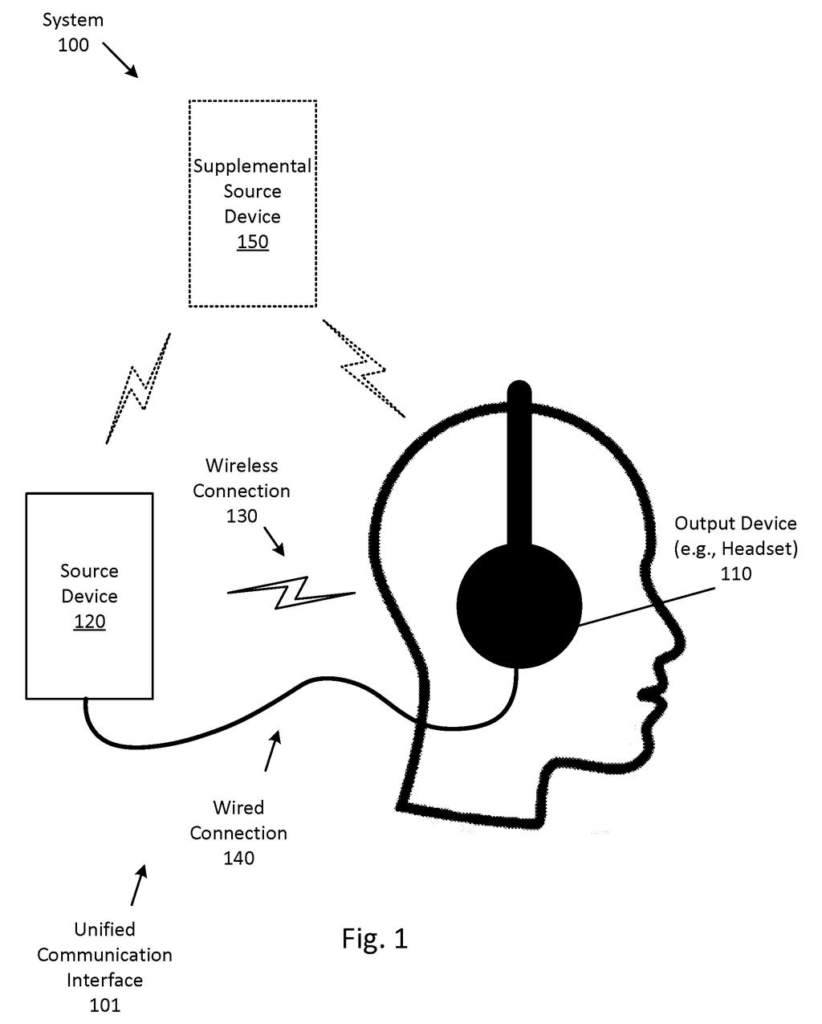
How Apple's wired-plus-wireless headphone system works
Wired headphones have always had a limitation: the cable carries sound, but nothing else. That means your device has no idea whether your head just turned left or right, which makes it impossible to create the kind of "the music is coming from over there" effect that newer wireless headphones can produce.
This patent describes a headset that does both at once. It plugs into your phone or laptop the normal way to receive high-quality audio over a cable. At the same time, it opens a separate wireless connection (think Bluetooth) to send one small stream of data back: sensor readings about how your head is moving. Your device uses that information to instantly adjust the audio before sending it back through the wire.
The result is spatial audio on wired headphones. When you turn your head, the sound field rotates with you, so a voice in front of you stays in front even if you look away. You get the reliability of a cable with the immersive audio tricks usually reserved for fully wireless gear.
… transmitting, through the wired connection, a first audio signal to the headset for audio playback; receiving, from the headset and via the wireless connection, head tracking data captured by a sensor of the headset …
Translation: Music travels through the headphone cable while motion data goes over a wireless link.
How the head-tracking data reshapes the audio signal
The system runs two connections simultaneously between the headset and the host device. The wired connection (a standard audio jack or similar cable) carries the audio signal in both directions. The wireless connection carries only one thing: head-tracking data, small packets of sensor readings that describe which way the user's head is oriented.
When the headset is plugged in, the device sends a first audio signal down the wire as usual. Meanwhile, sensors inside the headset (likely accelerometers and gyroscopes, the same kind that tell your phone when you've tilted it) continuously report head position and movement back to the device over the wireless link.
The device then runs a spatial audio processing step: it takes the incoming head-tracking data and uses it to modify the audio signal. In practice, this means it applies head-related transfer function adjustments (filters that mimic how sound would naturally reach your ears from a fixed point in space). The updated, adjusted audio is then sent back through the same wire as a new signal.
The key detail is the division of labor:
- Cable: high-bandwidth, low-latency audio delivery
- Wireless: low-bandwidth sensor data only
- Device processor: all the spatial audio math
Neither connection does the other's job, and the processing stays on the host device rather than inside the headset.
… producing a second audio signal by modifying the first audio signal based on the head tracking data; and transmitting, through the wired connection, the second audio signal for audio playback at the headset to account for the movement of the head of the user …
Translation: The device adjusts the sound based on how you move your head and sends it back down the wire.
What this means for wired headphone users who want spatial audio
For anyone who prefers wired headphones, whether for sound quality, battery anxiety, or reliability in professional settings, spatial audio has mostly been out of reach. This approach could bring head-tracked, immersive audio to a wired connection without requiring a completely new cable standard or putting expensive processors inside the headset itself.
The practical payoff is that you would notice it any time you watch a movie or listen to music mixed for spatial audio: turn your head and the sound stays anchored where it should be, rather than rotating with you. the pattern in Apple's spatial audio filings suggests the company sees this as a core experience layer across its audio lineup. Whether Apple applies this to a future version of EarPods, a wired studio headset, or something else, the filing signals that the company does not consider the headphone cable a dead end.
Apple's 12th filing in the audio patents we've tracked since May adds to a run that includes one on a faster surround sound method and one on compressing 3D spatial audio.
This is a genuinely practical fix for a real annoyance. Head-tracked spatial audio has been one of the best things about AirPods Pro, and the fact that wired headphones miss out on it has been an obvious gap. Using a separate wireless link for sensor data only is a clean way to solve that without reinventing the cable.
The processing burden stays on the phone or laptop, not the headset, which keeps costs down and the headset itself simple. That matters for users who want a wired headset they can replace cheaply, or who are listening in a setting where Bluetooth audio dropouts are unacceptable but losing spatial audio feels like a real downgrade.
The filing is narrow and specific enough that it reads like something Apple has actually prototyped. The dual-connection architecture is not especially complex, but the devil is in the latency: if the wireless head-tracking data arrives even slightly behind the audio, the spatial effect will feel wrong. Getting that timing right is the real engineering challenge, and the patent is quiet on how they solve it.
There are more where this came from
We read every patent application Big Tech publishes and send you the ones worth knowing. Plain English, free, every week.
The drawings
7 drawing sheets from US 2026/0292385 A1 · click any drawing to enlarge


Want this weekly breakdown for a company we don't cover? Patentlyze Pro →
Be the first to weigh in