
Sony Files Patent to Prevent Event Camera Saturation in Bright Light Conditions
Event cameras are one of the most promising sensor technologies for robotics and self-driving vehicles, but they have a nasty habit of flooding themselves with data when the scene gets too bright. Sony's new patent describes a pixel-level fix built directly into the sensor.
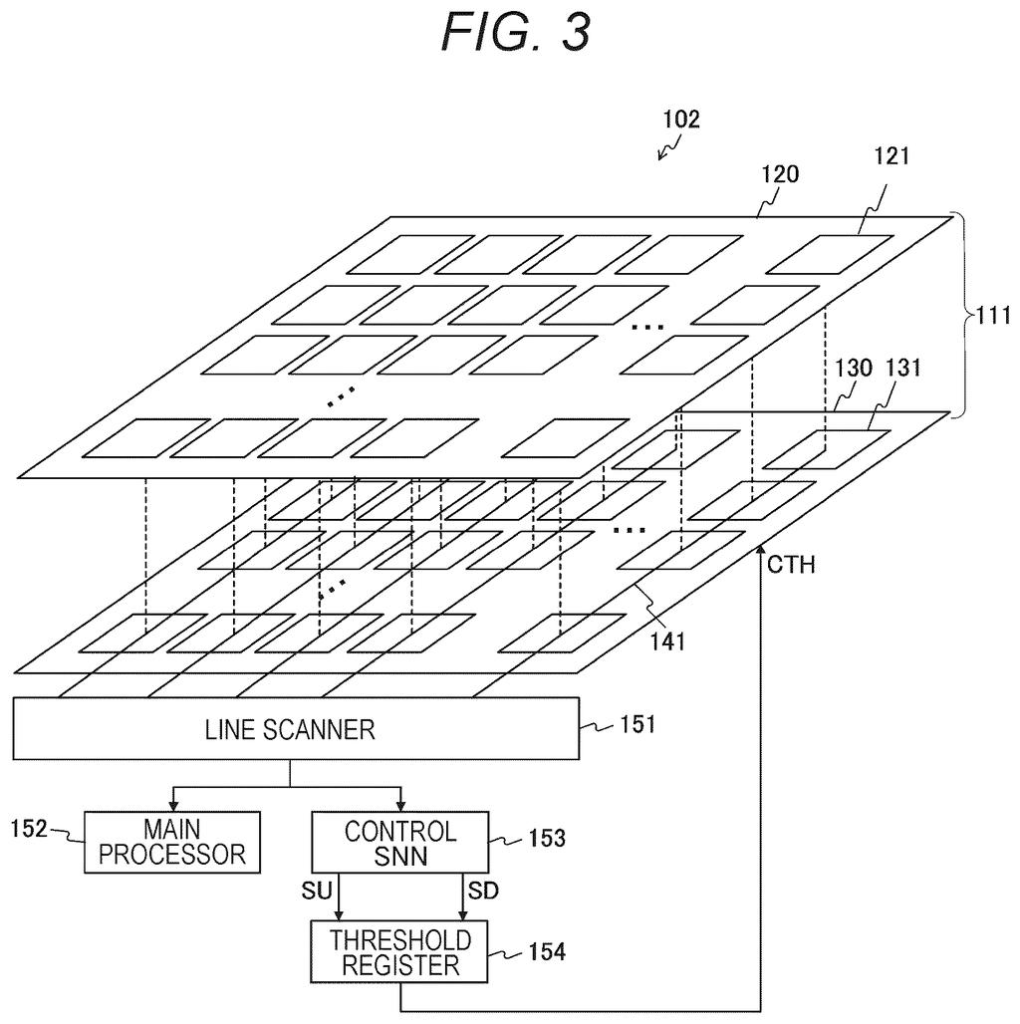
What Sony's photon-counting pixel design actually does
Imagine a camera that doesn't take regular photos but instead reports only the changes happening in a scene, pixel by pixel, thousands of times per second. That's an event camera, and it's extremely useful for tracking fast motion or objects in the dark. The catch is that very bright light can overwhelm it, causing it to fire off so many signals that the whole system gets jammed.
Sony's patent describes a new way of designing each individual pixel so it keeps a running count of incoming light pulses. When that count crosses a set threshold, the pixel reports an "event" and immediately resets its counter. Think of it like a tally counter that rings a bell and resets to zero every time you reach ten, rather than just screaming continuously once it's full.
The result is that even under intense light, each pixel reports in a controlled, measured way rather than saturating. You keep the sensitivity you need in dim conditions without losing control in bright ones.
How the counter and comparator manage each pixel's output
Traditional event cameras work by detecting changes in light intensity at each pixel. If a pixel gets very bright very fast, it can fire continuously, a problem called output saturation, which clogs the data pipeline and degrades the sensor's usefulness.
Sony's design addresses this with three components built into every pixel:
- A light receiving section that detects individual photons and emits a pulse for each one (essentially a single-photon detector)
- A counter that tallies those pulses over time
- A comparator that watches the count and fires an "event" signal only when the tally crosses a set threshold
The comparator then resets the counter immediately after firing, so the pixel starts a fresh count. This means a very bright pixel doesn't produce an uncontrolled flood of events. It produces a steady, metered stream based on the threshold, which the downstream processing system can handle much more easily.
The threshold value is adjustable, giving engineers a knob to tune the tradeoff between sensitivity (lower threshold, more events) and saturation control (higher threshold, fewer events per second). This is the key engineering balance the patent is trying to protect.
What this means for fast-moving cameras and robotics
Event cameras are a core component in robotics, autonomous vehicles, high-speed industrial inspection, and augmented reality tracking. All of those use cases involve scenes that mix very bright and very dark areas simultaneously. A sensor that falls apart in bright light is a liability in any real-world environment.
By solving this at the pixel level rather than in software after the fact, Sony keeps the sensor's response fast and its data output predictable. If this design makes it into production image sensors, it could make event cameras significantly more practical for outdoor robotics and automotive vision systems, where unpredictable lighting is the norm, not the exception.
This is focused, unglamorous engineering work on a genuine problem that limits where event cameras can actually be deployed. Sony Semiconductor is one of the few companies with both the sensor fabrication capability and the research depth to tackle this at the pixel level, and that combination is worth taking seriously.
There are more where this came from
We read every patent application Big Tech publishes and send you the ones worth knowing. Plain English, free, every week.
The drawings
20 drawing sheets from US 2026/0212169 A1 · click any drawing to enlarge


Want this weekly breakdown for a company we don't cover? Patentlyze Pro →
Be the first to weigh in