
Sony Patents a Noise-Canceling System That Adjusts When a Sudden Sound Hits
Noise-canceling headphones work beautifully for steady hum, but a sudden clap or slam can briefly overwhelm them. Sony's new patent targets exactly that moment, using one cancellation circuit to sense the shock and tell the other to back off before things go wrong.
What Sony's two-layer noise cancellation actually does
Every time a door slams near your noise-canceling headphones, the electronics face a split-second crisis: cancel the sound normally and risk a jarring distortion, or do nothing and let the noise through. Neither option feels great.
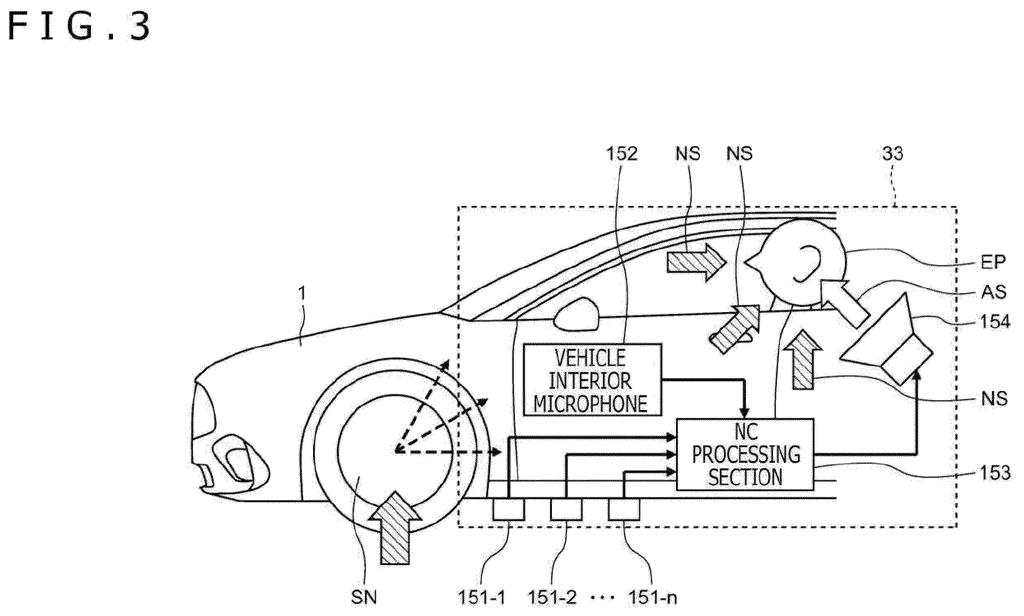
Sony's patent describes a system that runs two separate noise-canceling circuits at once. One circuit listens ahead of your ear, sensing incoming sound using an accelerometer (a tiny motion sensor that detects vibrations in the object producing the noise). The other circuit reacts to what actually reaches your ear. When the first circuit picks up a sudden impact, it immediately tells the second circuit to reduce its output, preventing the kind of harsh artifact you might otherwise hear.
The idea is to make noise cancellation more stable under unpredictable conditions, not just quieter in calm ones. Instead of both circuits fighting a sudden sound at full power, they coordinate, with one stepping back so the system can recover cleanly.
a first processing section that executes a process to reduce noise at a control point by generating and outputting a sound to cancel the noise or a vibration to excite a noise-source vibrating object, on a basis of a first sensor signal including an acceleration of the object; …
Translation: One part of the system cancels out unwanted sounds or shakes using motion data from a sensor.
How the FF and FB circuits hand off during a sudden sound
The patent describes a noise suppressing apparatus built around two distinct processing sections, each using a different sensor signal.
- First processing section (feedforward, or FF): This section reads a sensor that measures the acceleration of a noise-producing object, essentially detecting vibrations before the resulting sound reaches the listener. It generates a cancellation signal proactively, based on what the vibrating surface is doing.
- Second processing section (feedback, or FB): This section listens to what is actually happening at the "control point" (the location where noise needs to be suppressed, such as inside a headphone cup) and adjusts its cancellation signal reactively.
The key invention is in how these two sections interact. When the feedforward section detects a sudden sound (a sharp spike in the acceleration sensor reading), it sends a signal to reduce the drive signal feeding the feedback section's actuator (the component that physically produces the cancellation sound or vibration).
This matters because sudden acoustic events are the hardest case for feedback-based cancellation. A feedback loop is tuned for predictable, continuous noise. A sharp transient can push it into unstable territory, producing audible artifacts. By using the feedforward sensor as an early-warning system and throttling the feedback output in response, the system avoids that instability without abandoning cancellation entirely.
When a sudden sound is sensed on the basis of a sensor signal of a sensor in an FF-scheme NC apparatus, a drive signal to be supplied to an actuator in an FB-scheme NC apparatus is reduced.
Translation: When a loud noise pops up, the system quickly dials back its secondary noise cancellation power.
What this means for headphones and active noise control
For consumers, the practical target is the failure mode you have probably noticed: active noise cancellation that briefly sounds worse than doing nothing when something loud and unexpected happens nearby. A design that coordinates two cancellation approaches rather than running them independently has a better chance of handling those moments cleanly.
Sony's long bet on active noise control shows up across its WH and WF headphone lines, and a patent like this one is aimed squarely at making that technology more reliable at the edges, where it currently struggles most. Whether the coordination described here is fast enough to catch genuinely impulsive sounds (a gunshot, a nearby cymbal crash) without adding its own latency-related artifacts is the engineering question the patent leaves open.
Sony's 44th filing in the chip patents we've tracked since May adds to a run that includes a compact robot motor unit and a slim wide-angle lens.
The design makes a deliberate choice: when a sudden loud sound arrives, it dials back one layer of noise cancellation rather than letting both layers fight at full force. That choice trades some noise reduction for a cleaner, less distorted sound in the moment, which is probably the right call for most listeners.
The real vulnerability is the sensor that decides what counts as "sudden." If it misjudges a fast-rising steady sound as a sudden one, the system starts backing off at exactly the wrong time, giving you less protection when you might want more.
That uncertainty makes this a coordination fix rather than a fundamental improvement. It is worth having, but its success depends almost entirely on a calibration detail the patent leaves unresolved.
There are more where this came from
We read every patent application Big Tech publishes and send you the ones worth knowing. Plain English, free, every week.
The drawings
64 drawing sheets from US 2026/0279327 A1 · click any drawing to enlarge


Want this weekly breakdown for a company we don't cover? Patentlyze Pro →