
Sony Patents a Way to Pre-Draw Game Frames While the Server Catches Up
Cloud gaming's worst enemy is the time it takes for a server to send you the next frame. Sony's new patent tries to paper over that gap by having your device guess what the next frame probably looks like, before the real answer even arrives.
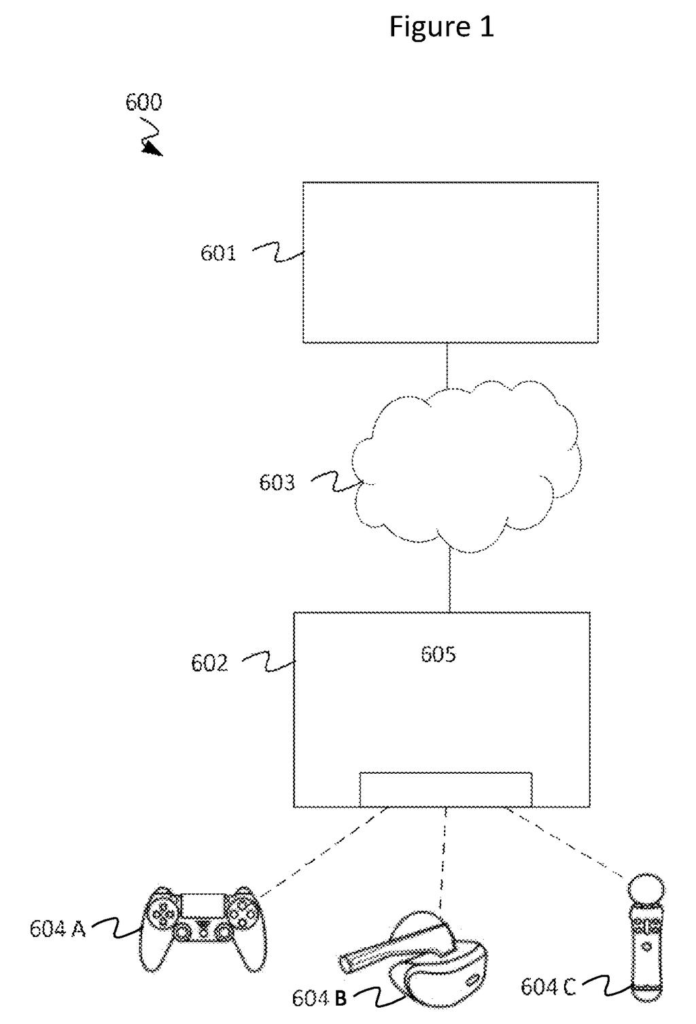
What Sony's frame prediction trick actually does for gamers
Every time you press a button in an online game, your device sends that input to a distant server, waits for the server to calculate the next image, and then displays it. That wait, even if it's only a fraction of a second, is what makes cloud gaming feel sluggish compared to playing on a local console.
Sony's patent describes a system where your device doesn't just sit idle during that wait. Instead, it uses the direction objects were already moving in previous frames, plus what button you just pressed, to make an educated guess at what the next frame should look like. It starts drawing that guessed frame immediately.
When the real frame data arrives from Sony's server, the system uses it to finish and correct the image. You get something on screen faster, and the final picture is still grounded in what the server actually calculated. The goal is to make cloud gaming feel more like local play.
generating first data based on second data and third data, wherein the second data represents at least one input signal from a user of the computer game and the third data represents at least one existing frame of video data of the computer game, and wherein the first data represents at least part of at least one estimated updated said frame of said video data; …
Translation: The system guesses what the next game screen should look like based on your controller clicks and the current picture.
How the system blends guessed frames with real server data
The patent describes a two-stage rendering process designed to reduce the perceived delay in cloud gaming.
In the first stage, the local device (a console, PC, or phone) takes two inputs and combines them:
- Previous motion vectors (data describing which direction and how fast objects moved in recent frames, essentially a record of where everything was going)
- Recent controller inputs (what the player just pressed or tilted)
Using those two data sources, the device generates a partial or estimated version of the upcoming frame. This is a prediction, not a final image. It renders what the scene probably looks like based on momentum and player intent.
In the second stage, the device receives the authoritative frame data from the remote server, which has done the full physics and game-logic calculations. The system then uses that real data to complete the rendering, overwriting or refining the predicted portions.
The result is a pipeline where something appears on screen almost instantly after a button press, and the server's ground-truth data lands on top of it to produce the finished frame. The patent covers this as a general method, applicable to any device receiving game video from a remote source.
The method comprises partially rendering (S 17 ) an updated video frame based on previous motion vectors and/or previous controller inputs (S 16 ) and at least one existing frame of video data (S 13 ).
Translation: It starts drawing the next video frame early using past motion and button presses before the server catches up.
What this means for cloud gaming lag on PlayStation
For cloud gaming, the biggest obstacle to mainstream adoption has always been latency. Players who are used to local consoles notice even small delays between pressing a button and seeing a response. Sony's approach tries to shrink the felt delay by keeping the screen moving during the server round-trip, rather than waiting for the full answer before drawing anything.
If this works as described, it could make PlayStation's cloud streaming service, PS Now or whatever form it takes on future hardware, feel meaningfully more responsive on connections that aren't perfect. That matters most for players outside major cities or on Wi-Fi rather than wired connections, where server response times are less predictable.
Sony's 519th filing in our Sony coverage since May follows patents like the controller router handoff and paying through a controller.
The cost here is accuracy. Predicting what a game frame should look like, based on where things were moving a moment ago, is a guess, and fast-moving scenes expose guesses quickly. When the real image arrives from the server and differs from the prediction, players may see a visible flicker or sudden correction.
Sony is betting that a slightly wrong frame appearing fast beats a correct frame arriving late. For slow, deliberate games that trade probably holds. For fast reflex games where every millisecond of precision matters, the prediction errors may land exactly when they hurt most.
What keeps this from being a reckless gamble is that the design treats server data as the final word, always. The prediction fills a gap; it does not replace the truth. That built-in correction limits the damage a bad guess can do, which makes the tradeoff read as reasonable even if it is not painless.
There are more where this came from
We read every patent application Big Tech publishes and send you the ones worth knowing. Plain English, free, every week.
The drawings
3 drawing sheets from US 2026/0273397 A1 · click any drawing to enlarge


Want this weekly breakdown for a company we don't cover? Patentlyze Pro →