Sony
Sony · Software · Filed Aug 7, 2025 · USPTO published Aug 13, 2026 · Aug 13 release
Sony Patent Connects Multiplayer Game Events to Specific In-Game Activities
When something dramatic happens in a multiplayer game, Sony wants its servers to automatically figure out which in-game activity caused it, and how likely that connection really is.
- Publication number
- US 2026/0233092 A1(US20260233092A1)
- Applicant
- Sony Interactive Entertainment Inc.
- Filed · Published
- Aug 7, 2025 · Aug 13, 2026
- Inventors
- Tatsuki Amimoto
- Status when we published
- Waiting for an examiner
- Document
- 18 claims
- US classification
- 463/42
- Parent application
- National Stage Entry of PCT/JP2023/009005 (filed Mar 9, 2023)(PCTJP2023009005)
What Sony's gameplay event-attribution system actually does
You're deep into a multiplayer match when something big happens: a player scores a rare achievement, a game-ending event fires, or an exploit gets triggered. Right now, figuring out why that happened typically requires a developer to dig through logs by hand.
Sony's patent describes a server system that does that detective work automatically. It watches play data from multiple players, tracks when certain activities start and end, and then checks whether any of those activity windows line up with the moment an event occurred. If they do, the system calculates a degree of involvement, essentially a confidence score saying how likely a given activity was the cause.
The practical uses span a wide range: finding bugs, flagging suspicious play patterns, surfacing data for game-balance tuning, or even powering highlight-reel generation based on what actually led to a big moment. Sony hasn't said exactly where this goes, but the target is clearly the kind of server-side intelligence that PlayStation's live-service games depend on.
… specify the activity with a likelihood of having been involved in the occurrence of the event, based at least in part on a relation between the period during which the activity has been performed and the time information included in the play data …
Translation: The system identifies which specific player actions likely caused a game event by comparing when they happened.
How the server links activity windows to event timestamps
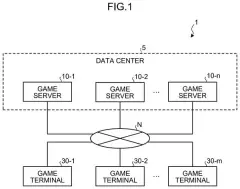
The system centers on three processing steps running on a server, each feeding into the next.
- Recording play data: The server logs events as they happen across all players in a session. Each event entry carries identification information (what kind of event it was) and a precise timestamp.
- Specifying the performance period: Separately, the system tracks activities, which are defined as in-game tasks that have a clear completion condition (think: capturing a flag, finishing a quest, or executing a combo chain). It identifies the start and end of each activity window.
- Deriving degree of involvement: The server then compares event timestamps against activity windows. If an event occurred while an activity was in progress, or very close to its completion, the system marks that activity as a candidate cause and assigns it a numeric involvement score reflecting how strong that timing overlap is.
Claim 1 is deliberately broad about what counts as an "event" or an "activity" -- it does not restrict the system to any single game genre, platform, or type of gameplay action. The involvement score derivation is also left open-ended, meaning the actual math (probability weighting, correlation coefficients, or something else) is left to implementation. That breadth is intentional: it lets the core architecture apply across Sony's entire game catalog.
A degree-of-involvement derivation unit 216 derives a degree of involvement indicating an extent of likelihood that the activity specified is involved in the occurrence of the event.
Translation: A software component calculates a probability score to show how much a player's action contributed to a specific game result.
What this means for PlayStation game analysis and fairness
For players, the most visible downstream effect of this kind of system would be faster, more accurate responses when something goes wrong in a live game. If a glitch or an exploit fires, a system like this could flag the contributing activity automatically and help developers patch it faster than manual log review would allow. It could also feed into features like automatic highlight detection, where the server already knows what sequence of actions led to a standout moment.
For Sony's live-service strategy, server-side event attribution is increasingly table-stakes infrastructure. Games like Destiny, Fortnite, and Sony's own live titles generate enormous volumes of play data, and making that data actionable in real time is a meaningful competitive factor. This patent sits in the middle of that push, and it's the kind of filing that shows up regularly when you track new Big Tech patents in the gaming infrastructure space.
Source: US 2026/0233092 A1 at the USPTO (PDF). Full patent text and figures are in the official publication.
Get our take in your Top Stories
Liked this breakdown? Add Patentlyze as a preferred source on Google, and our plain-English take shows up more often in your Top Stories the next time Sony patent news breaks.
Add Patentlyze on Google
One click.
There are more where this came from
We read every patent application Big Tech publishes and send you the ones worth knowing. Plain English, free, every week.
The drawings · 15 sheets
15 drawing sheets from US 2026/0233092 A1 · click any drawing to enlarge


Show the other 7 sheets


More from Sony
All 707 Sony patents →
More in Software
All 753 Software patents →
Sony
Sony Patents a Way to Pre-Draw Game Frames While the Server Catches Up
Sony
Sony Patents Technology to Break Down Game Visuals for Editing and Rebuild Them
Sony
Sony Patents Touchscreen Game Controls That Change Behavior Mid-Play
Sony