
Sony Patents a System That Adjusts In-Car Video to Match the Road Outside
Watching a movie in a moving car while the road curves the other way is a recipe for nausea. Sony has patented a way to detect that conflict and correct the video before it makes you sick.
How Sony syncs your screen to the car's motion
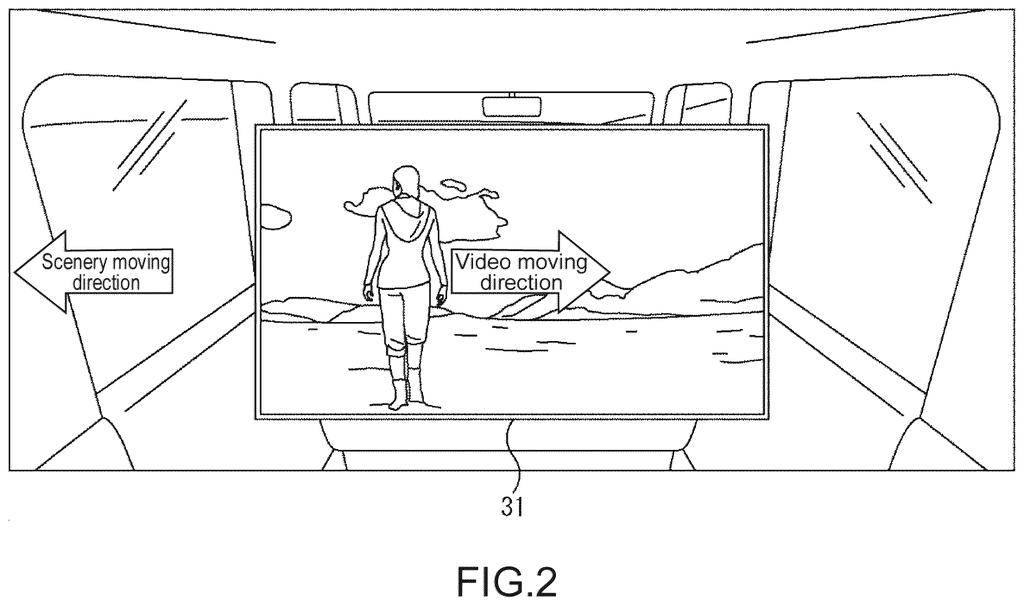
A passenger in the back seat pulls up a movie on the car's built-in screen. The car is sweeping left through a highway interchange, but the action movie on screen is panning sharply right. Your eyes and your body are getting contradictory signals, and your stomach starts to protest. That's the problem Sony wants to fix.
The idea is straightforward: a system watches two things at once. It tracks which way the picture on the screen is moving, and it tracks which way the outside world appears to be moving relative to the car. If those two directions clash badly, the system applies a visual effect to the video content to bring them into better agreement.
Sony is pitching this as something that could run in connected cars through a video content distribution service, meaning the adjustment could happen in the cloud or in the vehicle itself before the picture ever reaches your eyes.
… a scenery moving direction calculation section that calculates a direction in which a scenery outside the vehicle moves based on the vehicle's motion; and a presented video creation section that creates a video displayed by the video presentation section by applying an effect to the video content based on both the video moving direction and the scenery moving direction.
Translation: The system tracks how fast the outside world is rushing by and alters the screen video to match that real-world motion.
How the system calculates two movement directions at once
The patent describes three core components working together inside what Sony calls a video processing apparatus.
- A video moving direction calculation section analyzes the video content frame by frame and determines the direction the picture is moving. If a camera is panning left across a landscape, the system knows the video is moving left.
- A scenery moving direction calculation section uses data about the vehicle's motion (speed, steering, orientation) to calculate how the outside world appears to be drifting relative to the car window. A left turn makes the scenery appear to sweep rightward past the windows.
- A presented video creation section takes both of those direction readings and applies an effect to the displayed video. The patent does not lock down a single effect type, leaving room for approaches like subtle panning adjustments, stabilization, or opacity changes that soften the conflicting motion signal.
The system is designed for in-vehicle screens and is described as compatible with a video content distribution system, meaning the processing could live on a server that streams adjusted video to the car rather than requiring all the computation to happen on-board.
What this means for passengers watching screens on long rides
Motion sickness in cars is a real and common problem, and screens are making it worse as rear-seat entertainment becomes standard in more vehicles. When what your eyes see (video motion on a screen) disagrees with what your body feels (the car turning), your brain interprets the mismatch as a threat, and nausea follows. A system that actively monitors and reconciles those two signals could make long trips more bearable for passengers who currently have to close their eyes or stare out the window to feel okay.
Sony's steady investment in vehicle display technology puts this squarely in a market that is expanding as cars add more screens. If the approach works well enough in practice, it could become a feature that content providers or automakers license rather than build themselves.
This is the 449th Sony filing in our Sony coverage since May, adding to work like detail-based 3D compression and skipping unchanged scan data.
Matching a video to a car's movement means the system sometimes has to stretch, compress, or blur what a filmmaker originally put on screen, and the patent never says how much it will alter the picture or whether passengers will notice. That silence is a real cost: a small, invisible tweak helps, but a clumsy one trades nausea for a distorted movie.
The timing demand is brutal. The system has to measure the car's motion, read what the video is doing, and push out a corrected image before the next frame arrives, which happens roughly 40 times per second. Any lag creates its own visual jitter, and that jitter could leave passengers feeling worse than if the system had never intervened.
Motion sickness in back seats is a genuine, unsolved discomfort, so the goal is worth pursuing. Whether the tradeoff pays off depends entirely on engineering tolerances the patent leaves unspecified, and those tolerances are the whole question.
There are more where this came from
We read every patent application Big Tech publishes and send you the ones worth knowing. Plain English, free, every week.
The drawings
19 drawing sheets from US 2026/0268504 A1 · click any drawing to enlarge


Want this weekly breakdown for a company we don't cover? Patentlyze Pro →
Be the first to weigh in