
Samsung Patents an In-Car Display That Shows Notifications Based on Where You're Looking
Samsung is working on a car display that watches your eyes and decides whether — and how — to show you a notification based on how demanding your current driving situation is.
What Samsung's gaze-aware car display actually does
Imagine you're merging onto a highway when your phone gets a text. A dumb display would just pop it up. A smarter in-car system would look at what you're doing first.
That's the core idea here. Samsung's patent describes a vehicle display that tracks where the driver is actually looking. If you glance toward the corner of the screen where a notification badge appeared, the system notices — but instead of immediately expanding the full message, it checks what the car is doing. Cruising on the highway at steady speed? It might show you the whole thing. In the middle of a tricky maneuver? It might hold back, summarize, or delay.
The system ties together your gaze, incoming alerts from a paired phone or external device, and real-time driving data (like speed, navigation status, or road conditions) to decide the safest way to surface information to you. Think of it as a bouncer for your notifications — one that actually knows whether you can handle the crowd.
How the system links eye-tracking to driving data
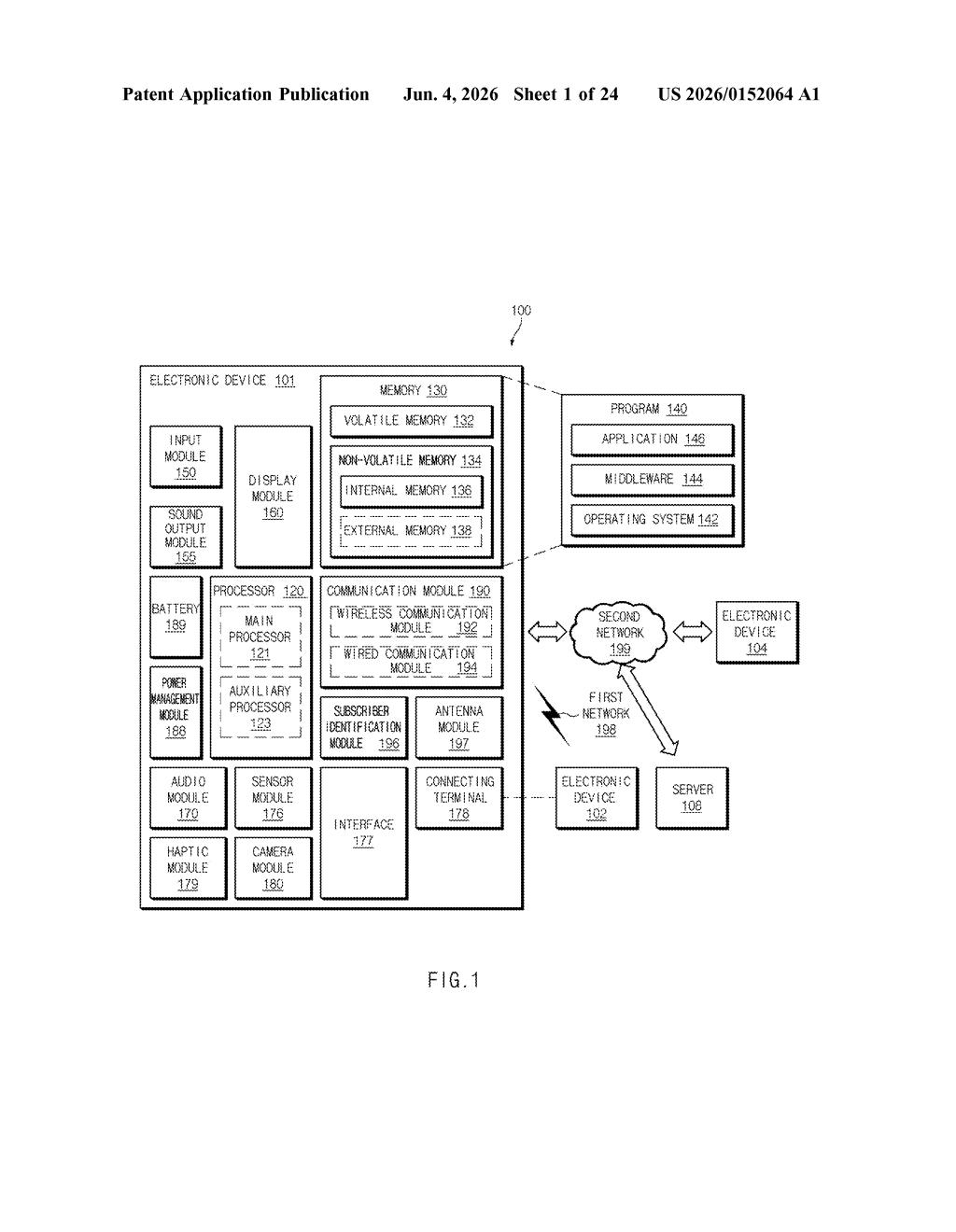
The patent describes an electronic device — most likely an in-vehicle head unit or dashboard display — built around three inputs working together:
- Gaze tracking: A sensor monitors the occupant's line of sight. When it detects that the driver is looking at a specific area of the screen — like a corner reserved for notification indicators — the system treats that as intentional attention.
- Notification intake: Alerts arriving from a paired external device (a smartphone, for example) are held in a staging area as small indicators, not immediately expanded into full content.
- Driving information: The processor pulls real-time vehicle data to assess the current driving context — speed, navigation state, or other situational signals.
When a user's gaze hits the indicator area, the system cross-references the driving data to determine a display method for the full notification content. That method might mean showing it in full, showing a condensed version, delaying display, or choosing a different layout depending on how much cognitive load the driver is likely under.
The patent frames this as a feedback loop: passive indicator → gaze trigger → driving-context check → adaptive content display. The display method itself is dynamic, not a fixed rule.
What this means for distracted-driving and in-car UX
Distracted driving is one of the hardest problems in automotive UX, and most current solutions are blunt: either block notifications entirely or dump them on screen and hope for the best. Samsung's approach threads the needle by making the display system context-aware — it doesn't assume every moment behind the wheel is equally risky.
For you as a driver, this could mean fewer missed messages when you're safely cruising and fewer dangerous pop-ups when you're navigating a complex interchange. It also signals Samsung's push to make its Galaxy ecosystem more tightly integrated with in-vehicle systems — a space where Apple CarPlay and Google's Android Automotive already have strong footholds.
This is a genuinely practical patent — not flashy, but aimed squarely at a real problem that every driver with a smartphone faces. The gaze-tracking-plus-driving-context combination is more nuanced than what most current head units do, and it fits neatly into Samsung's strategy of owning the full device-to-car pipeline. Whether it ships as a Galaxy feature or inside a Samsung-powered vehicle display is the real question.
There are more where this came from
We read every patent application Big Tech publishes and send you the ones worth knowing. Plain English, free, every week.
Want this weekly breakdown for a company we don't cover? Patentlyze Pro →