
Sony Patents a System That Keeps Virtual Band Members Perfectly in Sync
When multiple people perform together inside a virtual world, keeping everyone's music in sync is a surprisingly hard problem. Sony has filed a patent for a system that watches each performer's physical movements, figures out how fast they're playing, and automatically picks the right audio clip to match.
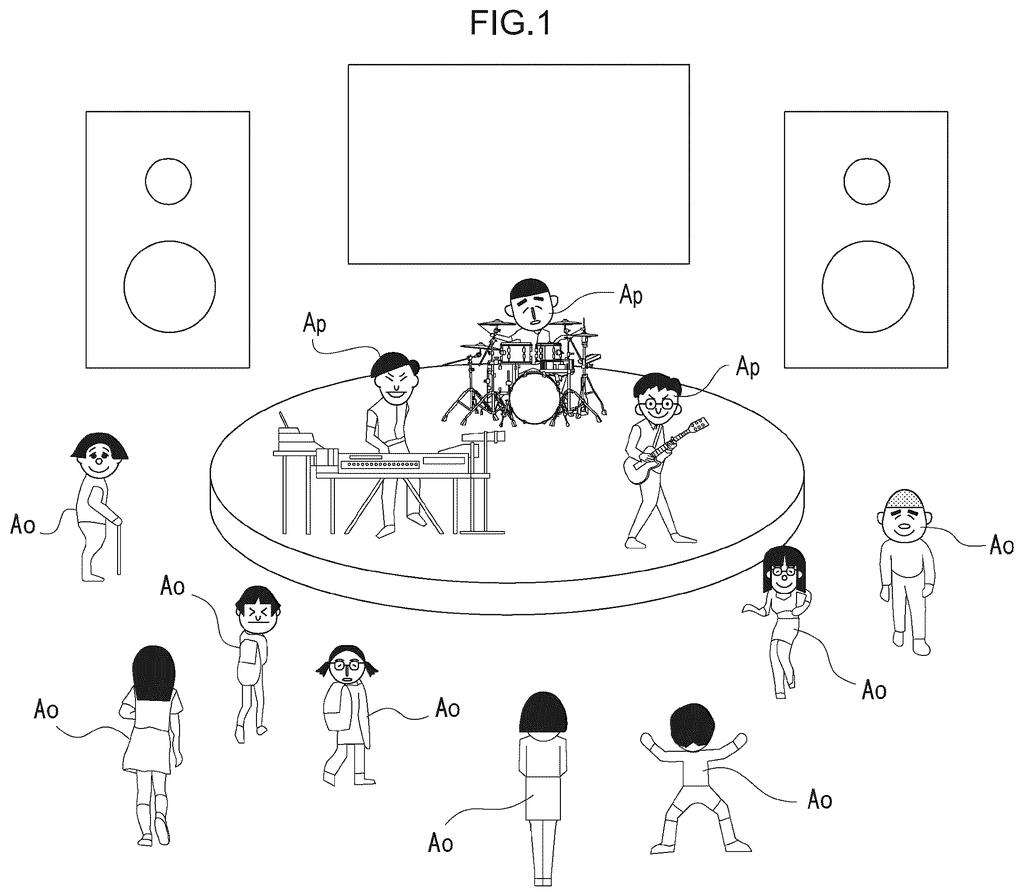
What Sony's virtual performance sync system actually does
Every time two musicians play together on the same virtual stage, their real-world bodies move at slightly different speeds, and the audio has to follow. That mismatch is normally a mess.
Sony's approach works by watching the physical movements of each performer in real time using motion capture, the same technology used in movies and video games to translate a person's body motion into a digital character. The system estimates how fast each person is playing their instrument based on those movements, then picks from a library of pre-recorded sound clips that match that speed. Every performer's chosen audio clip is then played back in sync with the others.
The result: a shared virtual stage where each person's performance sounds natural at their own pace, but everyone still sounds like they're playing together. You could think of it as autocorrect for live virtual music.
an operation estimation unit that estimates a performance operation speed for each of a plurality of performers whose own avatars are arranged in common virtual space based on motion capture data on the performers; …
Translation: It tracks how fast each musician is moving their virtual avatar using motion capture technology.
How motion capture data drives the sound selection
The patent describes a two-part system sitting inside an information processing device.
First, an operation estimation unit reads motion capture data from each performer in real time. Motion capture records a person's physical movements as a stream of positional data, and this unit uses that stream to calculate a performance operation speed, essentially how quickly someone is moving through the physical gestures of playing their instrument.
Second, an output sound control unit uses that speed estimate to select from a set of pre-recorded audio clips. The patent specifies that sound clips are prepared in advance at multiple speeds for each performer, so there is a library of options rather than a single fixed track. The unit picks the clip that matches the estimated speed, then outputs each performer's chosen clip in synchronization with every other performer's clip.
The key technical challenge the system solves is that multiple performers in a shared virtual space will naturally move at slightly different tempos. Rather than forcing everyone to match a fixed beat or locking them to a single shared audio track, the system lets each person's sound adapt to their own movement while still coordinating the outputs so the overall performance stays coherent.
What this means for live virtual concerts and multiplayer music
Virtual concerts and social gaming platforms already let people share digital spaces, but live collaborative music inside those spaces has remained awkward because real-time audio sync across multiple performers is technically difficult. This patent targets that specific gap.
For consumers, the practical payoff would show up in products like PlayStation's VR platform or Sony's broader entertainment ecosystem, where multiplayer music experiences could feel much more like playing with other people and much less like watching clips play at random. several Sony filings on virtual performance and avatar interaction this year suggest the company sees shared virtual performance as an area worth building infrastructure around, not just a novelty feature.
Sony's 496th filing in our Sony coverage since May adds to a pattern of self-managing software, alongside the self-healing devices patent and the adaptive UI patent.
Claim 1 covers a specific loop: watch how fast each performer moves, pick a pre-recorded sound clip that matches that speed, and play everyone's clips in sync inside a shared virtual space. Any multiplayer music app where motion-captured performers need their audio to adapt to their individual pace would have to contend with this claim if granted.
The built-in limit is that the sound clips must be prepared in advance for each speed level. A system that generates sound on the fly from a physical model of an instrument would likely land outside this claim entirely, giving developers a clear path around it.
The core sync mechanism, matching audio to motion speed independently for each performer and then locking all outputs together, is where the practical weight sits. That is the hard part of building a live virtual ensemble, and this claim draws a fence around one specific way of solving it.
There are more where this came from
We read every patent application Big Tech publishes and send you the ones worth knowing. Plain English, free, every week.
The drawings
17 drawing sheets from US 2026/0277535 A1 · click any drawing to enlarge


Want this weekly breakdown for a company we don't cover? Patentlyze Pro →
Be the first to weigh in