
Meta Patents a Shared Anchor System to Keep Multiuser XR Worlds in Sync
When two people in different rooms put on XR headsets and enter the same virtual space, how do you make sure they're both looking at the same thing? Meta's new patent answers that with a single moveable 'anchor object' that acts as the shared origin point for everything in the scene.
What Meta's shared XR anchor actually does
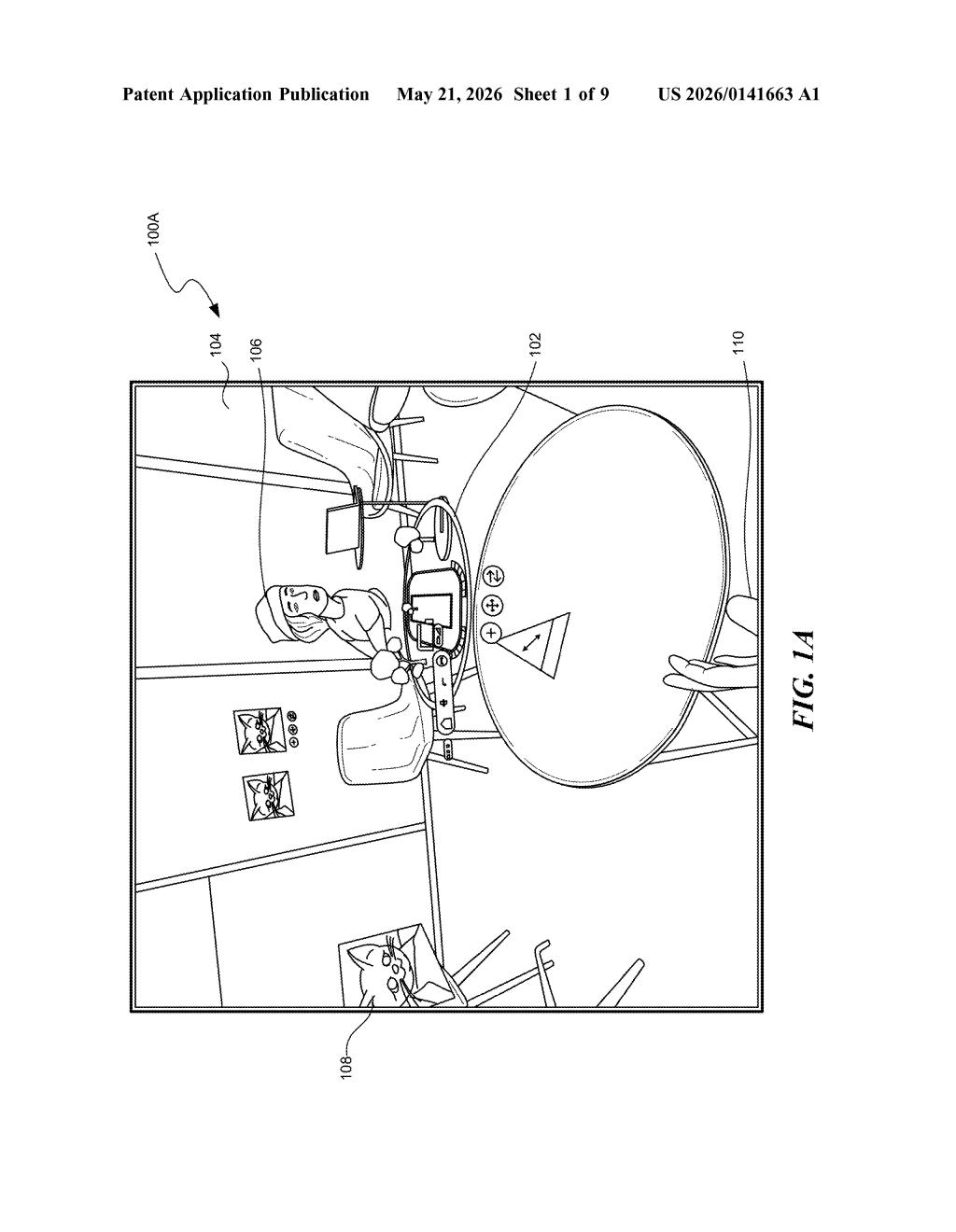
Imagine you and a friend are both wearing mixed-reality headsets and you've built a little virtual stage together — a table, some 3D models, maybe your avatars sitting across from each other. The problem is your headset and your friend's headset each have their own sense of where things are in space. Without something to agree on, the virtual furniture on your end might look like it's floating three feet to the left on theirs.
Meta's patent describes an anchor object — think of it as a shared GPS origin point for a multiplayer XR session. Every virtual object in the scene, including your avatar, is positioned relative to that anchor. When someone moves the anchor — say, sliding a virtual ring across the room — everyone's view updates together, keeping the whole scene coherent.
The anchor can be something virtual, like a menu or a floating ring, or something physical, like a small device sitting on a table that all users can see. Either way, it's the thing that makes sure your shared XR space actually feels shared.
How the anchor object locks a common coordinate system
The patent describes a co-presence framework — a coordination layer sitting underneath a multiuser XR session that establishes and maintains a common coordinate system across all connected headsets.
At the core is the anchor object, a designated reference point in the extended reality environment. All virtual objects — including user avatars — are stored and rendered with positions defined relative to this anchor, not relative to each headset's individual spatial mapping. This matters because each XR device builds its own local map of the physical room around it; without a shared reference, two users' coordinate spaces are essentially incompatible.
The key mechanic is what happens when someone moves the anchor:
- The system receives the move input on the initiating headset.
- It calculates a new anchor position (reposition) in the shared environment.
- All virtual objects maintain their relational positions to the anchor — so the whole scene shifts together, consistently, across every connected XR system.
The anchor can be a virtual object (a floating shape, a menu panel) or a physical stage device placed in the real world that all users can physically reference. The patent emphasizes that moving the anchor is the primary lever for rearranging the shared scene without breaking each participant's spatial coherence.
What this means for Meta's Quest multiplayer future
Multiplayer XR is one of Meta's biggest bets, and the awkward reality is that spatial synchronization across headsets is still a genuinely hard problem. Different headsets in different physical rooms each have their own inside-out tracking systems with no inherent shared reference frame. A patent like this tackles that foundational plumbing — the kind of unglamorous infrastructure work that makes or breaks whether a shared virtual meeting room actually feels like you're in the same place.
For Quest users, this points toward more robust shared-space features in Horizon Worlds or future social XR apps — scenarios where you and a collaborator can jointly manipulate a virtual scene without objects drifting or jumping between your respective views. It also has clear implications for enterprise use cases like remote design reviews or virtual collaboration, where spatial precision between participants isn't optional.
This is core multiplayer XR infrastructure — not flashy, but genuinely necessary. Meta is essentially patenting a clean, user-controllable solution to the coordinate-system mismatch problem that plagues any shared spatial computing session. Whether this becomes a platform-level feature in Horizon or a developer API, it's the kind of thing that has to exist before multiplayer XR feels truly reliable.
There are more where this came from
We read every patent application Big Tech publishes and send you the ones worth knowing. Plain English, free, every week.
Want this weekly breakdown for a company we don't cover? Patentlyze Pro →