
Sony Patents Technology That Reduces Pixel Color Data Before Saving Video Files
Sony is exploring a way to shrink video files by reducing color precision on individual pixels before compression even starts, using a custom pattern to decide which pixels get the full treatment and which don't.
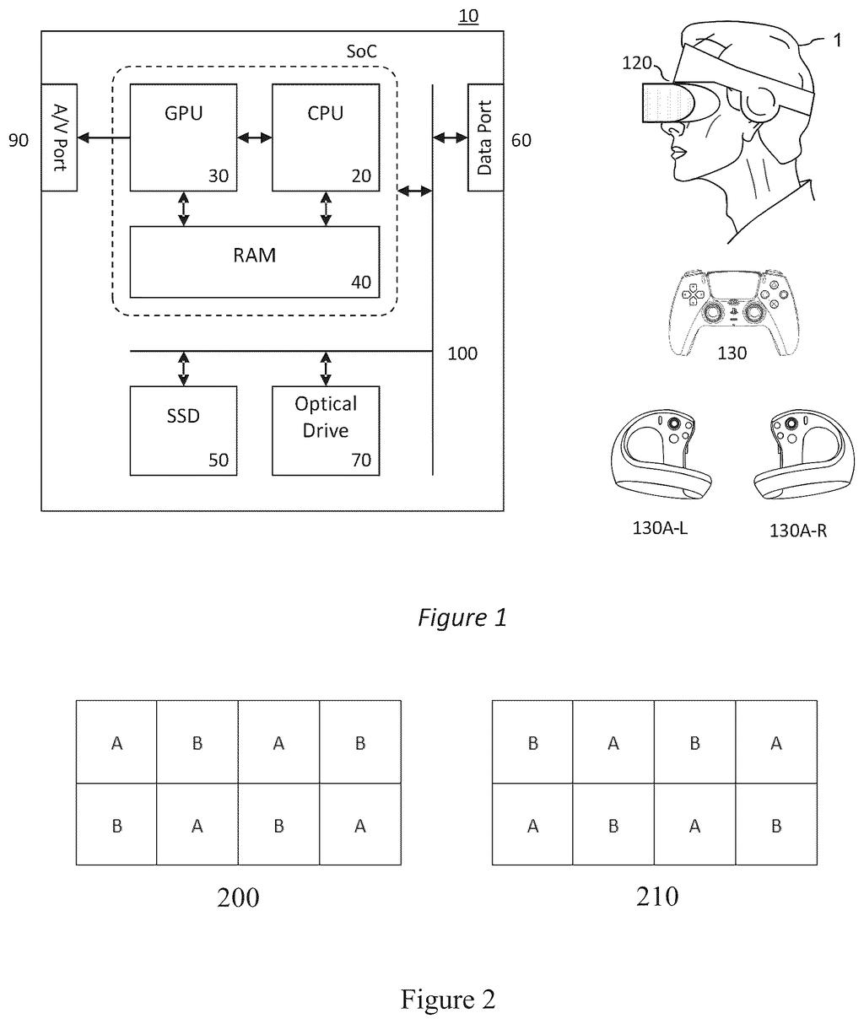
What Sony's pixel color-trimming encoder actually does
You're downloading a game update or streaming a movie, and the file is enormous. Every pixel on screen stores color data, and storing all of that at full precision takes up a lot of space.
Sony's patent describes a system that steps in before the usual video compression happens. It uses a preset pattern to go pixel by pixel across each video frame and dial down the color precision on at least some of those pixels. Think of it like deciding in advance which dots on the screen need the full box of crayons and which ones can get by with fewer shades. Once that selective trimming is done, a standard encoder compresses the result.
The idea is that by reducing color data in a controlled, patterned way, the encoder has less information to squeeze, which could mean smaller files or faster encoding, without the viewer necessarily noticing much difference.
… a colour sampling unit configured to sample a plurality of pixels within an obtained image frame in accordance with a predetermined pattern, wherein the predetermined pattern indicates a bit depth at which the colour of each of the pixels is to be sampled …
Translation: The system uses a set pattern to decide how much color detail to keep for each pixel.
How the bit-depth pattern decides which pixels get trimmed
The system has three main parts working in sequence.
- Image frame obtaining unit: pulls individual video frames from a source, whether that's a game engine, a camera feed, or stored footage.
- Colour sampling unit: applies a predetermined pattern across the pixels in each frame. That pattern specifies the bit depth (how many distinct color shades a pixel can represent) at which each pixel's color gets recorded. Crucially, it is set up to reduce the bit depth on at least some pixels, meaning those pixels get fewer possible color values than the original source had.
- Encoding unit: takes the already-sampled frames and compresses them using standard video encoding.
The core novelty here is the patterned, pre-compression color reduction step. Rather than letting the encoder decide uniformly what to throw away, this system bakes in a spatial map that controls precision on a pixel-by-pixel basis. A pixel in a visually busy area might keep its full color depth while a neighboring pixel in a flat, uniform region might be trimmed to fewer bits, with the encoder then working on already-simplified data.
… an encoding unit configured to encode the one or more image frames that have been subjected to the colour sampling.
Translation: It then saves the video using these lighter, reduced color frames.
What this could mean for streaming and PlayStation game delivery
Video files, especially for high-resolution games and 4K streaming, are still genuinely large. Any technique that trims data before standard compression can compound savings, because the encoder has less to work with from the start. Sony Interactive Entertainment's focus here points toward PlayStation-adjacent use cases like game streaming, remote play, or disc and download delivery.
For you as a viewer or player, the hoped-for result is faster downloads or smoother streaming at lower bandwidth without a noticeable dip in visual quality. Whether that holds up in practice depends heavily on how the pattern is designed and how perceptive the human eye actually is to the pixels being trimmed.
That makes this Sony's 83rd filing in our Display patents coverage since May, a run that includes one on instant-response pixel circuits and one cutting sensor processing delays.
Claim 1 covers any system that grabs video frames, runs them through a pattern that lowers color precision on at least some pixels, then compresses the result. That is a remarkably wide net. Nothing in the claim specifies how the pattern is chosen, how many pixels get the reduced treatment, or by how much.
In practice, that breadth could reach any video pipeline that touches color precision before compression, which describes a huge portion of modern streaming and game delivery infrastructure. Reducing color information before encoding has been standard practice for decades, so patent examiners will almost certainly push back hard on prior art.
The claim will very likely need to narrow significantly before it survives examination. Whether Sony can hold onto enough scope to matter commercially depends on what distinguishes this approach from what already exists, and the claim as written does not show that hand.
There are more where this came from
We read every patent application Big Tech publishes and send you the ones worth knowing. Plain English, free, every week.
The drawings
4 drawing sheets from US 2026/0270449 A1 · click any drawing to enlarge


Want this weekly breakdown for a company we don't cover? Patentlyze Pro →