
Apple Patents a System That Controls Every LED Behind Your Screen Individually
Your screen's backlight is dozens or hundreds of tiny LEDs, and managing all of them at once without overheating, wasting power, or causing flicker is harder than it looks. Apple's new patent describes a system that handles all of that at once.
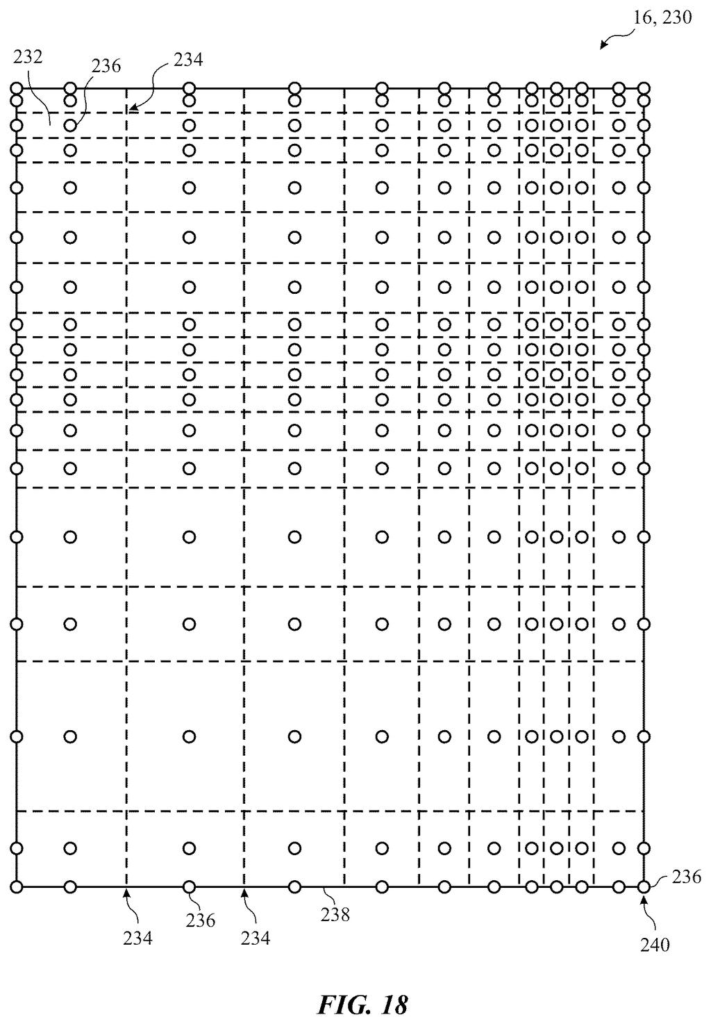
What Apple's backlight control system actually does
Imagine your phone's screen as a grid of tiny light bulbs behind the glass. Each one needs to be the right brightness at the right moment, but turning them up or down too fast causes a flicker you might not even consciously notice but your eyes still find annoying.
Apple's patent describes a system that smooths out those brightness changes gradually, like a dimmer switch instead of a light switch. It also watches how hot each bulb is getting, how much power the whole grid is drawing, and how much older bulbs have faded over time, adjusting everything automatically to keep the image looking consistent.
There's also a timing trick: the system can pause updates to the backlight for a moment while fresh image data is being written to the screen, so the picture and the light behind it always stay in sync. It's the kind of careful engineering that keeps displays looking good without you ever thinking about it.
The device “slopes” or gradually ramps a change in brightness of an LED based on a target brightness value of the LED, a current brightness value of the LED, and temperature at the LED.
Translation: The system smoothly adjusts screen brightness while factoring in heat levels.
How Apple manages brightness, power, heat, and timing
The patent describes a multi-part control system for LED backlights in electronic displays, covering four distinct problems at once.
- Brightness ramping: Instead of jumping an LED instantly to a new brightness level, the system calculates a gradual ramp (what the patent calls "sloping") based on the target brightness, the current brightness, and the LED's temperature. Hot LEDs behave differently from cool ones, so the ramp rate adjusts accordingly.
- Power limiting: The system monitors how much power each horizontal row of LEDs is drawing and compares that to an estimated total. If one row is pulling too much, the system caps it before it can cause instability or exceed the display's power budget.
- Voltage optimization: Rather than always supplying a fixed voltage, the system calculates the minimum voltage an LED actually needs to produce the required current (the flow of electricity that determines brightness). This reduces wasted energy.
- Interrupt-based sync: The system can send a signal (an "interrupt") to freeze backlight updates while new pixel data is being written to the display panel. This prevents a mismatch between what the pixels show and the light level behind them, which would produce a visible artifact.
The system also tracks LED aging, compensating for the natural dimming that happens as LEDs get older, and adjusts for real-time temperature readings to keep brightness consistent across conditions.
What this means for future iPhone and iPad displays
Display quality has become one of the sharpest battlegrounds in premium devices, and the difference between a good panel and a great one often comes down to how carefully the backlight is managed. Poorly controlled backlights produce flicker, uneven brightness, or color shifts when the screen dims, all of which are things users notice even if they can't name the cause.
Apple's steady run of display-engineering filings suggests the company is investing heavily in keeping full control of this stack in-house. For you as a user, a system like this could mean fewer visible flickers during dark scenes in videos, longer battery life from tighter power management, and screens that age more gracefully over years of use.
That makes this Apple's 32nd filing we've tracked in our Display patent coverage since May, a group that includes one on color adjustments for color-blind users and one on ceramic layers for foldable screens.
The real cost of this design is coordination. Managing brightness changes, power limits, voltage adjustments, and timing signals all together means a single miscalculation, say a bad temperature reading, could make the screen dim too slowly or flash at the wrong moment. More moving parts create more ways to fail.
Whether that cost is worth it depends on what you care about. A screen that stays consistent over years of use, without the creeping dimness or subtle flicker that makes older phones look worn out, requires exactly this kind of behind-the-scenes accounting. For a device sold at premium prices, that long-term reliability is part of what customers are paying for.
The patent's actual legal scope appears narrower than its description suggests, since the lead claim was canceled during filing. That limits how much competitive protection Apple gains here, even if the underlying engineering is sound.
Get our take in your Top Stories
Liked this breakdown? Add Patentlyze as a preferred source on Google, and our plain-English take shows up more often in your Top Stories the next time Apple patent news breaks.
There are more where this came from
We read every patent application Big Tech publishes and send you the ones worth knowing. Plain English, free, every week.
The drawings
11 drawing sheets from US 2026/0253561 A1 · click any drawing to enlarge


Show the other 3 sheets


Want this weekly breakdown for a company we don't cover? Patentlyze Pro →
Be the first to weigh in