
Sony Files Patent for a System That Remembers Your Speaker Layout
Sony Interactive Entertainment has patented a way for an information processing system — almost certainly a game console or cloud gaming service — to store and recall the exact physical positions of your speakers, so audio can be processed correctly every time without you re-entering your setup.
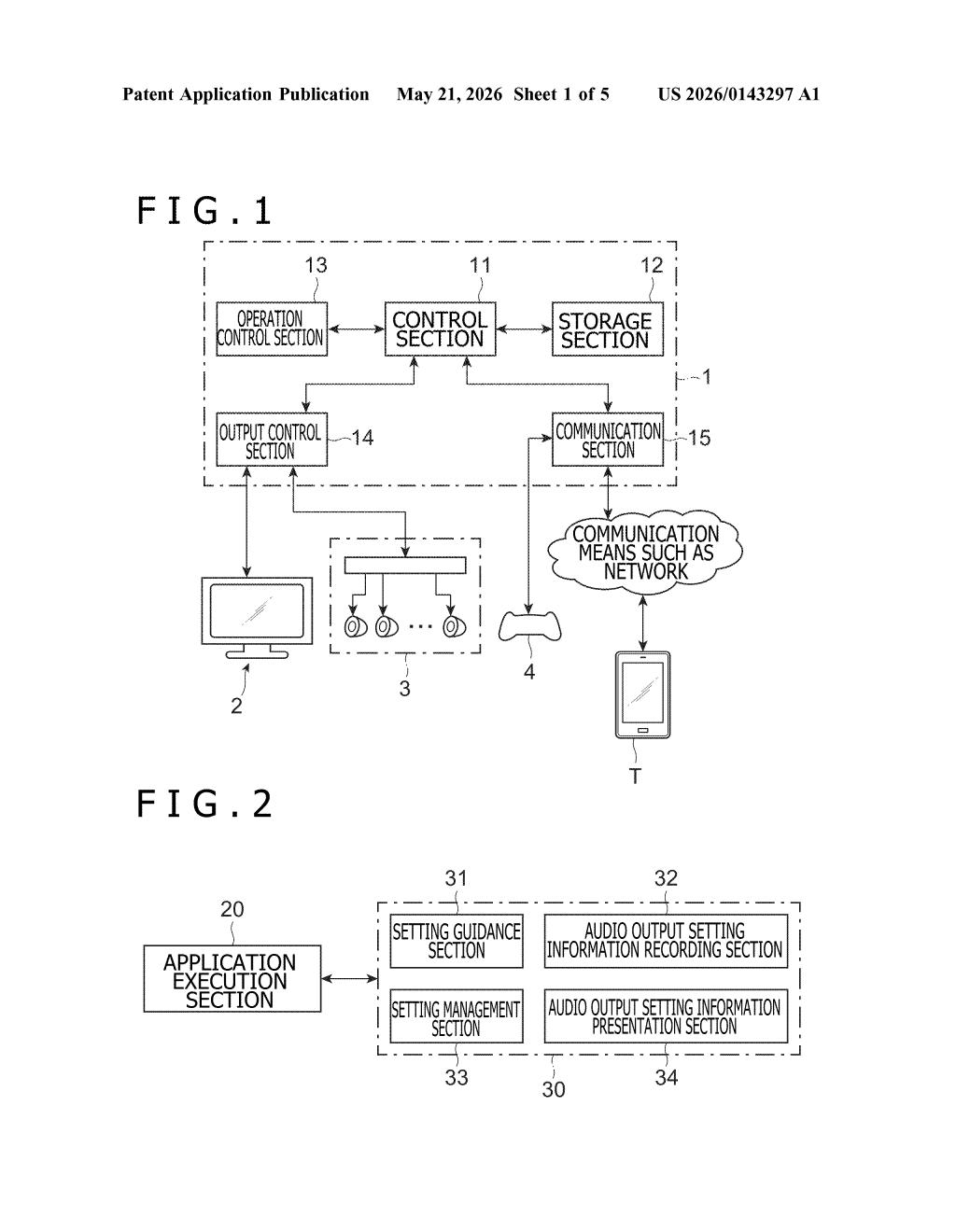
What Sony's speaker-position memory system actually does
Imagine you've carefully arranged a 5.1 surround sound system in your living room: two speakers in front, two behind, one to the side. You tell your PlayStation where each speaker is. Now imagine that every time you reconnected, you had to do that all over again — or worse, the audio engine just guessed wrong.
Sony's patent describes a system that saves your speaker layout tied to the specific display or speaker system you're using, then automatically pulls up those settings when you connect again. If you're on a local, direct connection, it uses your saved custom layout. If you're accessing remotely over a network, it falls back to a sensible default: two front speakers at -30 and +30 degrees.
The clever part is that this works across devices. If you've configured your speaker positions before — even via a terminal device like a phone or laptop — that configuration can travel with you, so the audio processing is always tuned to your actual room, not a generic guess.
How Sony stores and retrieves per-device speaker settings
The patent describes an information processing apparatus (think: a console or cloud gaming server) that manages audio output settings for multi-speaker systems. The core function is simple but useful: the system records audio output setting information, which is data describing the direction of each speaker relative to the user's orientation, and associates that data with an identifier for the specific display or speaker system connected.
There are two main scenarios the patent addresses:
- Direct local connection: The apparatus identifies the connected speaker system by its device ID, looks up the saved speaker-position data, and uses it to process the audio signal accordingly.
- Remote/network connection: If the user is accessing via a terminal device over a network and the speaker system isn't directly connected, the system falls back to default settings — a standard stereo layout with left and right speakers at -30° and +30°.
The patent also covers a scenario where the terminal device itself (e.g., a phone or laptop) stores and transmits the speaker configuration to the server on connection. This means user-defined speaker layouts can follow a user across sessions even in cloud or remote-play contexts.
The underlying goal is ensuring that whatever spatial audio or surround-sound processing happens on the backend is using geometry that actually matches the user's physical setup, rather than a one-size-fits-all assumption.
What this means for PlayStation spatial audio setups
For PlayStation users — especially anyone running a home theater setup or using PlayStation's Tempest 3D Audio engine — this kind of persistent speaker-position memory would remove a real pain point. Right now, spatial audio tuning often requires manual reconfiguration when you switch setups or access games remotely.
More broadly, as cloud gaming grows, the audio pipeline has to work correctly even when the rendering hardware is physically separated from the speakers. A system that stores and re-applies your speaker geometry on the server side — and falls back gracefully when it can't — is a quiet but meaningful piece of infrastructure for making remote play feel less like a compromise.
This is unglamorous plumbing, but it's the kind of plumbing that makes premium audio features actually work in the real world. Sony's Tempest audio engine is genuinely impressive on paper, but it's only as good as the speaker-position data fed into it. A patent that pins speaker layout to device IDs and syncs it across sessions is exactly the kind of system-level work needed to make spatial audio reliable rather than finicky.
Get our take in your Top Stories
Liked this breakdown? Add Patentlyze as a preferred source on Google, and our plain-English take shows up more often in your Top Stories the next time Sony patent news breaks.
There are more where this came from
We read every patent application Big Tech publishes and send you the ones worth knowing. Plain English, free, every week.
Want this weekly breakdown for a company we don't cover? Patentlyze Pro →