
Tesla Patents a Motorized Mechanism That Lifts Dashboard Screens Without Scratching Them
Tesla has patented a system that raises a touchscreen out of a car's dashboard using two arms moving at intentionally different speeds, preventing the screen's edges from scraping the dashboard as it deploys.
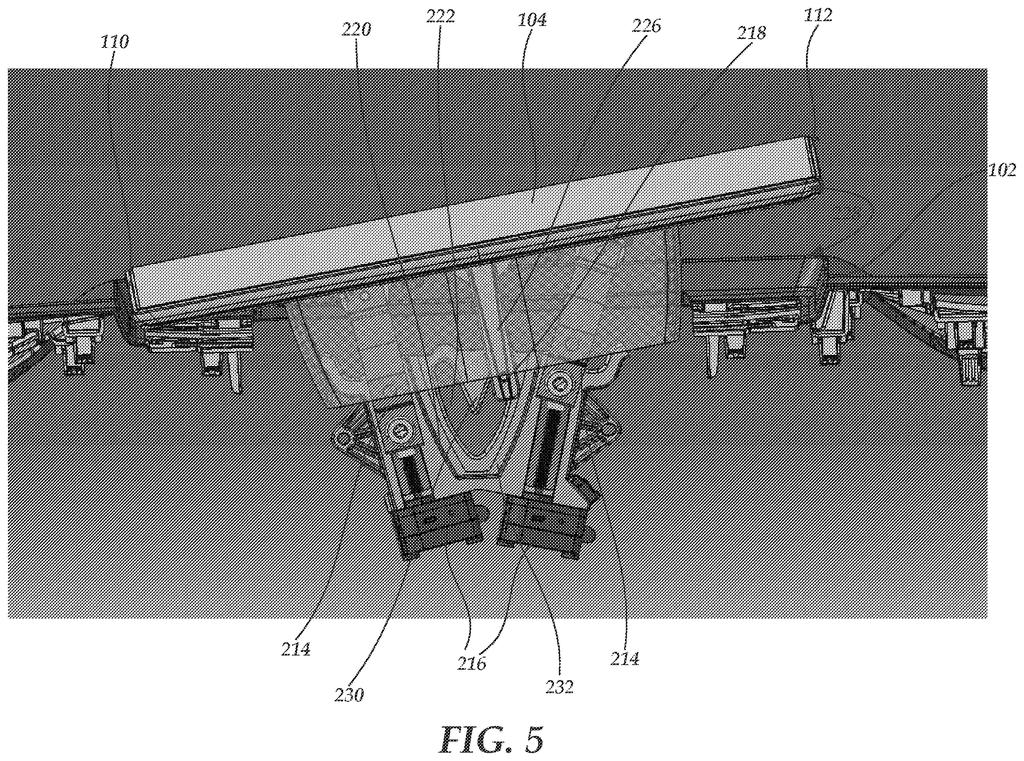
How Tesla's pop-up screen avoids scraping the dashboard
You're sitting in a car with a screen tucked flush into the dashboard, and you tap a button to bring it up. If both sides of the screen rose at exactly the same rate, the edges would drag along the dashboard surface on the way out, scratching the trim or jamming the mechanism.
Tesla's patent covers a display assembly that solves this by running the two arms that push the screen up at different speeds. One edge lifts faster than the other so the screen tilts away from the dashboard surface before it fully extends, keeping the panel clear of anything it might catch on.
Think of it like opening a stuck drawer by pulling one side slightly first to break the seal, then letting the whole thing glide out. The speeds are controlled by a motor system tucked inside a rail housing behind the dashboard.
… at least one motor transmission configured to drive the first link arm along the first rail and drive the second link arm along the second rail …
Translation: Motors push the two arms along separate tracks to change the screen's position.
How two link arms at different speeds tilt the display out
The assembly sits behind the dashboard and connects to the display through two link arms, each riding along its own rail inside a housing unit. A motor transmission (the powered mechanism that controls movement along the rails) drives both arms, but at deliberately mismatched speeds.
- The first link arm travels along a first rail at one speed.
- The second link arm travels along a second rail at a different speed.
- The speed difference causes the display to rotate slightly as it rises, angling it away from the dashboard surface.
At its starting position, both the top and bottom edges of the screen sit flush inside the dashboard cutout. The moment deployment begins, the speed differential introduces a controlled tilt, so neither edge stays in prolonged contact with the surrounding trim during travel.
The patent covers both the physical rail-and-arm structure and the logic governing the speed difference. The motor transmission can be a single unit driving both arms or separate units, and the claim language is broad enough to cover either arrangement.
The first speed is controlled to be different from the second speed such that the display may have less or minimized contact with a dashboard ( 102 ) of a vehicle during deployment.
Translation: Moving each arm at a different speed stops the screen from scraping against the dash.
What this means for Tesla's in-car screen designs
For Tesla specifically, large touchscreens are a design signature, and any retractable or deployable screen format multiplies the surface area that can scrape against interior trim. A deployment system that manages that contact mechanically, rather than relying on tight manufacturing tolerances alone, could make pop-up or tilt-out screens more practical in production vehicles.
For you as a driver, this is the difference between a screen that looks pristine after a thousand deployment cycles and one that shows wear marks on the bezel after a few months. It is an unglamorous engineering problem, but it matters whenever any automaker tries to hide a screen inside the dashboard for aesthetics or aerodynamics.
Tesla's fourth filing in the Display patents we cover since June adds to a run that includes a laser windshield cleaner and noise-absorbing perforated glass.
Claim 1 protects any display assembly where two arms travel along separate tracks at deliberately different speeds to keep a screen from scraping the dashboard as it deploys. The claim names only a rail housing, two link arms, and a motor transmission, with no restrictions on screen size, vehicle type, or how large the speed difference must be.
That breadth matters in practice. Any automaker building a motorized display that uses mismatched arm speeds to guide the screen into position would land inside this claim, regardless of how their tracks or motor are constructed.
Whether the claim holds depends entirely on whether older folding mechanisms, in car interiors or consumer electronics, already show the same basic motion. If prior art surfaces, the claim narrows. If it stands, it controls a wide corridor of motorized in-vehicle display design.
There are more where this came from
We read every patent application Big Tech publishes and send you the ones worth knowing. Plain English, free, every week.
The drawings
12 drawing sheets from US 2026/0285240 A1 · click any drawing to enlarge


Want this weekly breakdown for a company we don't cover? Patentlyze Pro →
Be the first to weigh in