
Sony Patents a Way to Shift Video Resolution Mid-Stream Without Starting Over
Most video systems handle quality drops by switching to a completely different stream. Sony's new patent describes a way to shrink the picture inside the same stream, without an interruption, so a viewer's player never has to jump tracks.
How Sony's mid-stream resolution trick affects your video
A security camera stares at an empty hallway all night, and a video call freezes right before someone makes a big announcement. Both problems often come from the same source: a video system that can't reduce quality when the connection gets bad without causing a visible hiccup.
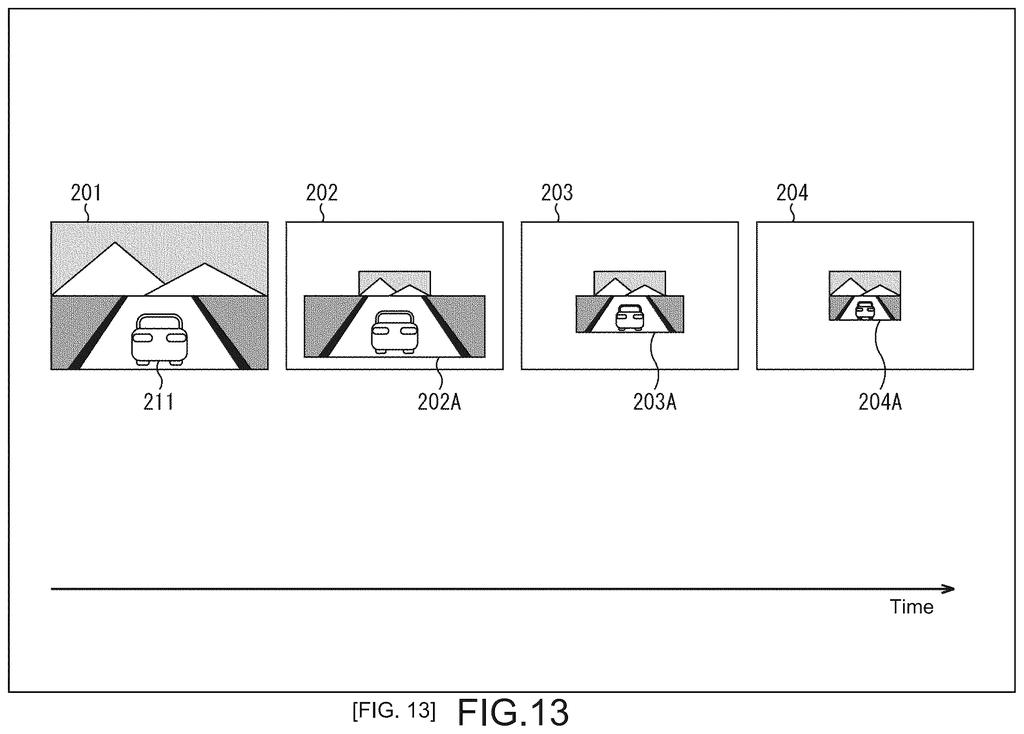
Sony's patent describes a method that changes how tightly a video is compressed, step by step, all within a single continuous video stream. Instead of sending a full-size picture every frame, the system can shrink the picture to a smaller size and place that smaller image inside the same-sized frame container. To anyone watching, it's the same file, the same stream, no interruption.
The key idea is that the video player never sees a "channel change." The encoder does all the switching behind the scenes, so you get a smoother experience when bandwidth drops, and the quality comes back up just as when conditions improve.
a resolution change control unit that performs control on a moving image of a predetermined frame size so that a resolution of a frame image is changed in multiple steps …
Translation: It adjusts the video resolution gradually rather than all at once.
How the encoder packs shrinking frames into one bitstream
The patent describes an image processing system built around four main components working together.
- Resolution change control unit: This part decides, in real time, when to step the image resolution up or down. It works in multiple discrete steps, not a continuous fade, so the encoder always knows exactly which resolution it is targeting at any moment.
- Image reduction unit: When a step-down is triggered, this unit physically shrinks the frame image. A 4K frame might become a 1080p-sized picture, for example.
- Position setting unit: The shrunken image does not simply disappear. It is placed at a defined location inside the original, full-size frame container. The outer frame dimensions never change.
- Coding unit: This is the final stage. It encodes the entire frame, full-size container and all, as one unbroken single sequence (a continuous data stream called a bitstream). No second stream, no switching signal required.
The trick is that the decoder on the other end receives one consistent stream and can reconstruct whichever resolution was active for each frame. Because the frame container size never changes, existing decoders do not need to renegotiate or restart to handle the quality shift.
… a reduced image is generated by reducing a size of the frame image of the moving image in accordance with the control, a position of the reduced image to be arranged in a frame of the frame size is set …
Translation: It shrinks the picture and places it inside a standard frame.
What this means for live and recorded video delivery
For you as a viewer, this is about removing the freeze or black flash that sometimes appears when streaming video quality drops during a busy moment. If Sony's approach were built into a camera, a video conference system, or a streaming encoder, quality could dip and recover without you ever seeing the seam.
For engineers building those systems, a growing pile of Sony image-processing filings points to a consistent interest in keeping video delivery smooth under bandwidth pressure. This particular patent tackles a real pain point: most adaptive systems today force a decoder to recognize a stream change, which takes time and causes visible artifacts. Wrapping everything into one sequence sidesteps that delay entirely.
Sony's 86th filing in our Display patent coverage since May follows one on mismatched camera settings and one on color-converting surfaces among the applications we've tracked.
The patent solves a specific, real annoyance: that flicker or pause you notice when a video call or stream drops quality. It is not speculative future technology; adaptive bitrate video exists everywhere already, but the "single sequence" framing is a meaningful technical distinction.
The payoff for a consumer is modest but concrete. Instead of a freeze lasting half a second while the player renegotiates the stream, quality would slide down (and back up) without a visible break. That matters most in live video: sports broadcasts, video calls, surveillance feeds, and anywhere a viewer cannot simply rewind.
How much any of this actually lands depends on whether Sony builds it into its cameras or broadcasting equipment, which the patent does not promise. As a piece of engineering, though, it addresses a real seam in how video compression works today rather than filing around a speculative future use case.
There are more where this came from
We read every patent application Big Tech publishes and send you the ones worth knowing. Plain English, free, every week.
The drawings
20 drawing sheets from US 2026/0281400 A1 · click any drawing to enlarge


Want this weekly breakdown for a company we don't cover? Patentlyze Pro →